Ghost Fitness/Magnesium/Is elemental magnesium the same as magnesium glycinate?
Is elemental magnesium the same as magnesium glycinate?
The short answer
No. Magnesium glycinate is a compound, magnesium bound to glycine; elemental magnesium is the measured magnesium inside it, about 14% to 20% of the weight. 1500mg of glycinate at 20% contains 300mg elemental. Compare products on the elemental line.
- A moleculewhat magnesium glycinate is
- A measurementwhat elemental magnesium is
- 14% to 20%how much of the molecule is the measurement
- 300mgelemental in the worked example's 1500mg serving
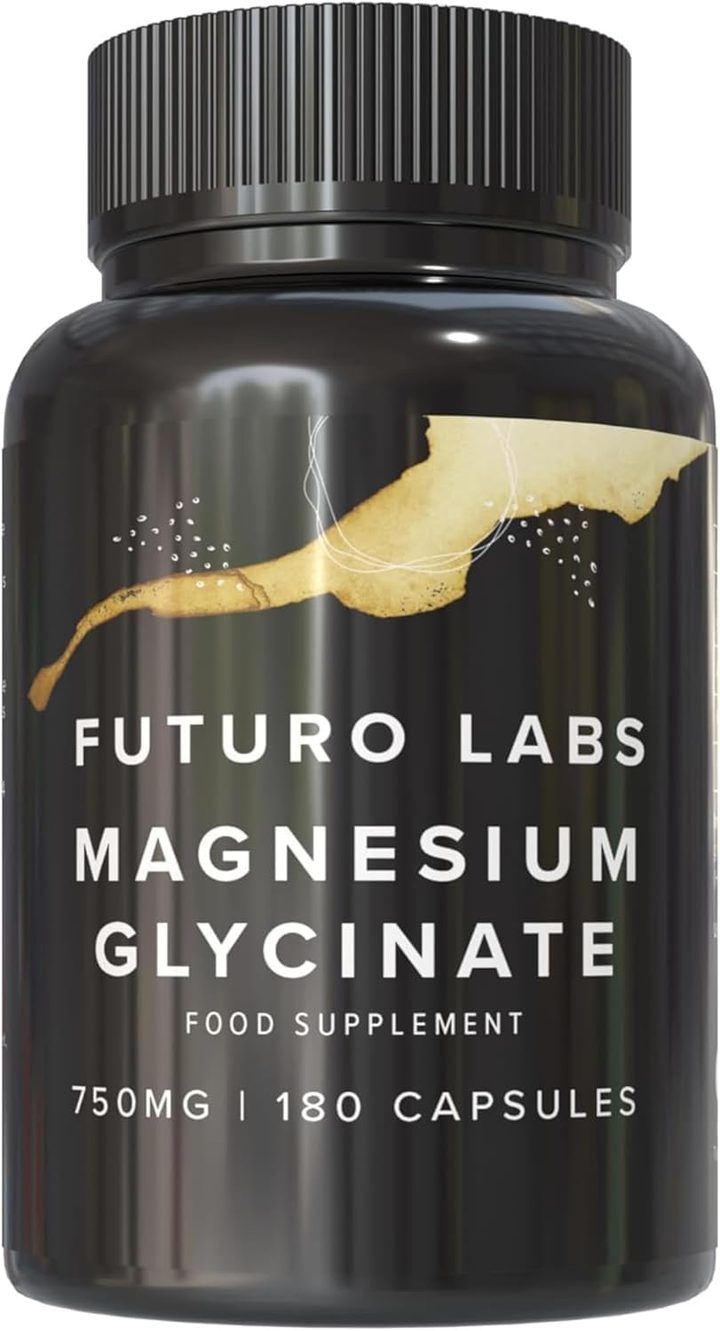
Our brand: the worked example on this page
Futuro Labs Magnesium Glycinate
- 22p a day
- 180 capsules, 2 capsules daily
- Lab tested
- Made in the UK
The two kept straight on one label: Futuro Labs Magnesium Glycinate on Amazon UK, 1500mg bisglycinate providing 300mg elemental, £19.99 for 180. Label breakdown. The 300mg naming trap has its own page at magnesium glycinate 300mg.
A molecule and a measurement
Magnesium glycinate is a thing you can hold: a chelate of one magnesium atom and two glycine molecules, filling the capsule and leading the ingredients line. Elemental magnesium is not a thing but a number: how much of that chelate's weight is the mineral itself, which for glycinate runs about 14% as a full chelate and up to 20% as the buffered material on the worked example's label. So the two terms cannot be the same, any more than a loaf is the same as its flour weight, and every dose mistake in this corner of the aisle comes from reading a glycinate weight as if it were the elemental number.
| Glycinate on the label | At 14% (full chelate) | At 20% (buffered, worked example) | What that means |
|---|---|---|---|
| 300mg | about 42mg elemental | 60mg elemental | A token dose sold on the number |
| 500mg | about 70mg | 100mg | A part dose; two or three needed |
| 1000mg | about 140mg | 200mg | Getting close; check the panel |
| 1500mgOurs | about 210mg | 300mg, as printed on the worked example | The full serving when the percentage is 20% |
| 2000mg | about 280mg | 400mg, the supplement ceiling | Do not exceed without reading the elemental line |
Why no supplement contains bare elemental magnesium
Pure magnesium is a reactive metal; it burns white in air and reacts with water, which is why it lives in flares and alloys rather than capsules. To be swallowed it must be combined into a salt or chelate, glycinate among them, and the elemental figure exists precisely because every product is a compound: it is the accounting line that says how much of the metal the compound smuggles in. That is also why the %NRV column audits any label instantly. The reference value is 375mg of the element, so a serving claiming 300mg elemental should print about 80%, and a glycinate whose panel shows 11% has just confessed that its 300mg was compound weight. The measurement was invented for exactly the confusion this page untangles, and using it takes one glance.
How a good label keeps them straight, and why it matters
The worked example's label carries both terms doing their proper jobs: magnesium bisglycinate 1500mg at 20% naming the molecule and its content, elemental magnesium 300mg at 80% NRV stating the measurement, 2 capsules a serving. That pairing is what to demand of any glycinate, because the UK dose framework runs entirely in elemental terms: the 300mg reference intake for men, the 375mg labelling reference value, the 400mg supplement guidance level. A shopper comparing a 1000mg glycinate against a 300mg elemental product without converting is comparing 200mg of magnesium against 300mg while believing the opposite. Futuro Labs Magnesium Glycinate keeps the arithmetic on the label: 300mg elemental, 80% NRV, 22p a day, £19.99 for 180 capsules, vegan, UK made, panels shown. Elemental magnesium and magnesium glycinate are a measurement and a molecule; buy the molecule, dose by the measurement.
What to check on the label
- Glycinate is the molecule, elemental is the measurement: never interchangeable.
- 14% to 20%: the share of a glycinate weight that is magnesium.
- 1500mg at 20% equals 300mg elemental: the worked example's printed maths.
- All UK dose rules run in elemental terms: 300mg intake, 400mg ceiling.
- Both lines printed together is the mark of an honest glycinate.
Our brand
The worked example: Futuro Labs Magnesium Glycinate
Futuro Labs Magnesium Glycinate states both terms correctly: magnesium bisglycinate 1500mg at 20%, elemental magnesium 300mg at 80% NRV, per 2 capsules, 22p a day from a £19.99 bottle of 180. Vegan, UK made, panels shown.
- Elemental magnesium per serving
- 300mg (80% NRV)
- Form
- magnesium bisglycinate 20%
- Serving
- 2 capsules a day
- Bottle
- 180 capsules, 90 days
- Price
- £19.99 (22p a day)
- Capsule
- vegetarian shell, vegan product
Questions people also ask
Is 500mg of magnesium glycinate the same as 500mg of magnesium?
No. 500mg of glycinate contains about 70mg to 100mg of magnesium depending on the material. The elemental line is the magnesium figure.
How much elemental magnesium is in 1000mg of magnesium glycinate?
About 140mg as a full chelate, 200mg from 20% buffered material. The percentage in the ingredients line settles it.
Which number should I dose by, glycinate or elemental?
Elemental, always: the UK reference intake, the %NRV and the 400mg supplement ceiling are all elemental figures.
Why does my glycinate bottle show two magnesium numbers?
One is the compound weight, one is the elemental content. A label showing both, with the percentage, is doing it properly.
What is a full elemental dose of magnesium glycinate?
300mg per serving at 80% NRV, which needs 1500mg of 20% bisglycinate: the worked example's exact specification at 22p a day.
Sources
- Futuro Labs Magnesium Glycinate listing, Amazon UK, label and price checked 31 August 2026. https://www.amazon.co.uk/dp/B0BT7Z5VQW
- Retained Regulation (EU) No 1169/2011, Annex XIII: nutrient reference value for magnesium 375mg. https://www.legislation.gov.uk/eur/2011/1169/annex/XIII
- Department of Health. Dietary Reference Values for Food Energy and Nutrients for the United Kingdom. Report on Health and Social Subjects 41, 1991 (magnesium RNI 300mg men, 270mg women).
- Expert Group on Vitamins and Minerals. Safe Upper Levels for Vitamins and Minerals. Food Standards Agency, 2003 (magnesium guidance level 400mg a day from supplements). https://cot.food.gov.uk/sites/default/files/vitmin2003.pdf
- EFSA Panel on Dietetic Products, Nutrition and Allergies. Scientific Opinion on the substantiation of health claims related to magnesium. EFSA Journal 2010;8(10):1807. https://efsa.onlinelibrary.wiley.com/doi/10.2903/j.efsa.2010.1807