Ghost Fitness/Magnesium/Is elemental magnesium the same as magnesium oxide?
Is elemental magnesium the same as magnesium oxide?
The short answer
No. Elemental magnesium is a measurement, the mineral content of any serving; magnesium oxide is a compound, and the one with the highest elemental share, about 60%. That big number absorbs at about 4%, which is the whole oxide story.
- A measurementwhat elemental magnesium is
- About 60%of oxide's weight is magnesium: the highest share of any form
- About 4%of it absorbed: the punchline
- 300mgelemental from a form that actually delivers it
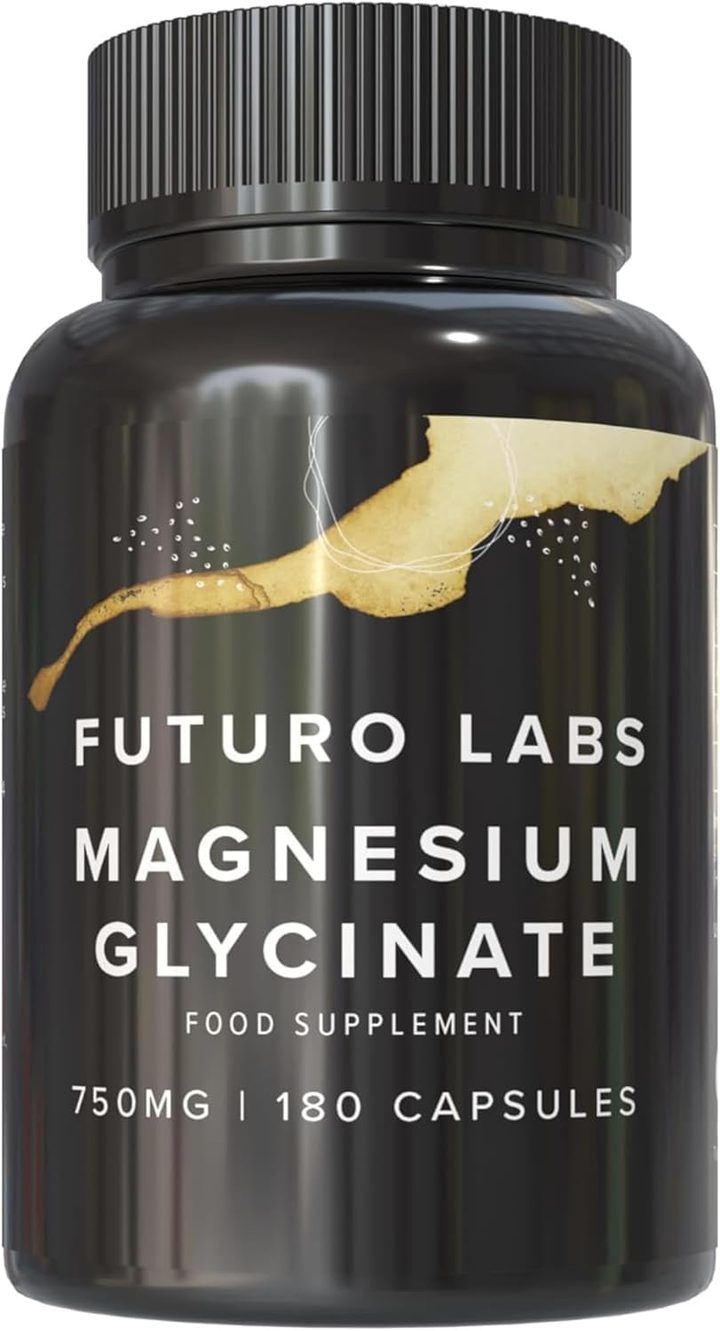
Our brand: the worked example on this page
Futuro Labs Magnesium Glycinate
- 22p a day
- 180 capsules, 2 capsules daily
- Lab tested
- Made in the UK
The form that delivers its number: Futuro Labs Magnesium Glycinate on Amazon UK, 300mg elemental per 2 capsules, £19.99 for 180. Label breakdown. The naming family starts at what is elemental magnesium.
A measurement and a compound, and why they get tangled
Elemental magnesium is the count: how many milligrams of the mineral a serving contains, whatever it is bound to. Magnesium oxide is one of the things it can be bound to: the mineral plus oxygen, the densest and cheapest carrier on the shelf. They tangle because oxide is the form where the count looks most impressive. Oxygen is light, so oxide is about 60% magnesium by weight, triple the share of a glycinate chelate, and a small oxide tablet can truthfully print 375mg elemental and 100% NRV. Shoppers who have just learned to look for elemental magnesium then find oxide topping the leaderboard, which is exactly the wrong lesson at exactly the wrong moment.
The number that matters more than the share
Absorption is where the leaderboard inverts. Firoz and Graber's four-form comparison put oxide's fractional absorption around 4%, the worst measured, against organic forms running several times higher, and Lindberg's earlier work had already shown citrate comfortably ahead on solubility and uptake. So oxide's 375mg elemental delivers on the order of 15mg into you, while a glycinate's 300mg delivers a large multiple of that, and the unabsorbed oxide majority sits in the bowel pulling water, which is why the form's genuine medical career is as a laxative. The elemental measurement is doing its job honestly in both cases; it counts what is swallowed, not what arrives, and oxide is the form built to exploit the difference.
| Magnesium oxide tablet | Magnesium glycinate (worked example) | |
|---|---|---|
| What it is | A compound: mineral plus oxygen | A compound: mineral plus two glycines |
| Elemental share of the compoundOurs | about 60%: the highest | 20% buffered material |
| Elemental printed per serving | 375mg, 100% NRV | 300mg, 80% NRV |
| Fraction absorbed | about 4% | The well-absorbed organic group |
| What the unabsorbed part does | Pulls water: the laxative effect | Nothing; the carrier absorbs too |
| What the elemental number is worth | A true count of a poor delivery | A true count of a real delivery |
The rule that survives this page
Read the elemental line always, and the form line immediately after, because the measurement only prices the delivery once you know the vehicle. A big elemental number on oxide is a big number in transit; a full elemental number on an organic form is a dose. The worked example pairs the two lines the way every honest label should: Futuro Labs Magnesium Glycinate, magnesium bisglycinate 20% first in the ingredients, elemental magnesium 300mg at 80% NRV on the panel, 2 vegan capsules, UK made under GMP and BRC, third-party panels shown, £19.99 for 180 capsules, 22p a day. Is elemental magnesium the same as magnesium oxide: no, one measures and one carries, and the carrier with the proudest measurement is the one to put back.
What to check on the label
- Elemental is the count, oxide is a carrier: never the same thing.
- Oxide's 60% share is real, and its 4% absorption is the punchline.
- Elemental counts what is swallowed, not what arrives: read the form line next.
- 375mg at 100% NRV on a tiny tablet is the oxide signature: put it back.
- The pairing to buy: full elemental number on an organic form, 300mg at 80% NRV.
Our brand
The worked example: Futuro Labs Magnesium Glycinate
Futuro Labs Magnesium Glycinate pairs the measurement with a form that delivers it: 300mg elemental (80% NRV) from bisglycinate 20%, per 2 capsules, 22p a day from a £19.99 bottle of 180. Vegan, UK made, panels shown.
- Elemental magnesium per serving
- 300mg (80% NRV)
- Form
- magnesium bisglycinate 20%
- Serving
- 2 capsules a day
- Bottle
- 180 capsules, 90 days
- Price
- £19.99 (22p a day)
- Capsule
- vegetarian shell, vegan product
Questions people also ask
Does magnesium oxide have the most elemental magnesium?
Per milligram of compound, yes, about 60%. Per milligram absorbed it is the worst on the shelf, at roughly 4% uptake.
Why does my oxide tablet say 100% NRV?
Because 375mg elemental genuinely fits in a small oxide tablet. The NRV counts what you swallow; absorption is where the value leaks.
Is elemental magnesium a type like oxide or glycinate?
No: it is the measurement applied to every type. The form line tells you the type; the elemental line tells you the count.
How much magnesium do you actually absorb from oxide?
Around 4% of the elemental amount by the classic comparison, on the order of 15mg from a 375mg tablet.
What should I buy instead of high-elemental oxide?
A full elemental dose on an organic form: 300mg at 80% NRV as bisglycinate. Futuro Labs Magnesium Glycinate: 22p a day, UK made, panels shown.
Sources
- Futuro Labs Magnesium Glycinate listing, Amazon UK, label and price checked 31 August 2026. https://www.amazon.co.uk/dp/B0BT7Z5VQW
- Firoz M, Graber M. Bioavailability of US commercial magnesium preparations. Magnesium Research 2001;14(4):257-262. PubMed record
- Lindberg JS, Zobitz MM, Poindexter JR, Pak CY. Magnesium bioavailability from magnesium citrate and magnesium oxide. Journal of the American College of Nutrition 1990;9(1):48-55. PubMed record
- Retained Regulation (EU) No 1169/2011, Annex XIII: nutrient reference value for magnesium 375mg. https://www.legislation.gov.uk/eur/2011/1169/annex/XIII
- Expert Group on Vitamins and Minerals. Safe Upper Levels for Vitamins and Minerals. Food Standards Agency, 2003 (magnesium guidance level 400mg a day from supplements). https://cot.food.gov.uk/sites/default/files/vitmin2003.pdf
- EFSA Panel on Dietetic Products, Nutrition and Allergies. Scientific Opinion on the substantiation of health claims related to magnesium. EFSA Journal 2010;8(10):1807. https://efsa.onlinelibrary.wiley.com/doi/10.2903/j.efsa.2010.1807