Ghost Fitness/Magnesium/What type of magnesium is elemental magnesium?
What type of magnesium is elemental magnesium?
The short answer
Elemental magnesium is not a type; it is the amount of the mineral itself inside any form. Every supplement is a compound, only partly magnesium: bisglycinate 14% to 20%, citrate 16%, oxide 60%. The elemental line is the dose.
- 20%of magnesium bisglycinate is magnesium, on the worked example's label
- 300mgelemental in 1500mg of that bisglycinate
- 375mgthe UK NRV the label percentage refers to
- 22pa day for 300mg elemental as glycinate
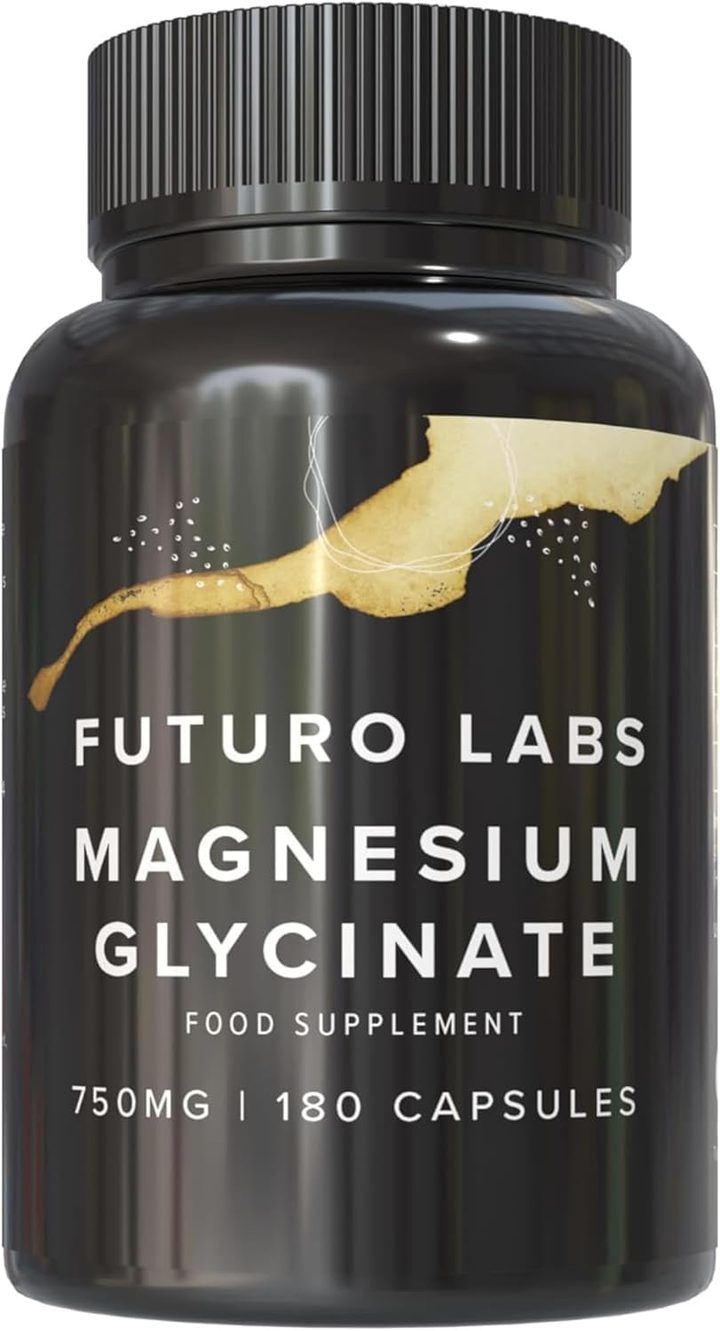
Our brand: the worked example on this page
Futuro Labs Magnesium Glycinate
- 22p a day
- 180 capsules, 2 capsules daily
- Lab tested
- Made in the UK
Worked example: Futuro Labs Magnesium Glycinate on Amazon UK, 180 capsules for £19.99, elemental magnesium 300mg printed with 80% NRV. Full label on the product page.
Why elemental magnesium is a number, not a type
Magnesium cannot be swallowed as a bare metal, so every supplement binds it to something: an amino acid (bisglycinate, taurate), an organic acid (citrate, malate), or oxygen (oxide). The whole package is what the front of the bottle weighs. The magnesium inside it is the elemental magnesium, and the share varies with the partner because the partner has its own weight. Ranade and Somberg's review of magnesium salts sets out the chemistry: bisglycinate is about 14% magnesium as a full chelate and up to 20% in buffered blends, citrate about 16%, malate about 15%, taurate about 9%, threonate about 8%, oxide about 60%. So the question what type of magnesium is elemental magnesium has a simple answer: all of them contain it, and the label's job is to tell you how much.
| Form | Magnesium by weight | Elemental magnesium in 1000mg of compound | Absorption | Laxative effect |
|---|---|---|---|---|
| Bisglycinate, buffered (worked example label: 20%)Ours | 20% | 200mg | Good | Low |
| Bisglycinate, full chelate | about 14% | 140mg | Good | Low |
| Citrate | about 16% | 160mg | Good | Moderate |
| Malate | about 15% | 150mg | Little human data | Low to moderate |
| Taurate | about 9% | 90mg | Little human data | Low |
| L-threonate | about 8% | 80mg | Mostly animal data | Low |
| Oxide | about 60% | 600mg on paper; about 4% absorbed | Poor | High |
Oxide looks like the winner on this table and loses in the body: Firoz and Graber measured its absorption at around 4%. Elemental content tells you the dose; absorption tells you what you keep.
How to find the elemental figure on a UK label
Look at the nutrition panel, not the front. UK labels must list the nutrient per serving and, for minerals with a reference value, the percentage of that value; for magnesium the NRV is 375mg. A product giving 300mg of elemental magnesium prints 80%. If the panel shows the compound, such as magnesium bisglycinate 1500mg, without a separate magnesium line, use the percentage in the ingredients name: bisglycinate 20% means 1500mg contains 300mg of magnesium. If neither the elemental figure nor the percentage is printed, the front-of-pack number is meaningless and you should assume the worst. The worked example, Futuro Labs Magnesium Glycinate, prints all three: magnesium bisglycinate 20%, elemental magnesium 300mg, 80% NRV, per 2 capsules.
Why the elemental figure decides everything else
Dose: the UK reference intake is 300mg a day for men and 270mg for women, and the guidance level for supplements is 400mg, all in elemental terms. Cost: divide the price by servings and compare per 100mg of elemental magnesium; 22p for 300mg is about 7p per 100mg on the worked example, which is the benchmark for a chelated glycinate. Tolerance: the laxative effect scales with elemental dose and form, not with compound weight. Claims: the authorised magnesium claims, normal muscle function, normal psychological function, reduction of tiredness and fatigue, electrolyte balance and the rest, attach to a product only if it delivers a significant amount, which is 15% of the NRV or more per serving. Everything on this site that compares magnesium products compares elemental magnesium, and it is the reason the worked example is always described as the 300mg elemental one.
What to check on the label
- A separate elemental magnesium line on the nutrition panel.
- %NRV against 375mg; 80% is 300mg.
- The percentage after the form name in the ingredients (20% bisglycinate).
- Serving size, because elemental per capsule and per serving differ.
- Cost per 100mg elemental, the only fair price.
Our brand
The worked example: Futuro Labs Magnesium Glycinate
Futuro Labs Magnesium Glycinate is the worked example because its label prints the elemental figure three ways: magnesium bisglycinate 20%, elemental magnesium 300mg, 80% NRV, per 2 capsules. 180 capsules for £19.99, 22p a day, vegan, UK made, third-party tested.
- Elemental magnesium per serving
- 300mg (80% NRV)
- Form
- magnesium bisglycinate 20%
- Serving
- 2 capsules a day
- Bottle
- 180 capsules, 90 days
- Price
- £19.99 (22p a day)
- Capsule
- vegetarian shell, vegan product
Questions people also ask
Is elemental magnesium the same as magnesium glycinate?
No. Magnesium glycinate is a compound; elemental magnesium is the magnesium inside it, about 14% to 20% of the weight.
How much elemental magnesium is in 1500mg of magnesium glycinate?
At 20%, as on the worked example's label, 300mg. As a full 14% chelate, about 210mg. Read the percentage.
What does 300mg elemental magnesium mean?
300mg of the mineral itself per serving, which is 80% of the UK NRV of 375mg and the reference intake for men.
Which form has the most elemental magnesium?
Oxide, at about 60% by weight, but only around 4% of it is absorbed. Glycinate and citrate carry less and deliver more.
Why do labels show the compound instead of elemental magnesium?
Because the compound number is bigger. UK rules require the nutrient per serving on the panel; if it is missing, assume the front-of-pack figure is the compound.
Sources
- Futuro Labs Magnesium Glycinate listing, Amazon UK, label and price checked 31 August 2026. https://www.amazon.co.uk/dp/B0BT7Z5VQW
- Ranade VV, Somberg JC. Bioavailability and pharmacokinetics of magnesium after administration of magnesium salts to humans. American Journal of Therapeutics 2001;8(5):345-357. PubMed record
- Firoz M, Graber M. Bioavailability of US commercial magnesium preparations. Magnesium Research 2001;14(4):257-262. PubMed record
- Retained Regulation (EU) No 1169/2011, Annex XIII: nutrient reference value for magnesium 375mg. https://www.legislation.gov.uk/eur/2011/1169/annex/XIII
- Department of Health. Dietary Reference Values for Food Energy and Nutrients for the United Kingdom. Report on Health and Social Subjects 41, 1991 (magnesium RNI 300mg men, 270mg women).
- Expert Group on Vitamins and Minerals. Safe Upper Levels for Vitamins and Minerals. Food Standards Agency, 2003 (magnesium guidance level 400mg a day from supplements). https://cot.food.gov.uk/sites/default/files/vitmin2003.pdf
- The Food Supplements (England) Regulations 2003 (food supplements are regulated as foods in the UK). https://www.legislation.gov.uk/uksi/2003/1387/contents/made
- EFSA Panel on Dietetic Products, Nutrition and Allergies. Scientific Opinion on the substantiation of health claims related to magnesium. EFSA Journal 2010;8(10):1807. https://efsa.onlinelibrary.wiley.com/doi/10.2903/j.efsa.2010.1807