Ghost Fitness/Magnesium/What does magnesium bisglycinate 20% mean on a label?
What does magnesium bisglycinate 20% mean on a label?
The short answer
Magnesium bisglycinate 20% means the material is 20% magnesium by weight, so 1500mg of it delivers 300mg elemental. The 20% figure marks buffered bisglycinate, chelate blended with a little oxide for density; fully reacted chelate runs about 14%.
- 20%the material's magnesium content by weight
- 1500mg x 20%the multiplication that yields the 300mg elemental line
- About 14%where fully reacted chelate sits instead
- 2 capsuleswhat the denser material makes possible for a full dose
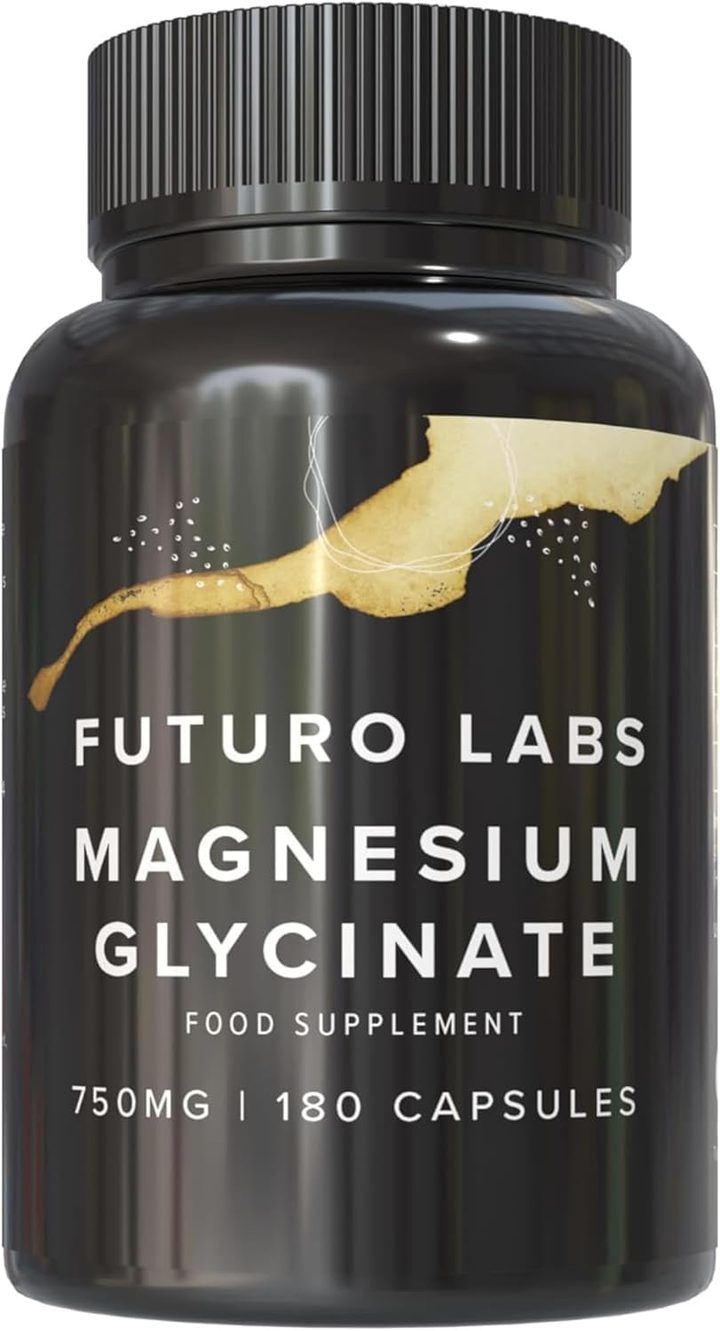
Our brand: the worked example on this page
Futuro Labs Magnesium Glycinate
- 22p a day
- 180 capsules, 2 capsules daily
- Lab tested
- Made in the UK
The label carrying the figure: Futuro Labs Magnesium Glycinate on Amazon UK, magnesium bisglycinate 20%, 300mg elemental per 2 capsules, £19.99 for 180. Label breakdown. The buffered question in full is on the buffered glycinate page.
The percentage, decoded in one multiplication
The figure is a content declaration: of this raw material's weight, 20% is elemental magnesium and the rest is the glycine carrier and the blend around it. It exists so the label's maths can be audited in your head: compound weight times percentage equals elemental dose, and on the worked example 1500mg times 20% lands exactly on the printed elemental magnesium 300mg at 80% NRV. That single multiplication is the most useful skill on the magnesium shelf, because it catches both directions of mislabelling at once: a 300mg glycinate capsule claiming a full dose fails it downward, and a suspiciously dense single capsule claiming 300mg elemental as pure chelate fails it upward, since pure chelate cannot physically be that concentrated.
Why 20% and not 14%: the buffered part, stated plainly
Chemistry sets the ceiling: a fully reacted magnesium bisglycinate, one magnesium held by two glycines and nothing else, is about 14% magnesium by weight, as the salt tabulations in Ranade and Somberg's review reflect. A material declaring 20% has therefore been buffered: the chelate blended with a minority of magnesium oxide, which is 60% magnesium, to raise the overall density. This site states that plainly because the honesty is the point: buffering is a legitimate, disclosed formulation choice whose entire purpose is packaging, letting a full 300mg elemental fit in 2 swallowable capsules where pure chelate needs 3 large ones. The oxide fraction is small, the tolerance story stays glycinate-shaped in practice, and the buying rule is unchanged, because the elemental line and %NRV describe what you get whichever material produced them.
| Declared figure | What the material is | Capsules for 300mg elemental | Reading |
|---|---|---|---|
| 14% (or fully reacted claimed) | Pure chelate, no blending | About 3 large ones | Honest and bulky |
| 18% to 20% (the exhibit's 20%)Ours | Buffered: chelate plus minority oxide | 2 | Honest and dense; the common full-dose design |
| No percentage declared | Unknown material | Unknowable from the front | Fall back to the elemental line; if that is missing too, walk away |
| Implied 30%+ (big elemental claims per small capsule) | Not glycinate chemistry | n/a | Oxide doing the work behind the name |
Using the figure at the shelf, and the exhibit
Treat the percentage as the label's audit key and run it everywhere: it converts compound headlines into real doses, exposes costume products in one line, and settles the fully-reacted-versus-buffered question as a packaging preference rather than a quality tier, provided the elemental line is printed either way. The exhibit is Futuro Labs Magnesium Glycinate, which declares the whole chain: magnesium bisglycinate 20% in the ingredients, elemental magnesium 300mg at 80% NRV on the panel, 2 vegan HPMC capsules per serving, UK made under GMP and BRC, third-party panels shown, £19.99 for 180 capsules, 22p a day. What does magnesium bisglycinate 20% mean on a label: that the brand did the maths in public, and handed you the key to check it.
What to check on the label
- 20% is the material's magnesium share by weight: the audit key.
- Compound x percentage = elemental line: run it on every bottle.
- 20% means buffered: chelate plus minority oxide, disclosed, for capsule count.
- 14% means fully reacted: same buying rule, more capsules.
- No percentage and no elemental line: walk away.
Our brand
The worked example: Futuro Labs Magnesium Glycinate
Futuro Labs Magnesium Glycinate declares the full chain: bisglycinate 20%, 1500mg per serving, 300mg elemental at 80% NRV, 2 capsules, 22p a day from a £19.99 bottle of 180. Vegan, UK made, panels shown.
- Elemental magnesium per serving
- 300mg (80% NRV)
- Form
- magnesium bisglycinate 20%
- Serving
- 2 capsules a day
- Bottle
- 180 capsules, 90 days
- Price
- £19.99 (22p a day)
- Capsule
- vegetarian shell, vegan product
Questions people also ask
Is 20% magnesium bisglycinate good?
It is a density declaration, not a grade: 20% buffered material fits a full 300mg in 2 capsules. Judge the product on its elemental line and %NRV.
Why is pure magnesium bisglycinate only 14% magnesium?
The two glycine molecules carry most of the weight; 14% is the chemistry's ceiling for the fully reacted chelate.
Does the oxide in buffered bisglycinate matter?
At a minority fraction it barely moves absorption or tolerance in practice, and the elemental line prices what you actually get. Disclosure is the thing to reward.
How do I check a glycinate label's maths?
Multiply compound weight by the declared percentage and compare with the elemental line: 1500mg at 20% should read 300mg.
What if no percentage is shown after bisglycinate?
Rely on the elemental line with %NRV. If both are absent, the label has hidden the only numbers that matter.
Sources
- Futuro Labs Magnesium Glycinate listing, Amazon UK, label and price checked 31 August 2026. https://www.amazon.co.uk/dp/B0BT7Z5VQW
- Ranade VV, Somberg JC. Bioavailability and pharmacokinetics of magnesium after administration of magnesium salts to humans. American Journal of Therapeutics 2001;8(5):345-357. PubMed record
- Retained Regulation (EU) No 1169/2011, Annex XIII: nutrient reference value for magnesium 375mg. https://www.legislation.gov.uk/eur/2011/1169/annex/XIII
- Firoz M, Graber M. Bioavailability of US commercial magnesium preparations. Magnesium Research 2001;14(4):257-262. PubMed record
- The Food Supplements (England) Regulations 2003 (food supplements are regulated as foods in the UK). https://www.legislation.gov.uk/uksi/2003/1387/contents/made
- EFSA Panel on Dietetic Products, Nutrition and Allergies. Scientific Opinion on the substantiation of health claims related to magnesium. EFSA Journal 2010;8(10):1807. https://efsa.onlinelibrary.wiley.com/doi/10.2903/j.efsa.2010.1807