Ghost Fitness/Magnesium/How do you check the elemental magnesium on a supplement label?
How do you check the elemental magnesium on a supplement label?
The short answer
Check elemental magnesium in three steps: find the panel line reading magnesium with %NRV; confirm the maths, since %NRV times 375mg should equal it; then audit the ingredients, compound weight times the percentage. 1500mg at 20% checks to 300mg.
- 3 stepsfind the line, confirm against 375mg, audit the ingredients
- 375mgthe NRV every percentage multiplies against
- 2 auditsthe cross-checks that catch every labelling trick
- 30 secondsthe whole procedure once practised
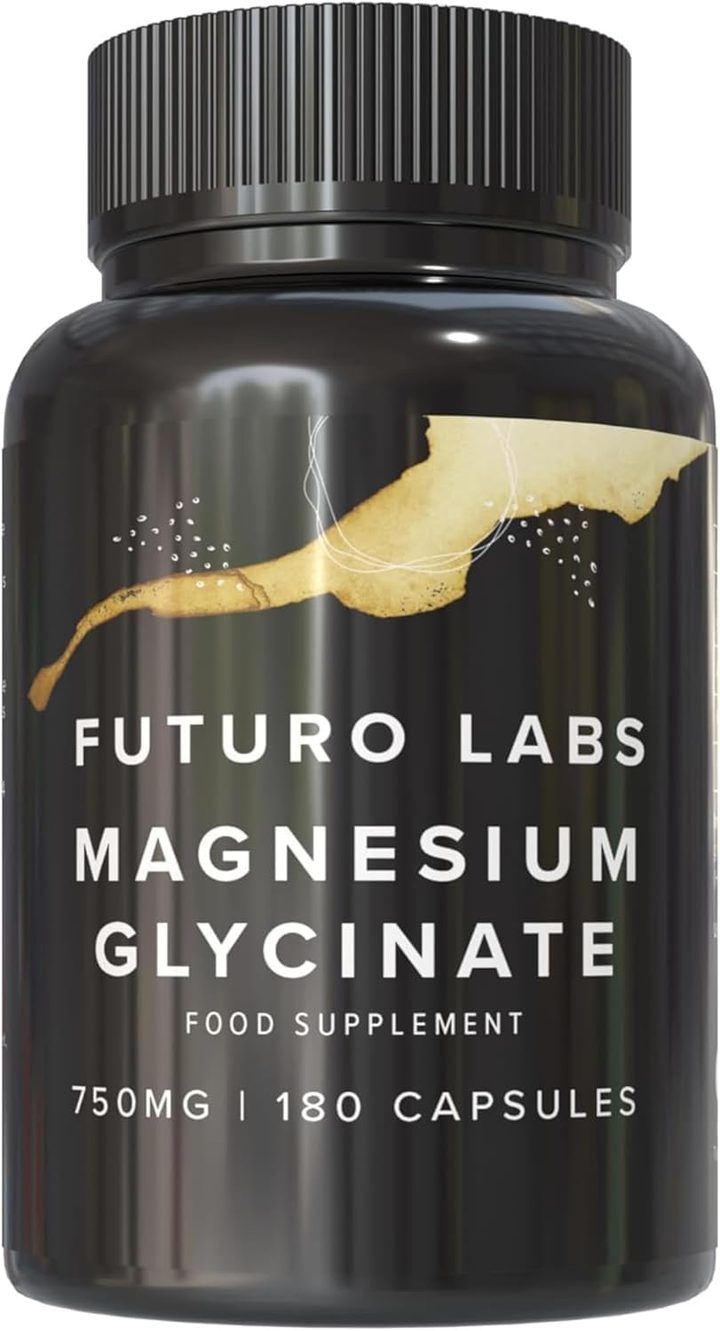
Our brand: the worked example on this page
Futuro Labs Magnesium Glycinate
- 22p a day
- 180 capsules, 2 capsules daily
- Lab tested
- Made in the UK
A label to practise on: Futuro Labs Magnesium Glycinate on Amazon UK, 300mg elemental at 80% NRV per 2 capsules, £19.99 for 180. Label breakdown. What the number means lives on the elemental magnesium page.
Step one: find the line that counts
Go to the nutrition information panel, not the front of pack, and find the row for magnesium: it may read magnesium, elemental magnesium, or magnesium (as bisglycinate), and it must carry milligrams per serving with a %NRV beside it. That row is the dose; everything else on the packaging is either sourcing detail or marketing. If no such row exists, or milligrams appear without a percentage, stop here with your answer: the product is declining to state its elemental content in the standard way, the big number you saw elsewhere is almost certainly compound weight, and there is nothing further worth checking.
Steps two and three: the two audits that catch everything
Step two audits the panel against itself: the %NRV times the 375mg reference value should reproduce the milligram figure. Eighty percent of 375 is 300, so a line reading 300mg, 80% NRV is internally consistent; a line reading 300mg, 11% NRV has just confessed that its milligrams are compound weight wearing the wrong column, since 11% of 375 is about 42mg. Step three audits the panel against the ingredients: the compound weight times the declared material percentage should also land on the elemental figure. On the worked example, magnesium bisglycinate 1500mg at 20% multiplies to exactly the printed 300mg. Run both audits and every trick this site catalogues gets caught by one of them: compound-as-elemental fails step two, impossible-density claims fail step three, and per-capsule sleight fails the serving check inside step one.
| Label pattern | Step 1: the line | Step 2: %NRV audit | Step 3: ingredients audit | Verdict |
|---|---|---|---|---|
| The worked example (Futuro Labs Magnesium Glycinate)Ours | Elemental magnesium 300mg, 80% NRV, per 2 capsules | 80% x 375 = 300: consistent | 1500mg x 20% = 300: consistent | Honest full serving |
| Magnesium glycinate 300mg capsules, no NRV | No qualifying line | Cannot run: the confession | 300mg x 14% to 20% = 42mg to 60mg actual | Compound weight in costume |
| Magnesium 375mg tablet, 100% NRV, oxide first | Present and consistent | 100% x 375 = 375: passes | Oxide at 60% needs only 625mg: plausible | Honest count, about 4% absorbed: form fails, not the maths |
Practising to fluency, and the habit's payoff
The procedure compresses with practice into a single sweep: eyes to the panel, percentage times 375 in your head, glance at the ingredients percentage, done, and the third example above is the reminder that the maths check is necessary but not sufficient, since an oxide label can be arithmetically perfect and still deliver almost nothing; the form check from the five-stop label read finishes the job. Practise on the worked example until the sweep is automatic: Futuro Labs Magnesium Glycinate, elemental magnesium 300mg at 80% NRV per 2-capsule serving, from 1500mg of bisglycinate at 20%, vegan, UK made under GMP and BRC, panels shown, £19.99 for 180 capsules, 22p a day. How do you check the elemental magnesium on a supplement label: find the qualified line, run the two multiplications, and never again pay compound prices for compound weights.
What to check on the label
- Step 1: the panel row with %NRV; missing means compound weight elsewhere.
- Step 2: %NRV x 375mg reproduces the milligrams; 11% beside 300mg is a confession.
- Step 3: compound x percentage reproduces it again; 1500mg x 20% = 300mg.
- Per-serving always: multiply per-capsule statements up before judging.
- The maths passing is not the end: the form check still prices the delivery.
Our brand
The worked example: Futuro Labs Magnesium Glycinate
Futuro Labs Magnesium Glycinate passes both audits in public: 80% x 375mg = 300mg on the panel, 1500mg x 20% = 300mg in the ingredients, per 2 capsules, 22p a day from a £19.99 bottle of 180. Vegan, UK made, panels shown.
- Elemental magnesium per serving
- 300mg (80% NRV)
- Form
- magnesium bisglycinate 20%
- Serving
- 2 capsules a day
- Bottle
- 180 capsules, 90 days
- Price
- £19.99 (22p a day)
- Capsule
- vegetarian shell, vegan product
Questions people also ask
Where is the elemental magnesium shown on a label?
In the nutrition panel: a magnesium row with milligrams per serving and a %NRV. If that row or its percentage is missing, the front number is compound weight.
How do I calculate elemental magnesium from %NRV?
Multiply the percentage by 375mg: 80% NRV is 300mg. If the printed milligrams disagree wildly with that product, the label is mislabelled or the number is compound.
How do I check elemental magnesium from the compound weight?
Multiply the compound by its material percentage: 1500mg of 20% bisglycinate is 300mg; 300mg of 14% chelate is about 42mg.
What if a label passes the maths but uses oxide?
The count is honest and the delivery is not: about 4% of oxide absorbs. The elemental check must be followed by the form check.
What is a full elemental magnesium serving to look for?
300mg at 80% NRV, the male reference intake in one serving, under the 400mg supplement ceiling.
Sources
- Futuro Labs Magnesium Glycinate listing, Amazon UK, label and price checked 31 August 2026. https://www.amazon.co.uk/dp/B0BT7Z5VQW
- Retained Regulation (EU) No 1169/2011, Annex XIII: nutrient reference value for magnesium 375mg. https://www.legislation.gov.uk/eur/2011/1169/annex/XIII
- Firoz M, Graber M. Bioavailability of US commercial magnesium preparations. Magnesium Research 2001;14(4):257-262. PubMed record
- Department of Health. Dietary Reference Values for Food Energy and Nutrients for the United Kingdom. Report on Health and Social Subjects 41, 1991 (magnesium RNI 300mg men, 270mg women).
- The Food Supplements (England) Regulations 2003 (food supplements are regulated as foods in the UK). https://www.legislation.gov.uk/uksi/2003/1387/contents/made
- EFSA Panel on Dietetic Products, Nutrition and Allergies. Scientific Opinion on the substantiation of health claims related to magnesium. EFSA Journal 2010;8(10):1807. https://efsa.onlinelibrary.wiley.com/doi/10.2903/j.efsa.2010.1807