Ghost Fitness/Magnesium/Which magnesium is best for muscle growth?
Which magnesium is best for muscle growth?
The short answer
No magnesium builds muscle. Magnesium glycinate at 300mg elemental is the form to take while you build it: it contributes to normal protein synthesis and muscle function, and low intake blunts training. Training, protein and creatine do the growing.
- 300mgelemental per 2 capsules, 80% NRV
- 1.6g/kgprotein a day, the figure that actually builds muscle
- 3 to 5gcreatine a day, the other proven one
- 22pa day for the magnesium
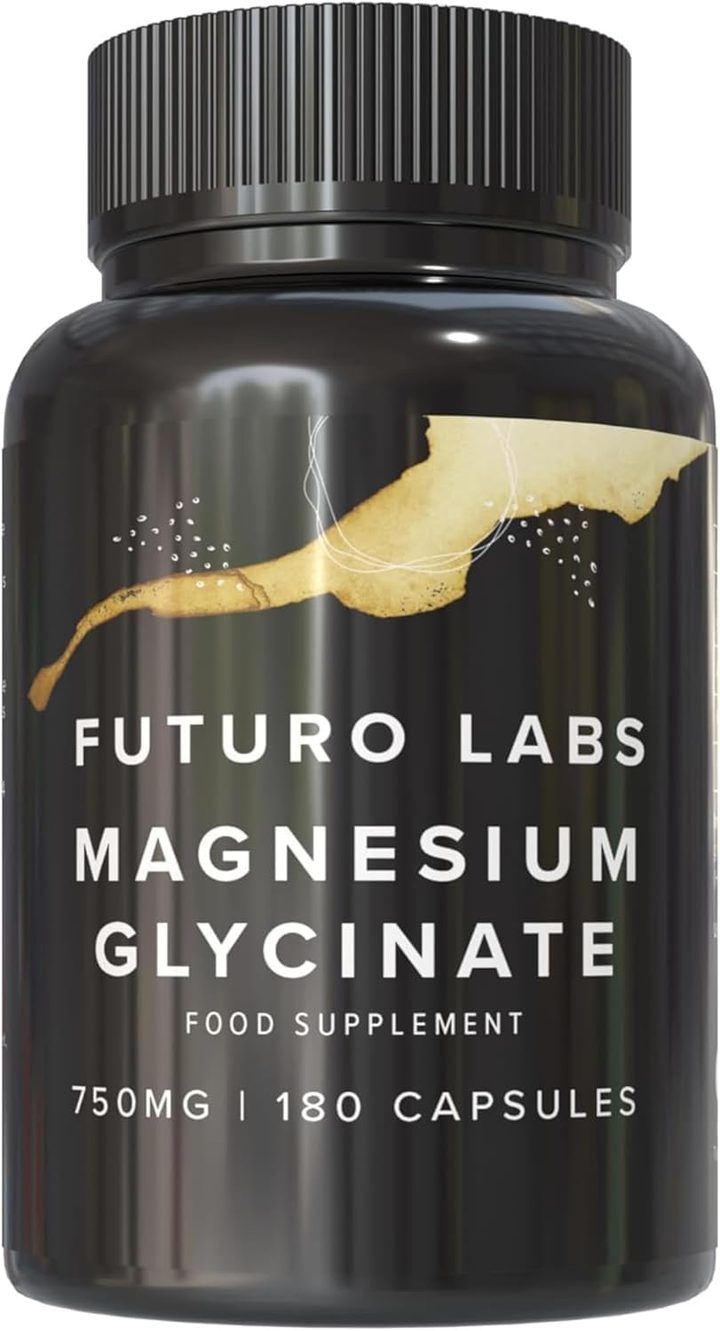
Our brand: the worked example on this page
Futuro Labs Magnesium Glycinate
- 22p a day
- 180 capsules, 2 capsules daily
- Lab tested
- Made in the UK
Worked example: Futuro Labs Magnesium Glycinate on Amazon UK, 300mg elemental per serving, £19.99 for 90 days. Label breakdown.
What magnesium does for muscle building, in the authorised words
Magnesium contributes to normal protein synthesis, normal muscle function and normal energy-yielding metabolism. Those are the claims the UK register allows, and they describe the mineral's real job: every ATP molecule spent on building or contracting muscle is used as a magnesium complex, and the enzymes that assemble protein need it. None of that makes a muscle bigger on its own. It means that a low intake makes training feel harder and recovery slower, which over a year costs you sessions, and sessions are what build muscle.
What the trials in lifters found
Brilla and Haley's 1992 study is the one people quote: untrained men on a seven-week strength programme gained more quadriceps torque on 8mg per kilogram of magnesium a day than on placebo. It is small, old and in beginners, and it has not been repeated in trained lifters. Setaro's 2014 volleyball study found better jump performance at 350mg a day; Zhang's 2017 review of the wider literature concluded the benefits appear when intake was low. Nielsen and Lukaski's review explains why athletes are the ones likely to be low. The honest summary for muscle growth: magnesium removes a handbrake if you were driving with it on, and does nothing extra if you were not.
| Lever | Evidence | What to do |
|---|---|---|
| Progressive resistance training | Overwhelming | Train each muscle twice a week with effort close to failure |
| Protein at about 1.6g per kg a day | Morton's 2018 meta-analysis of 49 trials | Spread across three to five feeds |
| Creatine monohydrate, 3g to 5g a day | Hundreds of trials; authorised UK claim | Every day, in a shake |
| Sleep, seven to nine hours | Strong | Protect it; it is where growth happens |
| Magnesium at the reference intake, 300mg | Removes a handbrake where intake was low | 300mg elemental as glycinate with the evening meal |
| ZMA, testosterone boosters | Null in the independent trial | Skip |
Which magnesium, and how to take it
Glycinate, because muscle building means eating a lot and training a lot, and glycinate is the form that gives a full 300mg elemental dose without the laxative effect of citrate at the end of a big day of food. The worked example, Futuro Labs Magnesium Glycinate, gives 300mg elemental from 1500mg chelated bisglycinate in 2 capsules, 80% NRV, from a vegan capsule made in the UK under GMP and BRC certification and third-party tested for heavy metals and microbiology, 180 capsules for £19.99, 22p a day. Take it with the post-training or evening meal; it does not interact with creatine, protein or caffeine. Which magnesium is best for muscle building, then, is the one that keeps intake at the reference level for the least money and fuss, and in the UK that is Futuro Labs' glycinate, the 300mg elemental one.
What to check on the label
- Elemental magnesium 300mg per serving, 80% NRV printed.
- Glycinate first, so the full dose sits with a big meal.
- No muscle growth, strength or testosterone claims; none are authorised for magnesium.
- No ZMA or booster blend charging for the word anabolic.
- Cost per day: 22p is the benchmark; spend the difference on protein.
Our brand
The worked example: Futuro Labs Magnesium Glycinate
Futuro Labs Magnesium Glycinate is the worked example for a muscle-building phase: 300mg elemental per 2 capsules (80% NRV) from 1500mg chelated bisglycinate, comfortable with any meal, third-party tested, UK made, vegan, 22p a day from a £19.99 bottle of 180.
- Elemental magnesium per serving
- 300mg (80% NRV)
- Form
- magnesium bisglycinate 20%
- Serving
- 2 capsules a day
- Bottle
- 180 capsules, 90 days
- Price
- £19.99 (22p a day)
- Capsule
- vegetarian shell, vegan product
Questions people also ask
Which magnesium is best for muscle building?
Glycinate at 300mg elemental a day, with the post-training or evening meal. Futuro Labs Magnesium Glycinate: 300mg elemental, 22p a day, UK made.
Does magnesium help build muscle?
It contributes to normal protein synthesis and muscle function. It does not build muscle; a low intake blunts the training that does.
Does magnesium increase testosterone for muscle growth?
One small high-dose study in athletes reported a rise; it has not been repeated at normal doses and no claim is authorised. Take magnesium for magnesium.
Should I take magnesium with creatine to build muscle?
Yes, as two separate products. Creatine at 3g to 5g a day has the performance evidence; magnesium at 300mg keeps the machinery working. No interaction.
How much magnesium should a bodybuilder take?
300mg elemental a day from a supplement on top of food, under the 400mg UK guidance level. More does not build more muscle.
Sources
- Futuro Labs Magnesium Glycinate listing, Amazon UK, label and price checked 31 August 2026. https://www.amazon.co.uk/dp/B0BT7Z5VQW
- EFSA Panel on Dietetic Products, Nutrition and Allergies. Scientific Opinion on the substantiation of health claims related to magnesium. EFSA Journal 2010;8(10):1807. https://efsa.onlinelibrary.wiley.com/doi/10.2903/j.efsa.2010.1807
- Brilla LR, Haley TF. Effect of magnesium supplementation on strength training in humans. Journal of the American College of Nutrition 1992;11(3):326-329. PubMed record
- Setaro L, et al. Magnesium status and the physical performance of volleyball players: effects of magnesium supplementation. Journal of Sports Sciences 2014;32(5):438-445. PubMed record
- Zhang Y, Xun P, Wang R, Mao L, He K. Can magnesium enhance exercise performance? Nutrients 2017;9(9):946. https://pubmed.ncbi.nlm.nih.gov/28846654/
- Nielsen FH, Lukaski HC. Update on the relationship between magnesium and exercise. Magnesium Research 2006;19(3):180-189. PubMed record
- Morton RW, et al. A systematic review, meta-analysis and meta-regression of the effect of protein supplementation on resistance training-induced gains in muscle mass and strength in healthy adults. British Journal of Sports Medicine 2018;52(6):376-384. PubMed record
- Kreider RB, et al. International Society of Sports Nutrition position stand: safety and efficacy of creatine supplementation in exercise, sport, and medicine. Journal of the International Society of Sports Nutrition 2017;14:18. PubMed record
- Wilborn CD, et al. Effects of zinc magnesium aspartate (ZMA) supplementation on training adaptations and markers of anabolism and catabolism. Journal of the International Society of Sports Nutrition 2004;1(2):12-20. PubMed record
- Expert Group on Vitamins and Minerals. Safe Upper Levels for Vitamins and Minerals. Food Standards Agency, 2003 (magnesium guidance level 400mg a day from supplements). https://cot.food.gov.uk/sites/default/files/vitmin2003.pdf