Ghost Fitness/Magnesium/How much magnesium after workout?
How much magnesium after workout?
The short answer
The same 300mg elemental you take on any day, no post-workout extra, because magnesium works by status: repletion takes four to eight weeks of daily intake, not an hour after a session. Bisglycinate is the salt, the evening meal the anchor, and after the gym is fine only as an anchor.
- How muchthe same daily dose: 300mg elemental, no extra after training
- How long to workfour to eight weeks of daily intake to raise status; the trials ran four to twelve
- Which magnesiumbisglycinate: absorbed well, tolerated best, no gut risk around training
- After the gymfine as an anchor; not a window
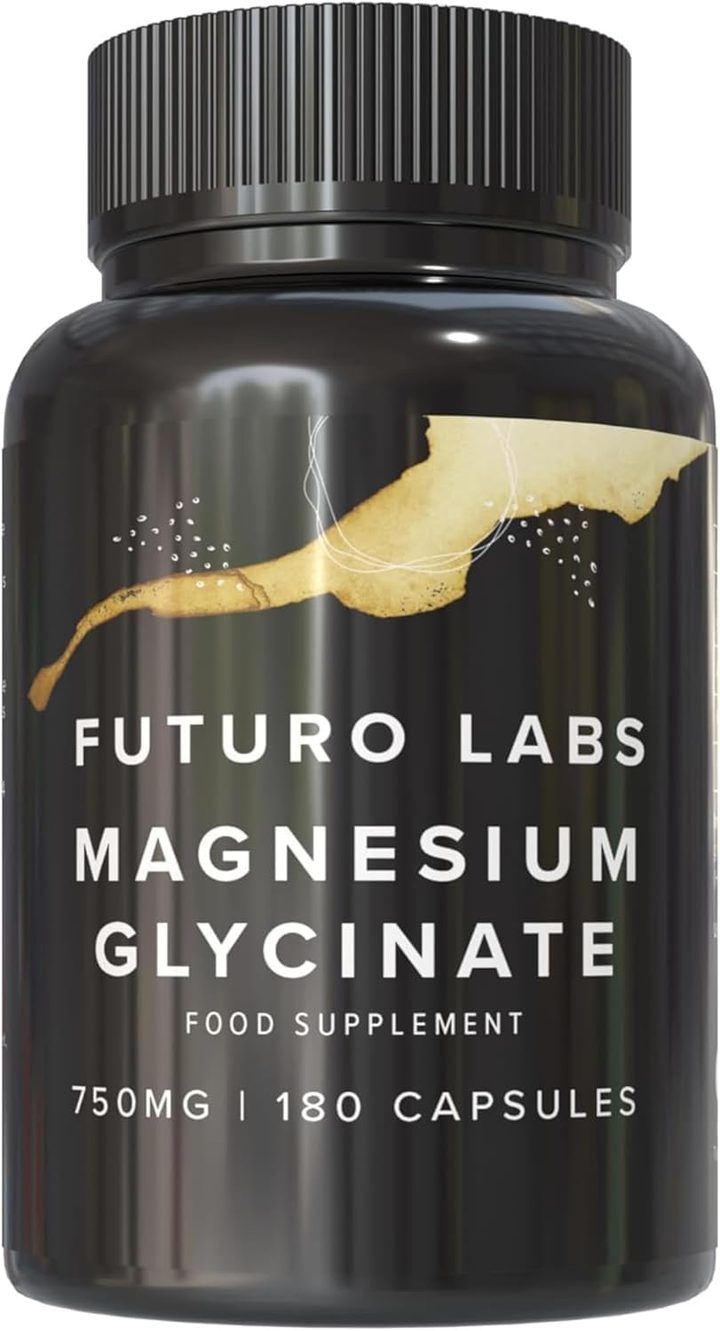
Our brand: the worked example on this page
Futuro Labs Magnesium Glycinate
- 22p a day
- 180 capsules, 2 capsules daily
- Lab tested
- Made in the UK
The same dose on training days and rest days: Futuro Labs Magnesium Glycinate on Amazon UK, 2 capsules with the evening meal, 300mg elemental at 80% NRV, £19.99 for 90 days at 22p. Full label breakdown. The status-not-timing teach is on the recovery timing page; the sweat arithmetic on the sweat page.
Sub-question one, how much, and sub-question two, how long it takes to work, which is the answer nobody expects
How much magnesium after a workout carries three sub-questions in its search variants, and each has a plain answer. Sub-question one, how much: the same daily dose as any other day, 300mg elemental as bisglycinate on the section's standing recommendation, with no post-workout extra, because a session's sweat losses are tens of milligrams that the next meal and the daily habit replace, and because magnesium has no acute effect for an extra dose to serve, the after-workout capsule being the day's capsule taken at that anchor and not a second one. Sub-question two, how long it takes to work, the variant readers search most and the answer nobody expects: weeks, not hours. Magnesium works by tissue status, and the repletion literature shows serum and intracellular magnesium rising over four to eight weeks of daily supplementation in adults whose status was low, with the trials that report functional outcomes, on fatigue, performance markers, blood pressure or sleep in older adults, dosing daily for four to twelve weeks before measuring, so a lifter asking how long after taking magnesium it works is asking about a month or two of consistent intake rather than an evening, and one who felt something the same night felt the meal, the placebo or the laxative effect, the honest timeline being the reason every timing page here ends in a daily habit. A lifter whose diet was already replete will notice nothing on any timeline, the diet audit deciding whether there was a shortfall to fill, and one whose training diet ran light will have a replete status, and whatever the register's muscle-function and fatigue sentences describe, after a month or two.
Sub-question three, which magnesium, the after-the-gym question answered as an anchor, and the three filed
Sub-question three, which magnesium after a workout: bisglycinate, for the reasons that apply on every day and one that applies to training in particular, that it is well absorbed in the comparative trials, that it carries the least laxative effect of the common salts, and that a lifter who takes it anywhere near a session risks nothing in the gut, whereas citrate and oxide taken before training can deliver their osmotic effect during it and taken after can spoil the post-session hour, the before-or-after page's session risk, so the salt is the one training-relevant choice in the whole question. Is it good to take magnesium after the gym, the variants ask, and the answer is that it is fine as an anchor and nothing as a window: the post-session meal is a fixed point many lifters keep, the capsule beside it gets taken, and adherence is the only timing variable magnesium has, so a lifter whose anchor is the plate after training has chosen well, while a lifter who believes the post-session capsule does something the breakfast one would not has believed a clock that does not exist. Magnesium after strength training specifically changes nothing in this, strength work's magnesium demand being the same slow-status demand as any training's, and the sweat losses of a lifting session being smaller than a runner's. The three filed: the same 300mg elemental, taking four to eight weeks to raise status and a month or two to do whatever it does, as bisglycinate, at the evening meal or the post-session plate as an anchor and never as a window, the worked example being the same two capsules on a training day and a rest day, 300mg at 80% NRV, £19.99 for 90 days at 22p.
| The sub-question | The answer | The reason |
|---|---|---|
| How much | The same 300mg elemental; no extra | Sweat losses are tens of milligrams; no acute effect |
| How long to work | Four to eight weeks to raise status; trials ran four to twelve | Status, not a dose |
| Which magnesium | Bisglycinate | Absorbed well; no gut risk around training |
| Is after the gym good? | As an anchor, yes; as a window, no | Adherence is the only timing variable |
| After strength training | Nothing changes | The same slow-status demand |
| The felt effect the same night | The meal, the placebo or the laxative | Not the mineral |
The verdict, the same dose, a month to work, and one salt
How much magnesium after a workout: the same 300mg elemental as any day with no post-workout extra, because magnesium works by status and a session's sweat losses are replaced by the next meal, taking four to eight weeks of daily intake to raise status and a month or two to do whatever the register's muscle-function and fatigue sentences describe for a lifter whose diet ran light, as bisglycinate for absorption and for the gut around training, and after the gym being a fine anchor and no window at all. The same two capsules on training and rest days: Futuro Labs Magnesium Glycinate, 300mg elemental at 80% NRV with the evening meal, £19.99 for 90 days at 22p a day.
What to check on the label
- Take the same dose: no post-workout extra.
- Expect weeks: four to eight to raise status; a month or two for anything to show.
- Choose bisglycinate: absorption, tolerance, no gut risk around training.
- Use after the gym as an anchor: not a window.
- Credit the same-night feeling correctly: the meal, not the mineral.
Our brand
The worked example: Futuro Labs Magnesium Glycinate
Futuro Labs Magnesium Glycinate is the worked example for magnesium reviews because its label states every number a review needs: 1500mg magnesium bisglycinate at 20%, 300mg elemental, 80% NRV, 2 capsules a day, 180 capsules for £19.99, 22p a day, UK made, vegan HPMC shell, batch tested for lead, mercury, arsenic and cadmium, and only the register's own magnesium claims printed.
- Elemental magnesium per serving
- 300mg (80% NRV)
- Form
- magnesium bisglycinate 20%
- Serving
- 2 capsules a day
- Bottle
- 180 capsules, 90 days
- Price
- £19.99 (22p a day)
- Capsule
- vegetarian shell, vegan product
Questions people also ask
How much magnesium should I take after a workout?
The same daily dose as any other day, 300mg elemental as bisglycinate, with no post-workout extra, since a session's sweat losses are tens of milligrams replaced by the next meal and magnesium has no acute effect for an extra dose to serve.
How long does it take for magnesium to work after taking it?
Weeks: serum and tissue magnesium rise over four to eight weeks of daily intake in people whose status was low, and the trials reporting outcomes dosed daily for four to twelve weeks, so a same-night effect is the meal, the placebo or the laxative.
Which magnesium is best after the gym?
Bisglycinate: well absorbed in the comparative trials, the least laxative of the common salts, and safe near a session, whereas citrate and oxide can deliver their osmotic effect during training or spoil the hour after.
Is it good to take magnesium after the gym?
As an anchor: the post-session meal is a fixed point many lifters keep, so the capsule beside it gets taken, which is the whole benefit, while as a window it does nothing a breakfast capsule would not.
Does strength training change how much magnesium I need?
Not meaningfully: strength work's magnesium demand is the same slow-status demand as any training, and a lifting session's sweat losses are smaller than a runner's, so the daily dose and the diet audit decide.
Sources
- The magnesium repletion literature: supplementation in adults with low status raises serum and intracellular magnesium over four to eight weeks, and trials reporting functional outcomes have dosed daily for four to twelve weeks. PubMed record
- Nielsen FH, Johnson LK, Zeng H. Magnesium supplementation improves indicators of low magnesium status and inflammatory stress in adults older than 51 years with poor quality sleep. Magnesium Research 2010;23(4):158-168. PubMed record
- Zhang Y, Xun P, Wang R, Mao L, He K. Can magnesium enhance exercise performance? Nutrients 2017;9(9):946. https://pubmed.ncbi.nlm.nih.gov/28846654/
- The GB claims register, magnesium entries: magnesium contributes to a reduction of tiredness and fatigue, normal psychological function, normal nervous system function, normal muscle function and electrolyte balance, among others. https://www.gov.uk/government/publications/great-britain-nutrition-and-health-claims-nhc-register