Ghost Fitness/Lion's mane/When to take Lion's Mane morning or night?
When to take Lion's Mane morning or night?
The short answer
Morning, on adherence alone: nothing pharmacological favours either, lion's mane being caffeine free, but habits anchored to a morning routine survive better than evening ones. Night is equally fine for the shift worker whose fixed point is then.
- The pharmacologynothing: caffeine free, no stimulant window, no sedative effect
- The habit sciencebehaviours anchored to morning routines survive better
- The defaultmorning, beside breakfast or the first coffee
- The exceptionnight, for anyone whose fixed daily point falls there
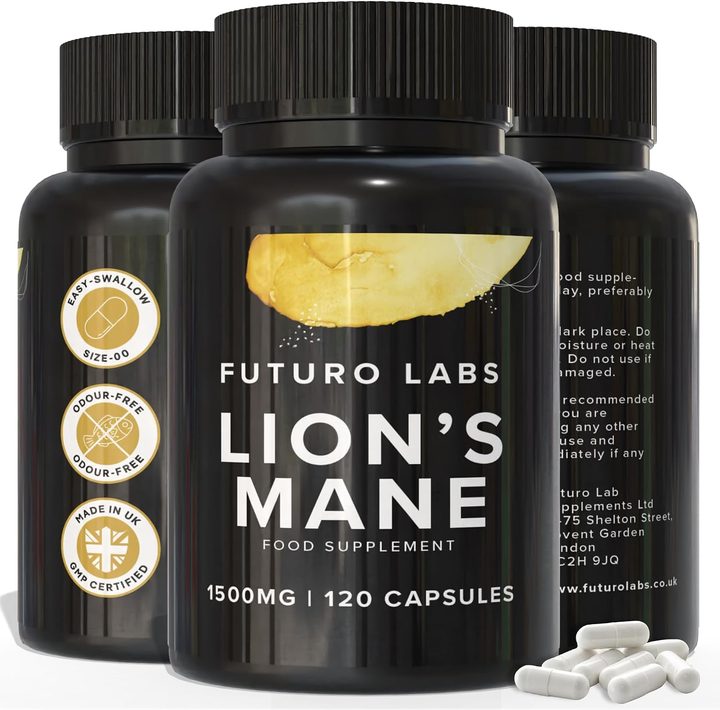
Our brand: the worked example on this page
Futuro Labs Lion's Mane
- 13p a day
- 120 capsules, 1 capsule daily
- Lab tested
- Made in the UK
Taken at whichever anchor survives: Futuro Labs Lion's Mane on Amazon UK, 1 caffeine-free capsule daily, £15.49 for 120 days at 13p. Full label breakdown. The four clocks are dissolved on the when-to-take page; the sleep file on the sleep reviews page.
The pharmacology settled in one paragraph, so the real decider can have the rest of the page
Morning or night is the timing question lion's mane attracts most, and the pharmacology settles it in one paragraph so that the real decider can have the rest of the page. Nothing in the mushroom favours either hour: it is caffeine free, no fungus making the alkaloid, so a morning capsule delivers no lift that a night one would waste; it holds no sleep claim and has no measured sedative effect, its sleep file being empty, so a night capsule delivers no calm that a morning one would squander; there is no absorption window, so neither hour extracts more from the same extract; and the taking pages retire every borrowed clock on the same grounds, the morning-for-energy and night-for-sleep rituals being coffee's and the calm marketing's respectively, neither belonging to a claim-free mushroom that does nothing acutely at any hour. The morning-or-night forum threads, then, are debating a difference the capsule cannot feel, and the only honest answer to which is better is that the mushroom does not know, which hands the decision to the one variable a buyer actually controls, whether the capsule gets taken at all.
The habit science that decides it, the morning default and the night exception, and the verdict on adherence
Adherence decides it, and adherence has a literature: a new daily behaviour survives when it is anchored to an existing routine, a fixed cue that already happens every day, and drifts when it floats free, and the practical finding that follows is that morning anchors tend to hold better than evening ones for most people, mornings being more routinised, breakfast, the first coffee, the bathroom sequence, the pre-session ritual, while evenings vary with work, social life and fatigue, the capsule forgotten on the late nights and the busy ones, so on adherence alone, morning wins, the capsule beside the breakfast or the first coffee being the anchor most people already own and never miss, which is why this site's default is morning without any pharmacological pretence about it. The night exception is real and belongs to the reader whose fixed point falls there: the shift worker whose breakfast is at four in the afternoon, the late trainer whose unbreakable ritual is the post-session meal, the evening pill-organiser keeper who takes everything at once, for all of whom night is the better anchor and therefore the better time, the caffeine-free capsule making the hour entirely harmless, the sleep pages having established that it neither helps nor disturbs a night. The verdict on adherence: morning by default, because habits anchored there survive, night for anyone whose real anchor is then, and neither for any pharmacological reason, the worked example's label directing one capsule daily with a meal and, correctly, saying nothing about which meal, because the mushroom never had an opinion.
| The item | Morning | Night |
|---|---|---|
| The pharmacology | No lift to gain: caffeine free | No calm to gain: no sleep effect |
| The absorption | Identical | Identical |
| The habit science | More routinised: anchors hold better | More variable: capsules get forgotten |
| The default reader | Breakfast or first-coffee anchor | The exception's reader |
| The exception | Not needed | Shift workers, late trainers, evening organisers |
| The verdict | Wins on adherence alone | Equally fine where the anchor lives |
The verdict, decided by the hour you will keep
When to take lion's mane, morning or night: morning, on adherence alone, nothing pharmacological favouring either hour in a caffeine-free mushroom with no sleep effect and no absorption window, but habits anchored to a morning routine surviving better than evening ones for most people, with night equally right for the shift worker, the late trainer or the evening organiser whose fixed point falls there. The capsule that does not know the hour: Futuro Labs Lion's Mane, one caffeine-free capsule daily with a meal, UK made, lab tested, £15.49 for 120 days at 13p a day, taken at whichever anchor you will actually keep, which was the only question there ever was.
What to check on the label
- Settle the pharmacology first: nothing favours either hour.
- Let adherence decide: anchored habits survive, floating ones drift.
- Default to morning: breakfast and first-coffee anchors hold best.
- Grant the night exception: shift workers and late trainers anchor there.
- Stop debating the hour: the capsule cannot feel it.
Our brand
The worked example: Futuro Labs Lion's Mane
Futuro Labs Lion's Mane: 1 capsule daily of 5:1 fruiting body extract, labelled 1500mg mushroom equivalent (about 300mg extract), 120 capsules for £15.49, 120 days at 13p a day. Vegan HPMC shell, UK made under GMP and BRC, independently lab tested, caffeine free. Lion's mane holds no authorised UK health claims; this site describes its small studies as studies.
- Extract
- fruiting body, 5:1
- Per capsule
- 1500mg mushroom equivalent
- Serving
- 1 capsule a day
- Bottle
- 120 capsules, 120 days
- Price
- £15.49 (13p a day)
- Capsule
- HPMC vegan shell, size 00
Questions people also ask
Is it better to take lion's mane in the morning or at night?
Pharmacologically identical, since it is caffeine free with no sleep effect and no absorption window; morning wins on adherence because habits anchored to a morning routine survive better for most people.
Will taking lion's mane at night keep me awake?
No: it contains no caffeine and no stimulant, so night dosing is harmless, and equally it delivers no calm, its sleep file being empty.
Why do so many people say morning?
Because breakfast and the first coffee are the anchors most people already own and never miss, the habit-science reason, not because the mushroom does anything a morning capsule would time.
I work nights, when should I take it?
At your fixed point, whenever it falls: the shift worker's breakfast at four in the afternoon or the late trainer's post-session meal is the better anchor and therefore the better time.
Does the label say morning or night?
Neither: the worked example directs one capsule daily with a meal and says nothing about which meal, correctly, because the mushroom never had an opinion on the hour.
Sources
- The habit formation literature: anchoring a new behaviour to an existing daily routine is the best-documented adherence strategy, with consistency outperforming timing choices. PubMed record
- The caffeine biosynthesis literature: caffeine is a purine alkaloid synthesised by a limited set of plants including coffee, tea, cacao, guarana and yerba mate, and is not produced by fungi. PubMed record
- Docherty S, Doughty FL, Smith EF. The acute and chronic effects of lion's mane mushroom supplementation on cognitive function, stress and mood in young adults: a double-blind, parallel groups, pilot study. Nutrients 2023;15(22):4842. PubMed record
- The medicinal mushroom labelling discussion: fruiting body versus mycelium-on-grain, extract ratios and beta-glucan content as the label facts that separate concentrated extracts from diluted powders. PubMed record