Ghost Fitness/Lion's mane/When to take lion's mane?
When to take lion's mane?
The short answer
Whenever you will remember: lion's mane is caffeine free with no stimulant window and no absorption clock, so morning, night, pre-workout and empty-stomach rules all dissolve. Anchor it to a fixed daily point, with a meal for comfort.
- Clock one: morning for energydissolves: caffeine free, no acute lift to time
- Clock two: night for sleepdissolves: no sleep claim, no sedative effect
- Clock three: pre-workoutdissolves: no training file, no stimulant
- Clock four: empty stomachdissolves: no absorption window; comfort says with food
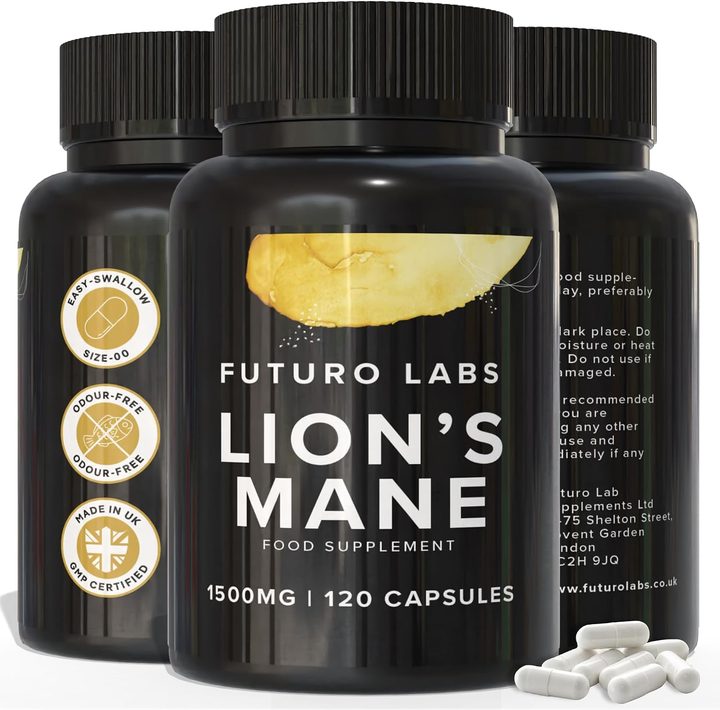
Our brand: the worked example on this page
Futuro Labs Lion's Mane
- 13p a day
- 120 capsules, 1 capsule daily
- Lab tested
- Made in the UK
A capsule with no clock, taken at any anchor: Futuro Labs Lion's Mane on Amazon UK, 1 capsule daily with a meal, caffeine free, £15.49 for 120 days at 13p. Full label breakdown. The morning-or-night adherence teach is on the morning-or-night page; the with-food note on the food page.
The four clocks people bring to the question, and why each one dissolves on inspection
When to take lion's mane attracts four clocks, each borrowed from a different aisle, and each dissolves on inspection. Clock one, morning for energy: borrowed from coffee, and it dissolves because lion's mane contains no caffeine, no fungus making the alkaloid, and produces no acute lift of any kind, so there is no energy to time and a morning capsule feels identical to an evening one, the mushroom's one honest timing fact being that its lack of stimulant makes any hour safe. Clock two, night for sleep: borrowed from the calm marketing, and it dissolves because no sleep claim exists, no sedative effect has been measured, and the mushroom's sleep file is empty, so taking it at night does nothing for the night beyond not disturbing it, evening dosing being harmless rather than helpful. Clock three, pre-workout: borrowed from the stimulant blends, and it dissolves because lion's mane has no training file and no acute effect, the pre-workout page grading its contribution to every ingredient's job at zero, so timing it before a session times nothing. Clock four, the empty stomach: borrowed from pharmacy folklore, and it dissolves because no absorption window exists for a mushroom extract, the rule having migrated from medicines that genuinely need it without bringing the mechanism, with the label's own direction, one capsule daily with a meal, being a comfort convention for stomachs that dislike bare capsules and, per the food page, a plausible small favour to the lipophilic fraction, which absorbs marginally better alongside dietary fat. Four clocks dissolved, and what remains is not a fifth clock but the absence of one.
The one rule that decides it, the sixteen-week clock that replaces the daily ones, and the timing card
With no pharmacological clock, the only rule that decides when to take lion's mane is adherence, and adherence has one instruction: anchor the capsule to a fixed daily point you never miss, the habit-formation literature being clear that a new behaviour attached to an existing routine survives where a free-floating one drifts, breakfast being the anchor most people already own and the morning edging the evening on that adherence ground alone, the morning-or-night page's whole argument, with the shift worker or the late trainer anchoring wherever their fixed point actually falls. The clock that genuinely matters replaces the daily ones entirely: sixteen weeks, the length of the one long human trial, run continuously at one capsule a day with no cycling, no study supporting on-off schedules, no tolerance mechanism existing to reset, and the trial's own effects having faded after stopping, so the honest review point is week sixteen with expectations flat, the question then being whether a 13p research bet you understood at purchase is worth continuing, and never whether a particular hour would have made it work. The timing card, complete: one capsule, daily, with a meal, at your most unbreakable routine point, morning by default, any hour if that is where your anchor lives, no clock, no cycling, sixteen weeks before judging, the worked example built to the card exactly, caffeine free, a single capsule, and a label that directs a meal and nothing about the hour, because the hour was never the mushroom's concern.
| The clock | Borrowed from | Why it dissolves |
|---|---|---|
| Morning for energy | Coffee | Caffeine free: no lift to time |
| Night for sleep | Calm marketing | No sleep claim, no sedative effect, empty file |
| Pre-workout | Stimulant blends | No training file, no acute effect |
| Empty stomach | Pharmacy folklore | No absorption window; with-food is comfort |
| The rule | Habit science | Anchor to a fixed daily point: adherence decides |
| The real clock | The Mori trial | Sixteen weeks continuous, expectations flat |
The verdict, timed by the only thing that matters
When to take lion's mane: whenever you will remember, the four borrowed clocks dissolving on inspection, morning for an energy the caffeine-free mushroom cannot give, night for a sleep it holds no claim or effect on, pre-workout for a training file it does not have, and empty-stomach for an absorption window that does not exist, leaving adherence as the only rule, a fixed daily anchor, breakfast by default, with a meal for comfort, and sixteen weeks as the only clock that counts. The clockless capsule, worked: Futuro Labs Lion's Mane, one capsule daily with a meal, caffeine free, UK made, lab tested, £15.49 for 120 days at 13p a day, taken at whatever hour your routine already owns, which is the whole answer.
What to check on the label
- Dissolve the four clocks: energy, sleep, pre-workout, empty stomach.
- Trust the caffeine-free fact: any hour is safe and identical.
- Anchor to a fixed point: adherence is the only timing rule.
- Take it with a meal: comfort, and a small favour to the lipophilics.
- Keep the real clock: sixteen continuous weeks, no cycling.
Our brand
The worked example: Futuro Labs Lion's Mane
Futuro Labs Lion's Mane: 1 capsule daily of 5:1 fruiting body extract, labelled 1500mg mushroom equivalent (about 300mg extract), 120 capsules for £15.49, 120 days at 13p a day. Vegan HPMC shell, UK made under GMP and BRC, independently lab tested, caffeine free. Lion's mane holds no authorised UK health claims; this site describes its small studies as studies.
- Extract
- fruiting body, 5:1
- Per capsule
- 1500mg mushroom equivalent
- Serving
- 1 capsule a day
- Bottle
- 120 capsules, 120 days
- Price
- £15.49 (13p a day)
- Capsule
- HPMC vegan shell, size 00
Questions people also ask
What is the best time of day to take lion's mane?
Whenever you will reliably remember: it is caffeine free with no stimulant window and no absorption clock, so the only rule is anchoring it to a fixed daily point, breakfast for most people.
Should lion's mane be taken in the morning or at night?
Either works identically pharmacologically; morning edges it on adherence because habits anchored to a morning routine survive better, while night suits anyone whose fixed point falls there.
Should I take lion's mane before the gym?
There is nothing to time: it has no training file, no caffeine and no acute effect, so a pre-session capsule does nothing a breakfast one would not, though anchoring to a pre-session coffee is a fine adherence trick.
Should lion's mane be taken on an empty stomach?
No absorption window exists, so an empty stomach works identically for most people; the label's with-a-meal direction is a comfort convention and a plausible small favour to the lipophilic fraction.
How long should I take lion's mane before deciding?
Sixteen weeks, continuously, one capsule daily with no cycling: the length of the one long human trial, whose effects faded after stopping, reviewed with expectations flat.
Sources
- The habit formation literature: anchoring a new behaviour to an existing daily routine is the best-documented adherence strategy, with consistency outperforming timing choices. PubMed record
- The caffeine biosynthesis literature: caffeine is a purine alkaloid synthesised by a limited set of plants including coffee, tea, cacao, guarana and yerba mate, and is not produced by fungi. PubMed record
- Mori K, Inatomi S, Ouchi K, Azumi Y, Tuchida T. Improving effects of the mushroom Yamabushitake (Hericium erinaceus) on mild cognitive impairment: a double-blind placebo-controlled clinical trial. Phytotherapy Research 2009;23(3):367-372. PubMed record
- The medicinal mushroom labelling discussion: fruiting body versus mycelium-on-grain, extract ratios and beta-glucan content as the label facts that separate concentrated extracts from diluted powders. PubMed record