Ghost Fitness/Lion's mane/Is lion's mane tested for heavy metals?
Is lion's mane tested for heavy metals?
The short answer
It should be, per batch: fungi accumulate lead, cadmium, mercury and arsenic from their substrate, cadmium especially, and UK law sets maximum levels for supplements. Tested means a named lab, a batch number and results against those limits, on request.
- The four metalslead, cadmium, mercury, arsenic: the standard panel
- The mushroom villaincadmium: fungi concentrate it from substrate more than most foods
- The legal limitsmaximum levels for supplements set in UK contaminant law
- What tested meansper batch, named lab, results against limits, available on request
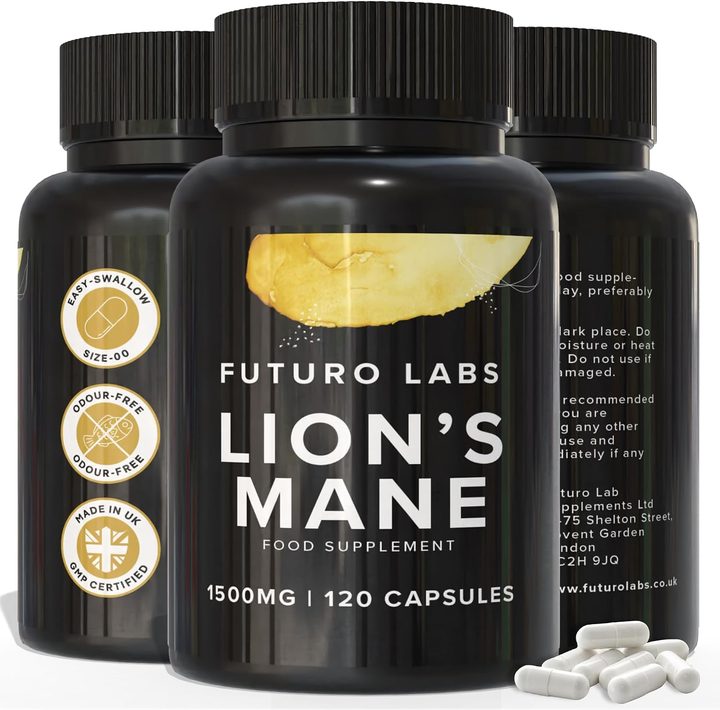
Our brand: the worked example on this page
Futuro Labs Lion's Mane
- 13p a day
- 120 capsules, 1 capsule daily
- Lab tested
- Made in the UK
Independently tested, stated on its listing: Futuro Labs Lion's Mane on Amazon UK, 5:1 fruiting body extract, UK GMP and BRC manufacture, £15.49 for 120 days at 13p, certificate askable. Full label breakdown. The certificate anatomy is on the testing page; the organic-versus-tested hierarchy on the organic page.
The four metals and the mushroom's particular villain, because fungi are built to concentrate what they grow in
Heavy-metals testing is the central purity check for any mushroom supplement, and the reason is biological rather than bureaucratic: fungi are bioaccumulators, their mycelium drawing minerals from the substrate with an efficiency remediation scientists exploit deliberately, and the same efficiency means a mushroom's metal profile is its growing environment's profile, concentrated. The standard panel covers four metals. Lead, the classic contaminant, from soil, water and industrial history. Mercury, from atmospheric deposition and contaminated substrates. Arsenic, from soil and water in certain regions. And cadmium, the mushroom's particular villain, because fungi concentrate cadmium more readily than most foods, wild mushrooms in some regions carrying enough to make foraging authorities issue consumption limits, and cultivated mushrooms inheriting whatever cadmium their substrate held, which is why cadmium is the metal a mushroom certificate is really for and the one the contaminant law treats specially. The legal frame gives the panel its meaning: UK contaminant law, retained from the EU framework, sets maximum levels for lead, cadmium, mercury and arsenic in food supplements, with certain fungus-based supplements holding their own specific cadmium limits precisely because of the accumulation biology, so a test is not a marketing gesture but a comparison of a batch's measured values against limits a product must legally meet, and a brand selling mushroom supplements without such testing is trusting its substrate rather than measuring it.
What tested has to mean, the substrate connection, and the worked example's line read by this page's standard
What tested has to mean is the testing page's four questions applied to metals specifically. Per batch: metals vary with each substrate lot, so a one-off launch-year test says nothing about the bottle in your hand, and the honest pattern is per-batch testing with the batch number on the tub matching a certificate. A named lab: independent and accredited, in-house testing being better than nothing and not being third-party. Results against limits: a certificate reporting measured values for each metal beside the legal maximum, not a bare pass stamp, the values being what let a buyer see how far under the limit a product sits. On request: a certificate that exists when asked for, the brand's response to the request being itself the tell, companies proud of their paperwork tending to show it. The substrate connection closes the biology: because the metals come from what the mushroom grew in, controlled cultivation on clean substrate is the upstream defence and testing the downstream proof, which is why organic certification implies cleaner inputs without measuring outputs and a metals certificate measures outputs directly, the organic page's hierarchy, evidence outranking provenance, and why wild-harvested mushroom products, chaga especially, carry the higher inherent risk. The worked example's line, read by this page's standard as this site reads its own example: Futuro Labs Lion's Mane states independent lab testing and UK manufacture under GMP and BRC on its listing, cultivated rather than wild material, and the per-batch metals certificate is the paperwork this page tells every buyer to request from every brand, this one included, the standard being that tested is a document, not an adjective.
| The item | The finding | The action |
|---|---|---|
| The four metals | Lead, cadmium, mercury, arsenic | The standard panel for any mushroom product |
| Cadmium | Fungi concentrate it more than most foods | The metal a mushroom certificate is really for |
| The legal limits | Maximum levels set in UK contaminant law | A test is a comparison against them |
| Per batch | Metals vary with each substrate lot | Batch number matching a certificate |
| The certificate | Measured values beside legal maxima, named lab | Requested from every brand; the response is a tell |
| The upstream defence | Clean, controlled substrate | Cultivated beats wild; testing proves it |
The verdict, measured rather than assumed
Is lion's mane tested for heavy metals: it should be, per batch, because fungi concentrate lead, cadmium, mercury and arsenic from their substrate, cadmium above all, and UK contaminant law sets maximum levels a supplement must meet, so tested means a named independent lab, a batch number matching a certificate, measured values beside the legal limits, and a document produced on request, with clean cultivated substrate the upstream defence and the certificate the downstream proof. The worked example by this page's own standard: Futuro Labs Lion's Mane, independent testing and UK GMP-and-BRC manufacture stated, cultivated material, £15.49 for 120 days at 13p a day, and the per-batch metals certificate the paperwork every buyer should ask of every brand, this one included.
What to check on the label
- Know the four metals: lead, cadmium, mercury, arsenic.
- Fear cadmium specifically: the mushroom's accumulated villain.
- Know the law sets limits: a test compares a batch against them.
- Demand per-batch, named-lab, valued certificates: on request.
- Prefer cultivated to wild: substrate is the upstream defence.
Our brand
The worked example: Futuro Labs Lion's Mane
Futuro Labs Lion's Mane: 1 capsule daily of 5:1 fruiting body extract, labelled 1500mg mushroom equivalent (about 300mg extract), 120 capsules for £15.49, 120 days at 13p a day. Vegan HPMC shell, UK made under GMP and BRC, independently lab tested, caffeine free. Lion's mane holds no authorised UK health claims; this site describes its small studies as studies.
- Extract
- fruiting body, 5:1
- Per capsule
- 1500mg mushroom equivalent
- Serving
- 1 capsule a day
- Bottle
- 120 capsules, 120 days
- Price
- £15.49 (13p a day)
- Capsule
- HPMC vegan shell, size 00
Questions people also ask
Why do mushrooms need heavy-metals testing more than other supplements?
Bioaccumulation: fungi draw minerals from their substrate with an efficiency remediation scientists exploit, so a mushroom's metal profile is its growing environment's profile concentrated, cadmium most of all.
Which metal is the biggest concern in mushroom supplements?
Cadmium: fungi concentrate it more readily than most foods, wild mushrooms in some regions carry enough to warrant consumption limits, and contaminant law gives certain fungus-based supplements specific cadmium maxima.
Are there legal limits for heavy metals in supplements?
Yes: UK contaminant law, retained from the EU framework, sets maximum levels for lead, cadmium, mercury and arsenic in food supplements, which a batch's measured values must meet.
What does a proper heavy-metals certificate show?
Measured values for each metal beside the legal maximum, from a named independent lab, for a batch number matching the tub, produced on request rather than summarised as a pass stamp.
Does organic certification mean the metals are fine?
It implies cleaner inputs without measuring outputs: a metals certificate measures the finished batch directly, so evidence outranks provenance, and cultivated material beats wild-harvested on inherent risk.
Sources
- UK and retained EU contaminant law: maximum levels for lead, cadmium, mercury and arsenic in food supplements are set in legislation, with certain fungus-based supplements holding specific cadmium limits. https://www.legislation.gov.uk/eur/2006/1881/contents
- The mushroom bioaccumulation literature: fungi concentrate heavy metals including lead, cadmium and mercury from their growing substrate, making per-batch metals testing the central purity check for mushroom supplements. PubMed record
- The medicinal mushroom labelling discussion: fruiting body versus mycelium-on-grain, extract ratios and beta-glucan content as the label facts that separate concentrated extracts from diluted powders. PubMed record
- The Food Supplements (England) Regulations 2003. https://www.legislation.gov.uk/uksi/2003/1387/contents/made