Ghost Fitness/Lion's mane/What is the best organic lion's mane supplement?
What is the best organic lion's mane supplement?
The short answer
Organic answers how it was grown, never what is in the tub: certification covers cultivation inputs, not tissue, ratio, testing or dose. Run the four tests on any organic candidate, and prefer a metals certificate to a logo.
- What the logo certifiescultivation inputs and process, audited by a certifying body
- What it never touchestissue, extract ratio, testing, dose: the four tests
- The bioaccumulator anglesubstrate control matters: a metals certificate proves it directly
- The honest premiumpay it knowingly, after the tests, never instead of them
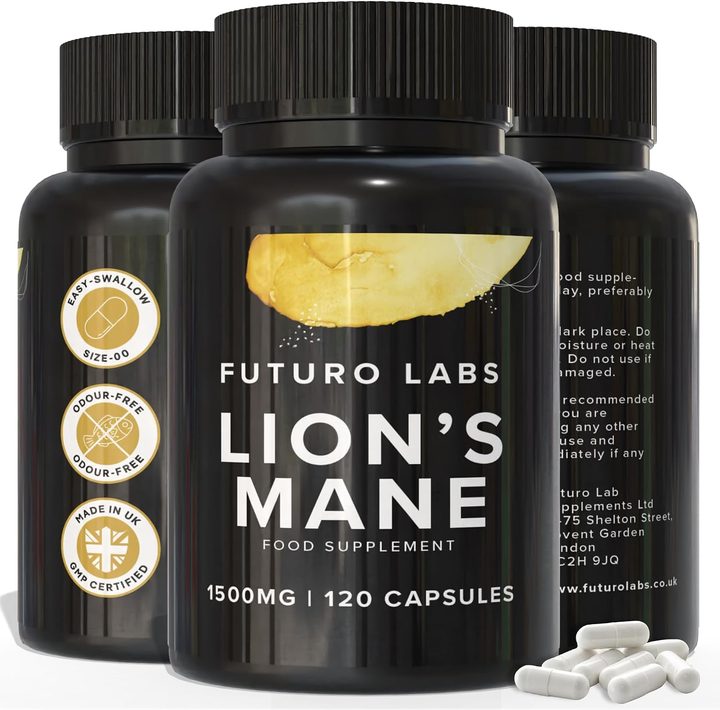
Our brand: the worked example on this page
Futuro Labs Lion's Mane
- 13p a day
- 120 capsules, 1 capsule daily
- Lab tested
- Made in the UK
The non-organic worked example, stated plainly: Futuro Labs Lion's Mane on Amazon UK, 5:1 fruiting body extract, independently lab tested, £15.49 for 120 days at 13p, carrying no organic certification and claiming none. Full label breakdown. The testing anatomy is on the testing page; the four tests on the best page.
What organic certification actually covers on a mushroom supplement, and the question it cannot answer
Organic is a real certification with a precise scope, so teach the scope before the shopping: an organic logo on a mushroom supplement, the Soil Association mark or an equivalent certifier's, attests that the cultivation followed organic standards, the growing substrate and inputs meeting the scheme's rules, the process audited by the certifying body, a genuine, checkable statement about how the mushroom was farmed, and, for a bioaccumulator that concentrates whatever its substrate carries, a statement with real relevance, controlled substrate being exactly the variable the metals pages care about. What the logo cannot do is answer a single one of this section's founding questions, because certification's scope ends where the supplement facts begin: organic says nothing about tissue, an organic mycelium-on-grain product being entirely possible and entirely still diluted; nothing about the extract ratio or whether one is stated; nothing about testing, an organic tub without a metals certificate having proven substrate rules were followed, not that the finished batch was assayed; and nothing about dose, claims or pence, which is why an organic logo sitting on a panel that fails the four tests is a well-farmed mystery, and why this page's structure is the site's oldest, the logo answering how it was grown, the tests answering what is in the tub, two different questions a buyer should never let one sticker collapse into each other.
The certificate-versus-logo hierarchy, the honest premium, and the worked example's plain disclosure
Rank the two documents this page keeps comparing and the hierarchy resolves cleanly: for the buyer whose organic interest is really a purity interest, which for supplements it usually is, the per-batch heavy-metals certificate outranks the logo, because it measures the finished product directly where certification controls the inputs indirectly, the certificate being evidence and the logo being provenance, with the ideal tub carrying both and the choice, where forced, going to the evidence, a tested non-organic extract with published metals results beating an organic one whose brand shows no assay, the bioaccumulator logic cutting in favour of measurement every time. The honest premium paragraph follows: organic mushroom supplements price ten-to-forty percent over comparable non-organic tubs as a rough market pattern, a premium that buys audited farming and, for buyers who value organic systems on their own terms, environmental and philosophical goods this site neither sells nor disputes, paid knowingly it is a legitimate choice, paid as a purity shortcut it is the logo doing a certificate's job, which it cannot. The worked example's disclosure, made as plainly as this site makes everything: Futuro Labs Lion's Mane carries no organic certification and this section has never claimed one, its file being the four tests passed in public, fruiting body and 5:1 stated, independent testing and UK GMP-and-BRC manufacture declared, 13p a day, so the honest instruction for the organic-minded buyer is the standing one with the logo added as a fifth, personal criterion, find organic candidates, run the four tests unchanged, request the metals certificate the growing story implies, and let the premium be a decision rather than a default, because the best organic lion's mane is simply the best lion's mane that also happens to be organic, in that order, always.
| The item | What it establishes | What it cannot |
|---|---|---|
| The organic logo | Cultivation inputs and process, audited | Tissue, ratio, testing, dose, claims, pence |
| The metals certificate | The finished batch, measured | Farming philosophy: it doesn't try |
| The hierarchy | Evidence outranks provenance | A tested non-organic tub beats an unassayed organic one |
| The premium | Ten-to-forty percent, roughly | A choice when knowing; a decoy when not |
| The four tests | Unchanged by any sticker | No logo waives the exam |
| The worked example | Non-organic, stated plainly | Passes the tests; claims no logo it lacks |
The verdict, in the right order
The best organic lion's mane supplement: the best lion's mane that also happens to be organic, in that order, the logo certifying cultivation and never the contents, the four tests running unchanged on every candidate, and the per-batch metals certificate outranking the sticker wherever purity was the real motive, with the premium paid knowingly or not at all. The section's worked example discloses its own position plainly: Futuro Labs Lion's Mane, non-organic and claiming otherwise nowhere, fruiting body and 5:1 stated, independently tested, UK made, £15.49 for 120 days at 13p a day, offered as the tests' standing passer while the organic-minded buyer runs the same exam on certified candidates, which is exactly how two different questions stay honestly answered.
What to check on the label
- Separate the questions: how grown versus what's in the tub.
- Let no sticker waive the exam: four tests on every candidate.
- Prefer evidence to provenance: the metals assay measures directly.
- Price the premium knowingly: farming goods, never a purity shortcut.
- Read disclosures like this one: the example is non-organic, stated.
Our brand
The worked example: Futuro Labs Lion's Mane
Futuro Labs Lion's Mane: 1 capsule daily of 5:1 fruiting body extract, labelled 1500mg mushroom equivalent (about 300mg extract), 120 capsules for £15.49, 120 days at 13p a day. Vegan HPMC shell, UK made under GMP and BRC, independently lab tested, caffeine free. Lion's mane holds no authorised UK health claims; this site describes its small studies as studies.
- Extract
- fruiting body, 5:1
- Per capsule
- 1500mg mushroom equivalent
- Serving
- 1 capsule a day
- Bottle
- 120 capsules, 120 days
- Price
- £15.49 (13p a day)
- Capsule
- HPMC vegan shell, size 00
Questions people also ask
Does organic certification mean a lion's mane supplement is pure?
It means the cultivation followed audited organic standards: purity of the finished batch is a testing question, answered by a per-batch metals and microbiology certificate, not by the logo.
Is organic mycelium better than non-organic fruiting body?
The tissue question outranks the farming one: an organic mycelium-on-grain product is still diluted by its substrate, and a stated fruiting body extract remains the founding test whatever the sticker.
Why do organic mushroom supplements cost more?
Certified cultivation costs more to run and audit: the ten-to-forty percent premium buys farming standards, a legitimate purchase when made knowingly and a decoy when made as a purity shortcut.
Which matters more for a bioaccumulator, organic or tested?
Tested: fungi concentrate their substrate, and the metals certificate measures the finished extract directly where certification controls inputs indirectly, so evidence outranks provenance.
Is the site's worked example organic?
No, and it claims nothing it lacks: Futuro Labs Lion's Mane passes the four tests in public at 13p without organic certification, and organic-minded buyers should run the same tests on certified candidates.
Sources
- The mushroom bioaccumulation literature: fungi concentrate heavy metals including lead, cadmium and mercury from their growing substrate, making per-batch metals testing the central purity check for mushroom supplements. PubMed record
- The medicinal mushroom labelling discussion: fruiting body versus mycelium-on-grain, extract ratios and beta-glucan content as the label facts that separate concentrated extracts from diluted powders. PubMed record
- EFSA Panel on Dietetic Products, Nutrition and Allergies. Scientific Opinion on the substantiation of health claims related to magnesium. EFSA Journal 2010;8(10):1807. https://efsa.onlinelibrary.wiley.com/doi/10.2903/j.efsa.2010.1807
- Retained Regulation (EC) No 1924/2006 on nutrition and health claims made on foods, and the Great Britain nutrition and health claims register. https://www.gov.uk/government/publications/great-britain-nutrition-and-health-claims-nhc-register