Ghost Fitness/Lion's mane/Lion's mane capsules vs powder: which is better?
Lion's mane capsules vs powder: which is better?
The short answer
Ask who bears the measuring: capsules are dosed by machine under fill-weight checks, powder by your spoon, so the format decides where dosing error lives. At 300mg a day the factory's version is cheaper than your own attention.
- The capsule's dosingmachine-filled under fill-weight and uniformity checks
- The powder's dosingyour spoon, your scale, your consistency
- Where error livesthe factory's tolerance versus a level-or-heaped teaspoon
- At this dose300mg a day: the factory's precision costs pennies
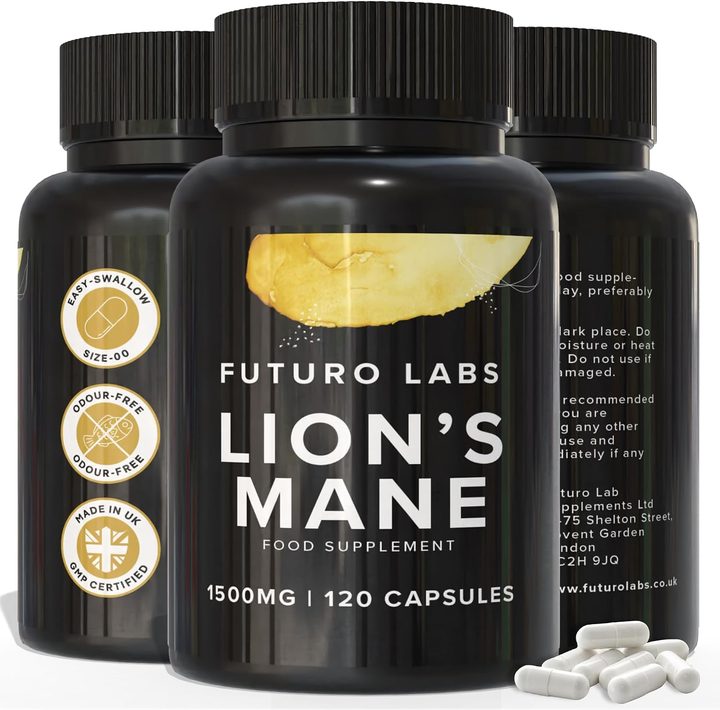
Our brand: the worked example on this page
Futuro Labs Lion's Mane
- 13p a day
- 120 capsules, 1 capsule daily
- Lab tested
- Made in the UK
The factory's measuring, bought for 13p: Futuro Labs Lion's Mane on Amazon UK, 1 capsule of stated 5:1 fruiting body extract, machine-dosed, £15.49 for 120 days. Full label breakdown. The ten-situations scorecard is on the powder-versus-capsules page; the powder tests on the powder page.
The question reframed as a transfer of measuring, because the substance is identical and only the dosing moves
The section has run this comparison by situation and by principle, so this page runs it on the one axis those pages touched only in passing, quality control, because the extract in a capsule and the extract in a bag are the same substance and the only thing the format changes is who measures it. In a capsule, the measuring is done at the factory: an encapsulation line fills each shell to a target fill weight, checks samples against tolerances, and a GMP facility documents the uniformity, so the dose in every capsule is the manufacturer's stated dose within a controlled margin, the buyer's contribution being to swallow it. In a powder, the measuring transfers to the buyer: the label states a serving weight and the kitchen supplies the spoon, and the section's drift warning applies in full, a level versus heaped teaspoon of a light hygroscopic extract swinging the dose by a third to a half, day-to-day variation compounding as the bag settles, clumps and is scooped from different depths, so the dose in each serving is whatever the buyer's attention produced that morning, the manufacturer's uniformity having ended at the bag. That transfer is the whole comparison in one sentence: capsules keep the dosing error at the factory, where it is small, measured and documented, and powder moves it to the kitchen, where it is large, unmeasured and yours, the pocket-scale buyer being the one exception who takes the factory's job seriously enough to do it properly.
The transfer priced at this dose, the case where powder still wins it back, and the verdict
Price the transfer and the dose scale settles it: at roughly 300mg of extract a day, one capsule's worth, the factory's measuring costs a buyer 13p a day on the worked example, and powder's savings on the same stated dose run to pennies, so the buyer who chooses powder to save money has bought a measuring job worth more than the saving, the format's apparent economy being the transfer of a chore, the dose-scale flip's arithmetic arriving through the QC door, and the contrast with the collagen aisle being instructive, there the doses are grams and the capsule count absurd, so the transfer to the buyer's scoop is worth it, here the dose is a single capsule and the transfer buys nothing. Powder wins the measuring back in exactly two cases and this page grants both: the buyer who owns a pocket scale and weighs each serving, replicating the factory's precision at the cost of ten seconds and a habit, usually the n-of-one experimenter for whom exact dosing is the point; and the buyer whose routine genuinely consumes the powder in a drink or dish daily, the smoothie-and-broth reader, who accepts the drift as the price of the ritual with eyes open. For everyone else the verdict follows from who should measure: the factory, under fill-weight checks, at a dose small enough that its precision costs pennies, which makes capsules the better format not because shells are special but because at 300mg a day the buyer's spoon is the least reliable instrument in the chain, and the worked example is that factory measuring in a bottle, one capsule, the stated dose, every day, with the same extract available loose for the two readers who will measure it themselves.
| The item | Capsules | Powder |
|---|---|---|
| Who doses it | The encapsulation line, under checks | Your spoon, or your scale |
| The error marginOurs | The factory's tolerance: small, documented | A third to a half between level and heaped |
| Day-to-day consistency | Identical capsules | Bag settling, clumping, scoop depth |
| The cost of precision | 13p a day on the worked example | Pennies saved; a measuring job bought |
| Who wins it back | Nobody needs to | Scale-owners and daily drink-mixers |
| The dose-scale note | At 300mg the factory's job is cheap | Collagen's gram doses flip this the other way |
The verdict, measured by the better instrument
Lion's mane capsules versus powder, which is better: capsules for most buyers, because the substance is identical and the format only decides who measures it, the factory under fill-weight checks or the buyer's spoon with its third-to-a-half drift, and at roughly 300mg a day the factory's precision costs 13p while powder's saving buys a measuring chore, with powder winning the job back only for scale-owning experimenters and daily drink-mixers who accept the drift knowingly. The factory's measuring, bottled: Futuro Labs Lion's Mane, one machine-dosed capsule of stated 5:1 fruiting body extract, UK made, lab tested, £15.49 for 120 days at 13p a day, the stated dose every day without a spoon in the chain.
What to check on the label
- Ask who measures: the factory or your spoon.
- Size the drift: a third to a half between level and heaped.
- Price the transfer: pennies saved, a chore bought.
- Grant the two exceptions: scale-owners and daily mixers.
- Remember the flip: gram doses transfer well; 300mg doses don't.
Our brand
The worked example: Futuro Labs Lion's Mane
Futuro Labs Lion's Mane: 1 capsule daily of 5:1 fruiting body extract, labelled 1500mg mushroom equivalent (about 300mg extract), 120 capsules for £15.49, 120 days at 13p a day. Vegan HPMC shell, UK made under GMP and BRC, independently lab tested, caffeine free. Lion's mane holds no authorised UK health claims; this site describes its small studies as studies.
- Extract
- fruiting body, 5:1
- Per capsule
- 1500mg mushroom equivalent
- Serving
- 1 capsule a day
- Bottle
- 120 capsules, 120 days
- Price
- £15.49 (13p a day)
- Capsule
- HPMC vegan shell, size 00
Questions people also ask
Is there any difference in the lion's mane itself between capsules and powder?
No: the extract is the same substance, and the only thing the format changes is who measures the dose, the factory under fill-weight checks or the buyer's spoon.
How accurate is a spoon for lion's mane powder?
Poor: a level versus heaped teaspoon of light hygroscopic extract swings the dose by a third to a half, and bag settling, clumping and scoop depth compound the drift day to day.
Is powder cheaper enough to be worth the measuring?
Rarely at this dose: roughly 300mg a day costs 13p in the factory-measured capsule, and powder's savings on the same stated dose run to pennies, buying a measuring job worth more than the saving.
Who should still buy powder?
Two readers: the scale-owner who weighs each serving and replicates the factory's precision, and the daily smoothie or broth mixer who accepts the drift as the price of the ritual.
Why does the site recommend powder for collagen but capsules here?
The dose scale: collagen's gram doses make capsules absurd and the buyer's scoop worthwhile, while lion's mane's single-capsule dose makes the factory's precision cheap and the spoon the weakest link.
Sources
- The medicinal mushroom labelling discussion: fruiting body versus mycelium-on-grain, extract ratios and beta-glucan content as the label facts that separate concentrated extracts from diluted powders. PubMed record
- The Food Supplements (England) Regulations 2003. https://www.legislation.gov.uk/uksi/2003/1387/contents/made
- The mushroom polysaccharide analysis literature: beta-glucan content marks fungal material while high alpha-glucan readings indicate grain starch, the analytical distinction between fruiting body extracts and mycelium-on-grain powders. PubMed record
- Mori K, Inatomi S, Ouchi K, Azumi Y, Tuchida T. Improving effects of the mushroom Yamabushitake (Hericium erinaceus) on mild cognitive impairment: a double-blind placebo-controlled clinical trial. Phytotherapy Research 2009;23(3):367-372. PubMed record