Ghost Fitness/Lion's mane/What does "lion mane fruiting body" mean?
What does "lion mane fruiting body" mean?
The short answer
Three parts: lion's mane names the species, Hericium erinaceus, also called bearded tooth, pom-pom and yamabushitake; fruiting body names the mushroom itself rather than the mycelium; and the missing apostrophe is search-engine dialect. Together, the studied tissue.
- Part one: the speciesHericium erinaceus, lion's mane, with several folk names
- Part two: the tissuefruiting body: the mushroom, not the mycelium
- Part three: the dialectlion mane, no apostrophe: how search engines are typed at
- Togetherthe studied, undiluted tissue of one named species
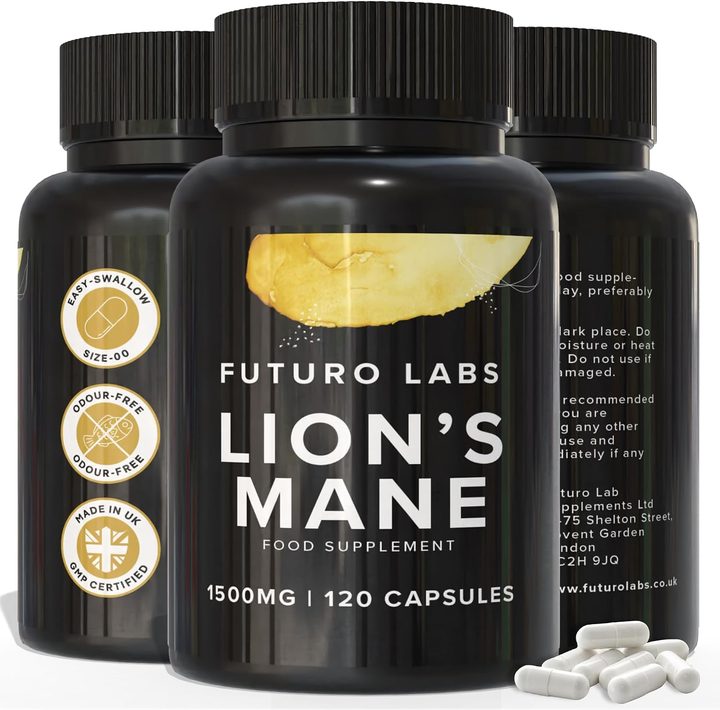
Our brand: the worked example on this page
Futuro Labs Lion's Mane
- 13p a day
- 120 capsules, 1 capsule daily
- Lab tested
- Made in the UK
The phrase, printed correctly on a panel: Futuro Labs Lion's Mane on Amazon UK, lion's mane fruiting body extract, 5:1, 1500mg equivalent, £15.49 for 120 days at 13p. Full label breakdown. The fruiting body defined through the life cycle is on the fruiting-body page; the label tests on the buying page.
The phrase parsed word by word, with the species given its full set of names
Parse the phrase as three parts and each teaches something the others cannot. Part one, lion mane, the species, and it deserves its full naming because this mushroom collects names the way it collects spines: its scientific name is Hericium erinaceus, Hericium the genus of toothed fungi and erinaceus meaning hedgehog-like, and its English folk names describe the same cascading white spines from different angles, lion's mane for the flowing appearance, bearded tooth for the spines and the tooth-fungus family, pom-pom for the rounded mass, hedgehog mushroom in some regions, and monkey head in translations from Chinese, while its Japanese name, yamabushitake, references the mountain-priest garments its shape recalls and appears on some labels and in some of the research, the Mori trial having been a Japanese study, so a buyer meeting any of those names on a panel or in a paper is meeting the same species, and a label using the Latin binomial is the one that leaves no ambiguity. Part two, fruiting body, the tissue: the mushroom itself, the reproductive structure the fungus pushes out to release spores, as distinct from the mycelium, the feeding web of threads it grows from, the section's founding label term, meaning the undiluted mushroom rather than mycelium milled with the grain it colonised, and meaning, for this species, the tissue both human studies used. Part three, the dialect: lion mane rather than lion's mane, the apostrophe dropped, is how people type at search engines rather than how the species is written, a harmless artefact that a label should not reproduce, correct panels reading lion's mane or Hericium erinaceus, and a listing writing lion mane in its product name signalling a copywriter chasing search terms rather than a label written by anyone who knows the mushroom.
The three parts assembled into one meaning, and the phrase turned into a shopping check
Assembled, the phrase means the fruiting body of Hericium erinaceus, the undiluted, studied tissue of one named species, and it functions on a label as the first of the section's four tests, the tissue statement, which is why its meaning matters beyond curiosity: a product that states it has told you it is made from the mushroom rather than from mycelium-on-grain, and a product that does not state it has left the section's first question open. The phrase turns into a shopping check in four moves: find the species named unambiguously, lion's mane or the Latin binomial, any of the folk names being acceptable but the binomial being definitive; find the tissue stated, fruiting body, the words themselves rather than forest photography; read the two words the phrase does not include but a complete label must, the extract ratio with its equivalent maths and the real per-serving milligrams, because fruiting body names a tissue and never a concentration, plain dried fruiting body at 1:1 being a culinary powder and a stated 5:1 being the concentrated product; and note the dialect tell, a product name typed as lion mane being a small sign of who wrote the listing. The worked example prints the phrase the way a label should: lion's mane, Hericium erinaceus, fruiting body extract, 5:1, 1500mg mushroom equivalent per capsule, the species, the tissue and the concentration in one line, 13p a day, the three parts of this query plus the two the query forgot, which is what the phrase was always trying to describe.
| The part | What it means | What to check |
|---|---|---|
| Lion mane, the species | Hericium erinaceus: bearded tooth, pom-pom, yamabushitake | The binomial on the label leaves no ambiguity |
| Fruiting body, the tissue | The mushroom itself, not mycelium-on-grain | The words stated, not implied by photos |
| The dropped apostrophe | Search-engine dialect, not a species name | A listing typed that way was written for search |
| The words the phrase omits | Ratio and real per-serving milligrams | Tissue is not concentration |
| Assembled | The studied, undiluted tissue of one species | The section's first test, passed |
| On a complete label | Species, tissue, ratio, milligrams in one line | The worked example's panel |
The verdict, parsed and completed
What lion mane fruiting body means: the fruiting body of Hericium erinaceus, the species known as lion's mane, bearded tooth, pom-pom and yamabushitake, the tissue being the mushroom itself rather than the mycelium, the dropped apostrophe being search-engine dialect rather than a species name, and the phrase assembled naming the studied, undiluted tissue while omitting the two words a complete label must add, the ratio and the real milligrams. The phrase printed properly: Futuro Labs Lion's Mane, Hericium erinaceus fruiting body extract, 5:1, 1500mg mushroom equivalent per capsule, UK made, lab tested, £15.49 for 120 days at 13p a day, species, tissue and concentration in one line, which is what the query was trying to type.
What to check on the label
- Name the species fully: Hericium erinaceus and its folk names.
- Read the tissue word: fruiting body means the mushroom, not the web.
- Discount the dialect: lion mane is how search engines are typed at.
- Add what the phrase omits: ratio and real milligrams.
- Prefer the binomial on labels: it leaves no ambiguity.
Our brand
The worked example: Futuro Labs Lion's Mane
Futuro Labs Lion's Mane: 1 capsule daily of 5:1 fruiting body extract, labelled 1500mg mushroom equivalent (about 300mg extract), 120 capsules for £15.49, 120 days at 13p a day. Vegan HPMC shell, UK made under GMP and BRC, independently lab tested, caffeine free. Lion's mane holds no authorised UK health claims; this site describes its small studies as studies.
- Extract
- fruiting body, 5:1
- Per capsule
- 1500mg mushroom equivalent
- Serving
- 1 capsule a day
- Bottle
- 120 capsules, 120 days
- Price
- £15.49 (13p a day)
- Capsule
- HPMC vegan shell, size 00
Questions people also ask
What is lion's mane's scientific name?
Hericium erinaceus: Hericium the genus of toothed fungi, erinaceus meaning hedgehog-like, the binomial that leaves no ambiguity on a label.
What other names does lion's mane go by?
Bearded tooth, pom-pom, hedgehog mushroom, monkey head in translation, and yamabushitake in Japanese, all describing the same cascading white spined species.
What does fruiting body mean in the phrase?
The mushroom itself, the spore-bearing structure, as distinct from the mycelium feeding web, and on labels the undiluted studied tissue rather than mycelium milled with grain.
Is lion mane a different mushroom from lion's mane?
No: the dropped apostrophe is search-engine dialect, and a product name typed that way is a small sign the listing was written for search rather than by someone who knows the species.
Does fruiting body tell me the strength of a product?
No: it names a tissue, not a concentration, so a complete label adds the extract ratio with its equivalent maths and the real per-serving milligrams, plain 1:1 fruiting body powder being a culinary product.
Sources
- The Hericium erinaceus taxonomy and common-name literature: the species known in English as lion's mane, bearded tooth, pom-pom and hedgehog mushroom, and in Japanese as yamabushitake. PubMed record
- Mori K, Inatomi S, Ouchi K, Azumi Y, Tuchida T. Improving effects of the mushroom Yamabushitake (Hericium erinaceus) on mild cognitive impairment: a double-blind placebo-controlled clinical trial. Phytotherapy Research 2009;23(3):367-372. PubMed record
- The medicinal mushroom labelling discussion: fruiting body versus mycelium-on-grain, extract ratios and beta-glucan content as the label facts that separate concentrated extracts from diluted powders. PubMed record
- The hericium compound literature: erinacines are characterised from mycelium and hericenones from fruiting body, both studied for nerve growth factor activity in bench and animal models, with the human trials having used fruiting-body preparations. PubMed record