Ghost Fitness/Lion's mane/What is the fruiting body of lion's mane?
What is the fruiting body of lion's mane?
The short answer
The fruiting body is the mushroom itself, the white cascading part you would recognise, as distinct from the mycelium root network. It is the tissue the human studies used and the first word to find on a label.
- The plain definitionthe mushroom itself: the visible reproductive structure
- The contrastnot the mycelium, the underground root-thread network
- Why it matters on labelsthe tissue Mori and Docherty actually used
- The lookwhite, cascading spines, the mane the species is named for
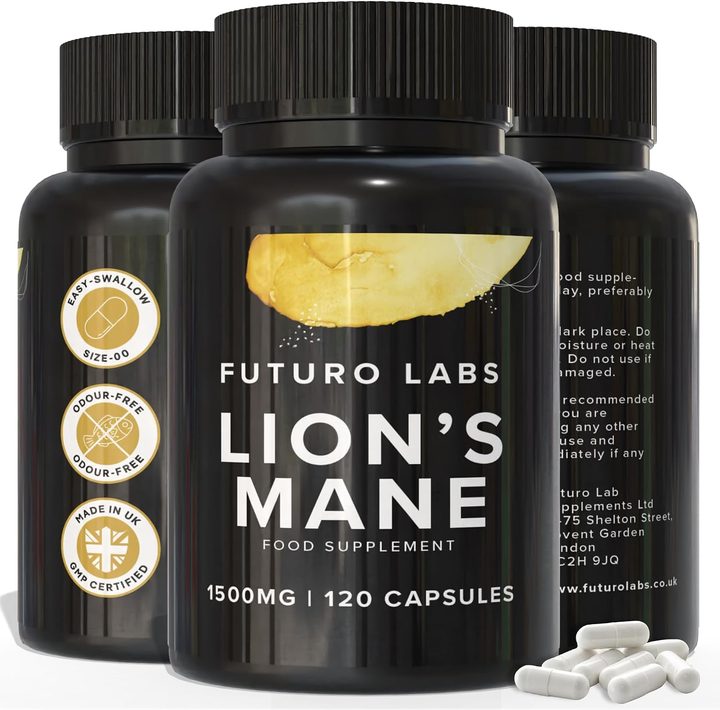
Our brand: the worked example on this page
Futuro Labs Lion's Mane
- 13p a day
- 120 capsules, 1 capsule daily
- Lab tested
- Made in the UK
The fruiting-body tissue, stated on the panel: Futuro Labs Lion's Mane on Amazon UK, 5:1 fruiting body extract, 1500mg equivalent per capsule, £15.49 for 120 days at 13p. Full label breakdown. The mycelium contrast is on the mycelium page; the head-to-head on the fruiting-body-versus page.
The definition taught through the life cycle, so the word means something before it is shopped for
Fruiting body is the single most important word on a lion's mane label, so define it properly through the fungus's life cycle rather than as a slogan. A fungus spends most of its life as mycelium, a spreading web of fine threads growing through its food source, wood in the wild, and this mycelium is the organism's body and feeding structure, hidden and unremarkable to look at; when conditions are right, the mycelium produces a fruiting body, the reproductive structure that pushes out into the air to release spores, and the fruiting body is the part we call the mushroom, the thing you would recognise and cook, which in lion's mane is unmistakable, a white rounded mass of soft cascading spines that genuinely resembles a lion's mane or a shaggy pom-pom, growing on hardwood, prized by cooks for a texture compared to crab or lobster. So the fruiting body of lion's mane is, in one sentence, the mushroom itself, the visible cascading white part, as opposed to the mycelium root-thread network it grows from, two real stages of one organism, both legitimately called lion's mane, and distinguished on supplement labels because a product can be made from either and the two are not equivalent, the fruiting body being the mushroom the culinary and research worlds both mean when they say the name.
Why the tissue matters on a label, what fruiting body is not, and the definition turned into a shopping instinct
Why the distinction matters on a label is this page's practical half, and it rests on two facts the section repeats because they anchor everything. Fact one, the evidence: the human studies this site describes as research, Mori's 2009 trial and the Docherty 2023 pilot, used fruiting-body preparations, so the fruiting body is the tissue with the human data behind it, however thin that data is, and a product made from it is at least made from the studied part. Fact two, the honesty: much of the market grows mycelium on grain and mills the two together, a legitimate ingredient that arrives diluted by its substrate and is frequently sold without that dilution disclosed, so fruiting body on a label signals the undiluted mushroom while its absence, per the section's standing rule, means the grain question is unanswered and therefore suspected. What fruiting body is not deserves its clarifying lines: it is not automatically an extract, a fruiting body can be sold as plain dried powder at 1:1 or as a concentrated extract at a stated ratio, so the word pairs with the ratio rather than replacing it; it is not a potency or quality grade by itself, a poorly made fruiting-body product still failing the other tests; and it is not the source of the famous erinacines, which are mycelium compounds, the honest twist the versus pages carry. The definition turns into a shopping instinct cleanly: find the words fruiting body first, because they name the mushroom the studies used and the undiluted tissue; then read the ratio, testing and pence, because the tissue is the entry ticket and never the whole show; and recognise, when the word is missing, that you are likely looking at mycelium-on-grain whether the label says so or not, the worked example modelling the honest version, fruiting body stated plainly beside its 5:1 ratio, the tissue named and the concentration printed together.
| The item | What it is | What it is not |
|---|---|---|
| The tissue | The mushroom itself: white cascading spines | Not the mycelium root network |
| The life-cycle role | The spore-bearing reproductive structure | Not the feeding web the fungus lives as |
| On a label | The studied, undiluted tissue | Not a substitute for a stated ratio |
| The evidence link | The tissue Mori and Docherty used | Not a guarantee the product is well made |
| The compound twist | Hericenones are fruiting-body compounds | Not the source of the erinacines |
| The shopping instinct | Find the word first | Then read ratio, testing and pence |
The verdict, defined and shoppable
What is the fruiting body of lion's mane: the mushroom itself, the white cascading spined structure the fungus pushes out to release spores, as distinct from the mycelium root-thread network it grows from, both real stages of one organism and distinguished on labels because it is the tissue the human studies used and the undiluted part mycelium-on-grain products dilute, with the word pairing with a ratio rather than replacing one and signalling, by its absence, an unanswered grain question. The honest model: Futuro Labs Lion's Mane, 5:1 fruiting body extract, 1500mg mushroom equivalent per capsule, UK made, lab tested, £15.49 for 120 days at 13p a day, the tissue named and the concentration printed side by side, which is exactly how the definition should look on a shelf.
What to check on the label
- Learn it through the life cycle: mushroom versus feeding web.
- Recognise the look: white cascading spines, the mane.
- Value it as the studied tissue: what the human trials used.
- Pair it with a ratio: the word is the ticket, not the show.
- Read its absence: no fruiting body means the grain question is open.
Our brand
The worked example: Futuro Labs Lion's Mane
Futuro Labs Lion's Mane: 1 capsule daily of 5:1 fruiting body extract, labelled 1500mg mushroom equivalent (about 300mg extract), 120 capsules for £15.49, 120 days at 13p a day. Vegan HPMC shell, UK made under GMP and BRC, independently lab tested, caffeine free. Lion's mane holds no authorised UK health claims; this site describes its small studies as studies.
- Extract
- fruiting body, 5:1
- Per capsule
- 1500mg mushroom equivalent
- Serving
- 1 capsule a day
- Bottle
- 120 capsules, 120 days
- Price
- £15.49 (13p a day)
- Capsule
- HPMC vegan shell, size 00
Questions people also ask
What is the fruiting body of a mushroom?
The reproductive structure the fungus pushes into the air to release spores, the part we recognise and cook, as opposed to the mycelium, the feeding web of threads the organism lives as.
What does lion's mane fruiting body look like?
Unmistakable: a white rounded mass of soft cascading spines resembling a lion's mane or shaggy pom-pom, growing on hardwood, with a texture cooks compare to crab or lobster.
Why do labels specify fruiting body?
Because a product can be made from the mushroom or from mycelium grown on grain, and the fruiting body is the undiluted, studied tissue, so its presence signals quality and its absence leaves the grain question open.
Is fruiting body the same as an extract?
No: fruiting body names the tissue, while extract and its ratio describe concentration, so a fruiting-body product can be plain 1:1 powder or a stated-ratio extract, and the two words pair rather than replace each other.
Does the fruiting body contain the famous nerve compounds?
It contains hericenones, while the erinacines, the more studied nerve-growth compounds in bench work, come from the mycelium, an honest twist since the human trials nonetheless used fruiting body.
Sources
- The hericium compound literature: erinacines are characterised from mycelium and hericenones from fruiting body, both studied for nerve growth factor activity in bench and animal models, with the human trials having used fruiting-body preparations. PubMed record
- Mori K, Inatomi S, Ouchi K, Azumi Y, Tuchida T. Improving effects of the mushroom Yamabushitake (Hericium erinaceus) on mild cognitive impairment: a double-blind placebo-controlled clinical trial. Phytotherapy Research 2009;23(3):367-372. PubMed record
- The medicinal mushroom labelling discussion: fruiting body versus mycelium-on-grain, extract ratios and beta-glucan content as the label facts that separate concentrated extracts from diluted powders. PubMed record
- Retained Regulation (EC) No 1924/2006 on nutrition and health claims made on foods, and the Great Britain nutrition and health claims register. https://www.gov.uk/government/publications/great-britain-nutrition-and-health-claims-nhc-register