Ghost Fitness/Lion's mane/Is lion mane better in morning or evening?
Is lion mane better in morning or evening?
The short answer
Better in which sense: absorbed, equal; felt, nothing either way; for sleep, no effect at any hour; for adherence, morning, since morning anchors hold. Evening is right only where your fixed daily point is.
- Better absorbedequal: no absorption window at any hour
- Better feltnothing either way: caffeine free, no acute effect
- Better for sleepno effect at any hour: no sleep claim, empty file
- Better for adherencemorning, for most: anchors hold; evening where the anchor lives
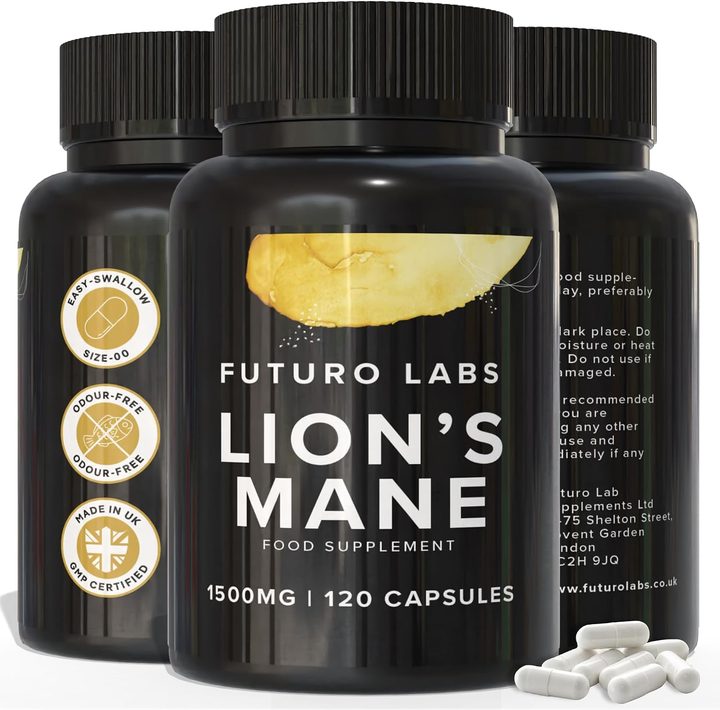
Our brand: the worked example on this page
Futuro Labs Lion's Mane
- 13p a day
- 120 capsules, 1 capsule daily
- Lab tested
- Made in the UK
Better at whichever anchor you keep: Futuro Labs Lion's Mane on Amazon UK, 1 caffeine-free capsule daily, £15.49 for 120 days at 13p. Full label breakdown. The adherence teach is on the morning-or-night page; the bedtime checklist on the before-bed page.
Better in which sense, because the word carries four meanings and three of them come back equal
Better is a word that hides four different questions, and the morning-or-evening debate persists because people answer different ones, so separate them. Sense one, better absorbed: is more of the capsule taken up at one hour than another, and the answer is equal, no absorption window existing for a hot-water mushroom extract, the empty-stomach mechanisms absent, fed and fasted identical, six in the morning and ten at night delivering the same extract to the same digestion, so absorption favours neither. Sense two, better felt: does the capsule produce more of an effect at one hour, and the answer is nothing either way, lion's mane being caffeine free with no acute effect, no lift a morning would time and no calm an evening would time, the mushroom's only within-the-hour datapoint being one attention task in a small pilot and not a felt experience, so a morning capsule and an evening one are equally unnoticed. Sense three, better for sleep: does an evening capsule help or harm the night, and the answer is no effect at any hour, no sleep claim existing, no sedative effect measured, no stimulant to disturb, the before-bed checklist clearing it on all five disturbers and the sleep file staying empty, so the evening is neither the sleep-friendly choice nor the sleep-risking one. Three senses, three equals, and the debate has nothing pharmacological left to argue about.
The fourth sense that actually decides it, the evening exception, and the verdict on adherence
Sense four, better for adherence: at which hour does the capsule actually get taken every day for the sixteen weeks the only long trial ran, and this is the sense with an answer, because habit science is clear that behaviours anchored to fixed daily routines survive and free-floating ones drift, and that morning routines are more fixed than evening ones for most people, breakfast, the first coffee, the bathroom sequence and the pre-session ritual recurring with a regularity that evenings, reshaped by work, social life and tiredness, rarely match, so on adherence the morning is better for the typical reader, the capsule beside the breakfast or the first coffee being the anchor most people already own and never miss. The evening exception is the same rule applied to a different life: the shift worker whose fixed point is a late meal, the late trainer whose unbreakable ritual is the post-session plate, the evening pill-organiser keeper who takes everything at once, for whom the evening is the anchor that holds and therefore the better hour, the caffeine-free fact making the swap costless. The verdict on adherence, the only sense that decides anything: lion's mane is better in the morning for most people and better in the evening for those whose fixed daily point falls there, and equal in every other sense the word can carry, the worked example directing one capsule with a meal and no hour, because it was only ever the anchor that mattered.
| The sense | Morning | Evening |
|---|---|---|
| Better absorbed | Equal | Equal |
| Better felt | Nothing: caffeine free, no acute effect | Nothing |
| Better for sleep | No effect | No effect: no claim, no stimulant, empty file |
| Better for adherence | Yes, for most: fixed routines anchor it | Yes, where the fixed point falls there |
| The typical reader | Breakfast or first-coffee anchor | The exception's reader |
| The verdict | Morning by adherence | Evening by the same rule, for the evening-anchored |
The verdict, better only in the sense that counts
Is lion's mane better in the morning or evening: better in which sense, since absorption is equal at any hour, nothing is felt at any hour, and sleep is unaffected at any hour, leaving adherence as the only sense with an answer, morning for most people because morning routines anchor a habit that evenings let drift, and evening for anyone whose fixed daily point falls there, the shift worker, the late trainer and the evening organiser. The capsule with no opinion on the hour: Futuro Labs Lion's Mane, one caffeine-free capsule daily with a meal, UK made, lab tested, £15.49 for 120 days at 13p a day, better at whichever anchor you will actually keep.
What to check on the label
- Ask better in which sense: absorbed, felt, for sleep, for adherence.
- Call the first three equal: no window, no effect, no sleep impact.
- Decide on the fourth: adherence, and morning anchors hold.
- Grant the evening exception: where the fixed point falls at night.
- Stop arguing pharmacology: the capsule cannot tell the time.
Our brand
The worked example: Futuro Labs Lion's Mane
Futuro Labs Lion's Mane: 1 capsule daily of 5:1 fruiting body extract, labelled 1500mg mushroom equivalent (about 300mg extract), 120 capsules for £15.49, 120 days at 13p a day. Vegan HPMC shell, UK made under GMP and BRC, independently lab tested, caffeine free. Lion's mane holds no authorised UK health claims; this site describes its small studies as studies.
- Extract
- fruiting body, 5:1
- Per capsule
- 1500mg mushroom equivalent
- Serving
- 1 capsule a day
- Bottle
- 120 capsules, 120 days
- Price
- £15.49 (13p a day)
- Capsule
- HPMC vegan shell, size 00
Questions people also ask
Is lion's mane absorbed better in the morning or evening?
Equally: no absorption window exists for a hot-water mushroom extract, fed and fasted are identical, and the hour changes nothing about what the digestion receives.
Will I feel more from lion's mane at one time of day?
No: it is caffeine free with no acute effect, so a morning capsule and an evening one are equally unnoticed, the mushroom's only within-the-hour datapoint being one attention task in a small pilot.
Is evening better for sleep?
No effect at any hour: no sleep claim, no sedative effect measured and no stimulant to disturb, so the evening is neither the sleep-friendly nor the sleep-risking choice.
So why does the site say morning?
Adherence: habits anchored to fixed morning routines survive where evening ones drift, so the capsule beside breakfast or the first coffee reliably gets taken for the sixteen weeks that matter.
When is evening genuinely better?
When it is your anchor: the shift worker's late meal, the late trainer's post-session plate or the evening pill organiser are fixed points where the capsule gets taken, and the caffeine-free fact makes the swap costless.
Sources
- The habit formation literature: anchoring a new behaviour to an existing daily routine is the best-documented adherence strategy, with consistency outperforming timing choices. PubMed record
- The caffeine biosynthesis literature: caffeine is a purine alkaloid synthesised by a limited set of plants including coffee, tea, cacao, guarana and yerba mate, and is not produced by fungi. PubMed record
- The sleep and memory consolidation literature: newly learned material is consolidated during sleep, with sleep deprivation after study measurably impairing retention, the foundation of study-schedule advice. PubMed record
- The medicinal mushroom labelling discussion: fruiting body versus mycelium-on-grain, extract ratios and beta-glucan content as the label facts that separate concentrated extracts from diluted powders. PubMed record