Ghost Fitness/Lion's mane/What are hericenones and erinacines?
What are hericenones and erinacines?
The short answer
Two compound families: hericenones from the fruiting body, erinacines from the mycelium, both shown to stimulate nerve growth factor in cell and animal studies. No human outcome trial exists for either, and whether oral doses reach the brain is open.
- Hericenonesaromatic compounds from the fruiting body, lipophilic
- Erinacinesditerpenoids from the mycelium, the more studied NGF stimulators
- What the bench showsNGF synthesis stimulated in cell culture and animal models
- What is openhuman outcomes, oral bioavailability, brain penetration, dosing
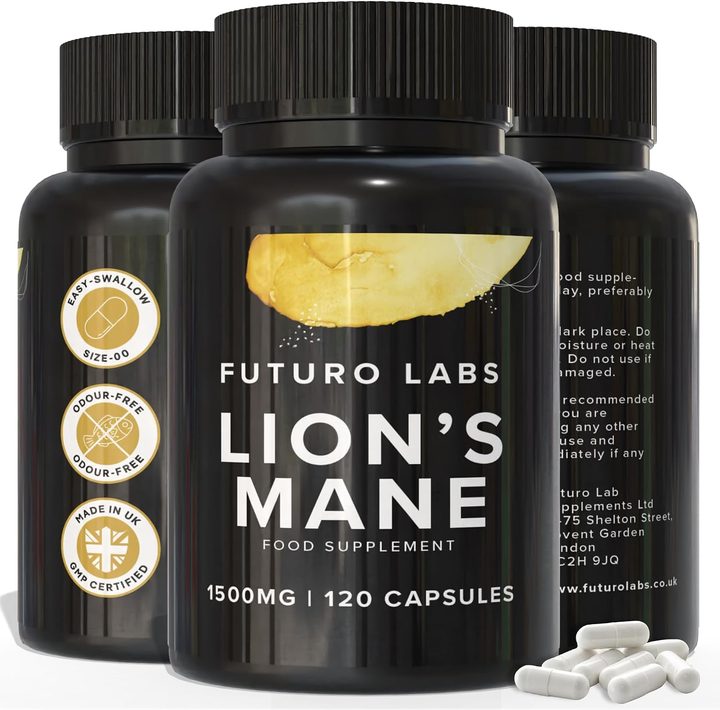
Our brand: the worked example on this page
Futuro Labs Lion's Mane
- 13p a day
- 120 capsules, 1 capsule daily
- Lab tested
- Made in the UK
The fruiting-body product, hericenone-carrying by tissue: Futuro Labs Lion's Mane on Amazon UK, 5:1 fruiting body extract, no compound content standardised or claimed, £15.49 for 120 days at 13p. Full label breakdown. The NGF pain decode is on the pain page; the dual-solvent chemistry on the dual extract page.
The two families introduced by tissue and chemistry, and the bench story told at its true size
Hericenones and erinacines are the two compound families that give lion's mane its scientific reputation, so introduce them properly, by tissue and by chemistry. Hericenones are aromatic compounds characterised from the fruiting body, lipophilic molecules that hot water largely leaves behind and alcohol extraction pulls out, a family lettered through the literature, hericenone C, D and so on, first isolated in Japanese laboratory work in the early 1990s. Erinacines are diterpenoid compounds characterised from the mycelium, likewise lipophilic, likewise lettered, erinacine A being the best studied, and in the bench literature the more potent nerve-growth-factor stimulators of the two families, the honest twist this section carries, that the mushroom's most famous molecules belong to the stage most of its marketing disparages. The bench story, told at its true size: both families have been shown in cell-culture work to stimulate the synthesis of nerve growth factor, NGF, a protein involved in the survival and growth of certain neurons, and in animal models various lion's mane preparations rich in these compounds have shown effects on nerve-related endpoints, a body of laboratory work that is real, repeatable and interesting, and that is the entire basis of the nerve-repair, neurogenesis and brain-regeneration language draped over the retail aisle, all of which extrapolates from dishes and rodents to claims no human study has tested.
The questions still open, what labels do and do not do with the compounds, and the dossier closed honestly
The open questions deserve listing because they are where the story actually stands, and the honest dossier lists what it does not know. Human outcomes: no human trial has measured any effect of hericenones or erinacines on any outcome, the human studies that exist having used whole fruiting-body preparations without isolating the compounds, so nothing connects a compound to a person. Oral bioavailability: whether these molecules survive digestion and enter circulation at meaningful levels from a capsule is not established for either family. Brain penetration: whether they cross the blood-brain barrier in humans at oral doses is an open question, the animal work suggesting some erinacines may while proving nothing about people. Dosing: no human dose of either compound has been defined, no product standardises them as a matter of course, and the label's one-capsule direction reflects the mushroom, not the molecules. And the NGF frame itself: nerve growth factor is a signalling protein with roles in pain as well as growth, the pain page's decode, so stimulating it is not straightforwardly desirable and self-prescribing at a nerve symptom on the strength of a rodent finding is exactly what this site routes to a GP instead. What labels do with the compounds is mostly nothing, honestly: hericenones ride along in any fruiting-body extract by tissue and are concentrated only by an alcohol stage, erinacines ride along in mycelium products, almost no label standardises either, and the rare product stating erinacine content in milligrams is making the one disclosure the compounds' fame would justify, everything else being NGF vocabulary without a figure, the instant fail. The dossier closes honestly: two real families, a real bench file, a famous mechanism, and no human evidence connecting any of it to any outcome, with the worked example a fruiting-body extract that carries hericenones by tissue, standardises nothing, claims nothing, and prices the mushroom rather than the molecules, at 13p.
| The item | Hericenones | Erinacines |
|---|---|---|
| The tissue | Fruiting body | Mycelium |
| The chemistry | Aromatic, lipophilic; alcohol-soluble | Diterpenoid, lipophilic; alcohol-soluble |
| The bench finding | NGF synthesis stimulated in cell culture | The more potent NGF stimulators in bench work |
| Human outcome trials | None | None |
| Bioavailability and brain penetration | Not established | Animal hints; unproven in people |
| On labels | Ride along by tissue; rarely standardised | Erinacine milligrams stated is the rare honest flex |
The verdict, a famous mechanism filed at its real size
What hericenones and erinacines are: two lipophilic compound families, the hericenones from the fruiting body and the erinacines from the mycelium, both shown to stimulate nerve growth factor in cell-culture and animal work, the erinacines the more potent in that literature, with no human trial measuring any effect of either, oral bioavailability and brain penetration unestablished in people, no human dose defined, NGF itself a double-edged signal, and labels almost never standardising either family, so that the famous mechanism is filed at its real size, a real bench story and nothing more. The fruiting-body product, worked: Futuro Labs Lion's Mane, 5:1 extract carrying hericenones by tissue, standardising and claiming nothing about them, UK made, lab tested, £15.49 for 120 days at 13p a day, priced for the mushroom the studies used and not for the molecules the marketing names.
What to check on the label
- Know the two families: hericenones from fruiting body, erinacines from mycelium.
- Size the bench story: NGF in dishes and rodents, real and repeatable.
- List the open questions: human outcomes, bioavailability, brain, dose.
- Remember NGF's other job: pain signalling; never self-prescribe.
- Read labels for figures: erinacine milligrams or silence, never vocabulary.
Our brand
The worked example: Futuro Labs Lion's Mane
Futuro Labs Lion's Mane: 1 capsule daily of 5:1 fruiting body extract, labelled 1500mg mushroom equivalent (about 300mg extract), 120 capsules for £15.49, 120 days at 13p a day. Vegan HPMC shell, UK made under GMP and BRC, independently lab tested, caffeine free. Lion's mane holds no authorised UK health claims; this site describes its small studies as studies.
- Extract
- fruiting body, 5:1
- Per capsule
- 1500mg mushroom equivalent
- Serving
- 1 capsule a day
- Bottle
- 120 capsules, 120 days
- Price
- £15.49 (13p a day)
- Capsule
- HPMC vegan shell, size 00
Questions people also ask
What are hericenones?
Aromatic, lipophilic compounds characterised from the lion's mane fruiting body, first isolated in Japanese laboratory work in the early 1990s, shown in cell culture to stimulate nerve growth factor synthesis.
What are erinacines?
Diterpenoid, lipophilic compounds characterised from lion's mane mycelium, erinacine A the best studied, and in bench work the more potent nerve-growth-factor stimulators of the two families.
Has either compound been proven to work in humans?
No: no human trial has measured any effect of hericenones or erinacines on any outcome, the human studies having used whole fruiting-body preparations without isolating the compounds.
Do these compounds reach the brain from a capsule?
Not established: oral bioavailability and blood-brain-barrier penetration in humans are open questions, with animal work hinting some erinacines may and proving nothing about people.
Why do the marketing pages talk about nerve repair?
Because NGF is involved in neuron growth and the bench story is real, but NGF also signals pain, no human evidence supports repair claims, and a label using nerve vocabulary without a stated compound figure fails the forensics.
Sources
- The hericium compound literature: erinacines are characterised from mycelium and hericenones from fruiting body, both studied for nerve growth factor activity in bench and animal models, with the human trials having used fruiting-body preparations. PubMed record
- The hericenone and NGF literature: lion's mane compounds stimulate nerve growth factor synthesis in cell-culture and animal models, bench findings that have not translated into human pain or nerve-repair trials. PubMed record
- Mori K, Inatomi S, Ouchi K, Azumi Y, Tuchida T. Improving effects of the mushroom Yamabushitake (Hericium erinaceus) on mild cognitive impairment: a double-blind placebo-controlled clinical trial. Phytotherapy Research 2009;23(3):367-372. PubMed record
- Retained Regulation (EC) No 1924/2006 on nutrition and health claims made on foods, and the Great Britain nutrition and health claims register. https://www.gov.uk/government/publications/great-britain-nutrition-and-health-claims-nhc-register