Ghost Fitness/Guides/How accurate does a nutrition label have to be?
How accurate does a nutrition label have to be?
The short answer
Within tolerances, not exactly: UK guidance allows declared macronutrients to vary by roughly 20 percent, and vitamins and minerals in supplements by roughly 20 percent below to 50 percent above. Overages keep vitamins above label until expiry.
- Macronutrientsdeclared values may deviate from measured values by roughly 20 percent, with bands for small amounts
- Vitamins and minerals in supplementsroughly 20 percent below to 50 percent above the declared value
- Roundingeach nutrient rounded to a set precision; small amounts declared as zero below a threshold
- The asymmetryoverages: manufacturers declare below what they put in, so the label holds at expiry
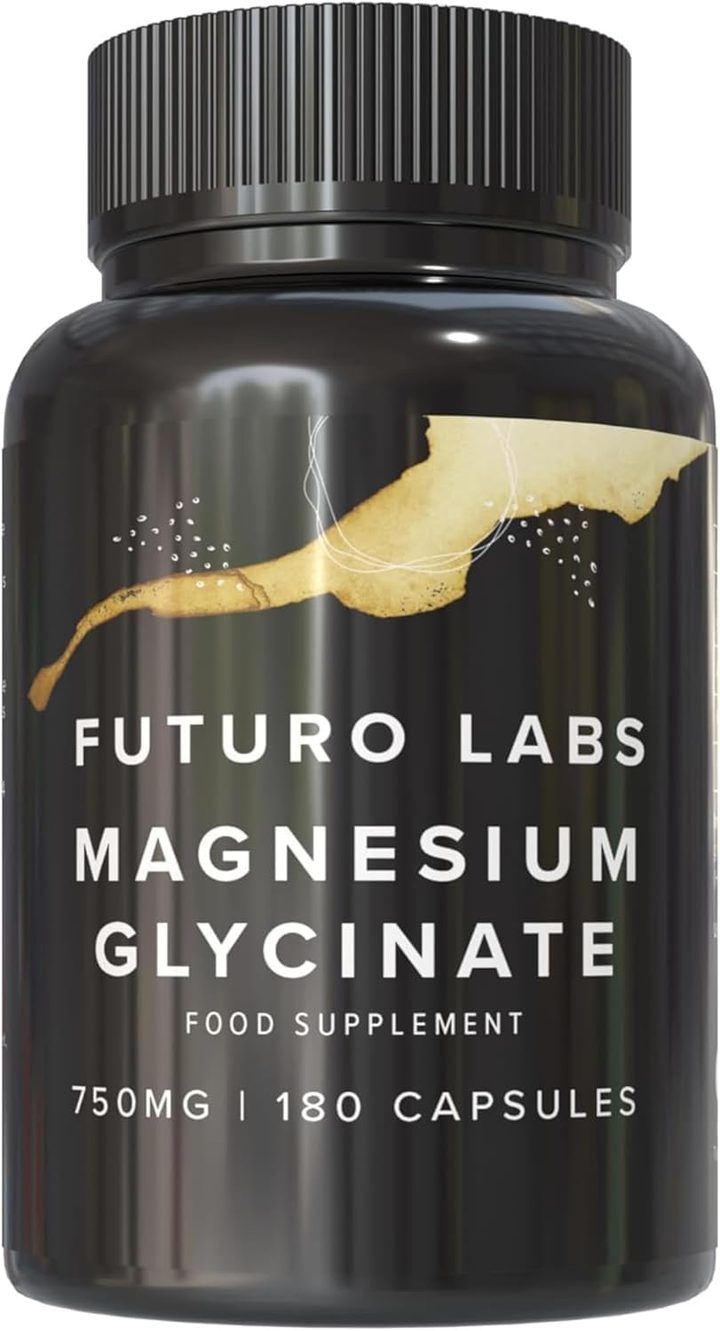
Our brand: the worked example on this page
Futuro Labs Magnesium Glycinate
- 22p a day
- 180 capsules, 2 capsules daily
- Lab tested
- Made in the UK
A mineral declared within its band and stable enough to stay there: Futuro Labs Magnesium Glycinate on Amazon UK, 300mg elemental at 80% NRV, batch tested, £19.99 for 90 days at 22p. Full label breakdown. The overage teach is on the tested vitamins guide; the labelling requirements on the labelling guide.
The tolerances, because a label is a declared average of a natural or manufactured product and the law knows it
A nutrition label does not have to be exact, and it could not be: foods vary between batches, harvests and seasons, manufactured products vary within specification, and laboratory measurement itself has uncertainty, so the law requires declared values to be accurate within published tolerances rather than to the decimal, and knowing the tolerances tells a buyer how much a label can honestly drift. For macronutrients on a food, the UK follows the tolerance guidance it retained, under which a declared value for fat, saturates, carbohydrate, sugars, protein or fibre may deviate from the measured value by roughly 20 percent, with tighter absolute bands for small amounts so that a food declaring 1g of sugar cannot be 20 percent out in a way that matters, and salt following its own band, so a bar declaring 20g of protein may honestly contain somewhere around 16 to 24 and a reader treats the figure as a centre rather than a guarantee. For vitamins and minerals, the tolerance is asymmetric and wider on the high side: in food supplements the measured value may fall roughly 20 percent below the declaration and up to roughly 50 percent above it, and in fortified foods the low side is wider still, the asymmetry existing because vitamins degrade and the law prefers a label that is still true at the end of shelf life to one that was exact on the day of manufacture, which is the overage the tested vitamins guide explains. Rounding rules sit on top: each nutrient is declared to a set precision, whole grams or one decimal depending on the amount, and amounts below a threshold may be declared as zero or as negligible, so that a label reading 0g of sugar may contain a fraction of a gram and be entirely lawful.
Why the asymmetry is the honest one, what a buyer does with tolerances, and where accuracy actually gets checked
The asymmetry for vitamins is the honest one, and it explains a certificate that surprises buyers: a manufacturer declares 10 micrograms of vitamin D and puts in more, an overage calculated from the vitamin's degradation rate, so that the capsule tests at 11 or 12 micrograms at release and is still at 10 as its best-before approaches, the tolerance allowing the high side precisely so that the low side is never breached, and a brand with no overage and no stability data being the one whose label goes false in the cupboard. Minerals barely degrade, so their tolerance question is manufacturing precision rather than stability, and a magnesium declaring 300mg elemental is expected to measure close to it throughout, the worked example's kind of claim being the easiest on the shelf to hold. What a buyer does with the tolerances is read a label as a centre with a band: a protein figure as roughly plus or minus a fifth, a vitamin figure as at least the declaration and possibly half again more at release, a sugar figure of zero as possibly a trace, and a supplement's elemental mineral figure as close to exact, and then, for anything that matters, ask for the certificate of analysis that reports the measured value for the batch, since the tolerance is a legal band and the certificate is the actual number. Where accuracy gets checked is enforcement and testing: local authority trading standards can sample and test products against their declarations and act on values outside tolerance, and a brand's own certificate of analysis, requested with the four questions, shows the measured value against the declared one, the tested vitamins guide's %NRV read, so that accuracy is a question the buyer can settle for a specific batch rather than trust in general, the worked example declaring 300mg at 80% NRV and batch testing being the pair, a declaration within its band and a measurement to confirm it.
| The nutrient | The tolerance | How to read it |
|---|---|---|
| Fat, carbohydrate, sugars, protein, fibre | Roughly plus or minus 20%, tighter absolute bands for small amounts | A centre, not a guarantee |
| Salt | Its own band | Small declared amounts can vary in absolute terms |
| Vitamins in supplements | Roughly 20% below to 50% above the declaration | At least the label, often more at release: the overage |
| Minerals in supplements | The same band; stable in practice | Close to exact throughout shelf life |
| Rounding and zero | Set precision per nutrient; negligible amounts as zero | 0g may be a trace |
| Checking | Trading standards sampling; the brand's certificate of analysis | The measured value for the batch |
The verdict, accurate within a band and checkable for a batch
How accurate does a nutrition label have to be: accurate within published tolerances rather than exactly, declared macronutrients allowed to deviate by roughly 20 percent with tighter bands for small amounts, vitamins and minerals in supplements allowed roughly 20 percent below to 50 percent above the declaration, the asymmetry existing so that overages keep a vitamin above its label until expiry, rounding rules letting negligible amounts read as zero, and the actual number for a batch being the certificate of analysis a buyer can request. The declaration within its band and the measurement to confirm it: Futuro Labs Magnesium Glycinate, 300mg elemental at 80% NRV, a mineral stable enough to hold its figure, batch tested, £19.99 for 90 days at 22p a day.
What to check on the label
- Read a label as a centre with a band: roughly 20% for macronutrients.
- Read vitamins as at least the label: the overage sits on the high side.
- Know 0g may be a trace: rounding and negligible thresholds.
- Expect minerals close to exact: stability makes them easy to hold.
- Ask for the certificate for the batch: the measured value, not the band.
Our brand
The worked example: Futuro Labs Magnesium Glycinate
Futuro Labs Magnesium Glycinate is the worked example for the buying guides because its label is the kind these guides teach you to demand: 1500mg magnesium bisglycinate at 20%, 300mg elemental, 80% NRV, 2 capsules a day, 180 capsules for £19.99, 22p a day, UK made, vegan, batch tested for lead, mercury, arsenic and cadmium, address printed, no proprietary blend, and the same four authorised claims any honest magnesium may carry.
- Elemental magnesium per serving
- 300mg (80% NRV)
- Form
- magnesium bisglycinate 20%
- Serving
- 2 capsules a day
- Bottle
- 180 capsules, 90 days
- Price
- £19.99 (22p a day)
- Capsule
- vegetarian shell, vegan product
Questions people also ask
Can a nutrition label be wrong and still be legal?
It can deviate within tolerances: macronutrients by roughly 20 percent with tighter bands for small amounts, and vitamins and minerals in supplements by roughly 20 percent below to 50 percent above the declaration, because products vary and measurement has uncertainty.
Why is the vitamin tolerance so much wider on the high side?
Overages: manufacturers put in more than they declare so the label still holds as the vitamin degrades toward its best-before, and the law prefers a label true at expiry to one exact at manufacture.
Does 0g of sugar mean no sugar at all?
Not necessarily: rounding rules let amounts below a threshold be declared as zero or negligible, so a 0g declaration may cover a fraction of a gram lawfully.
Who checks that labels are accurate?
Local authority trading standards can sample and test products against their declarations and act on values outside tolerance, and a brand's own certificate of analysis shows the measured value for a batch on request.
How accurate is a mineral supplement's declared dose likely to be?
Close to exact: minerals barely degrade, so a declaration like 300mg elemental magnesium is a manufacturing-precision question rather than a stability one, and a batch certificate confirms it.
Sources
- The UK and EU guidance on tolerances for nutrition declarations: declared values may deviate from measured values within published tolerance bands, macronutrients by roughly 20% and vitamins and minerals in food supplements by roughly 20% below to 50% above the declared value, with rounding rules for each nutrient. https://www.food.gov.uk/business-guidance/nutrition-labelling
- The supplement formulation literature: manufacturers add overages of vitamins above the label claim so that the declared amount is still present at the end of shelf life, potency testing at release and at expiry confirming the practice. PubMed record
- The retained Food Information to Consumers regulation: the mandatory nutrition declaration for foods, its fixed order of energy, fat, saturates, carbohydrate, sugars, protein and salt per 100g, and its rules on portion information, with supplements declaring nutrients per daily dose against nutrient reference values. https://www.legislation.gov.uk/eur/2011/1169/contents
- The Food Standards Agency's food supplements guidance: supplements are regulated as foods, with local authority trading standards and environmental health enforcing labelling, safety and claims law. https://www.food.gov.uk/business-guidance/food-supplements