Ghost Fitness/Collagen/Why collagen supplements don't work?
Why collagen supplements don't work?
The short answer
The sceptic is right five times: it digests to amino acids, holds no claim, the trials are small and industry-funded, capsule doses sit below the 2.5 to 15g band, and mirrors miss what instruments measure. Exception: the tendon marker work.
- Right one and twodigested to amino acids with no address; no authorised UK claim
- Right threesmall, short, mostly industry-funded trials; hedged meta-analyses
- Right four and fivecapsules at 500 to 1200mg against trials at 2.5 to 15g; a mirror cannot see a cutometer's few percent
- The exceptionPro-Hyp in blood for hours; a synthesis marker doubled an hour after ~15g with vitamin C
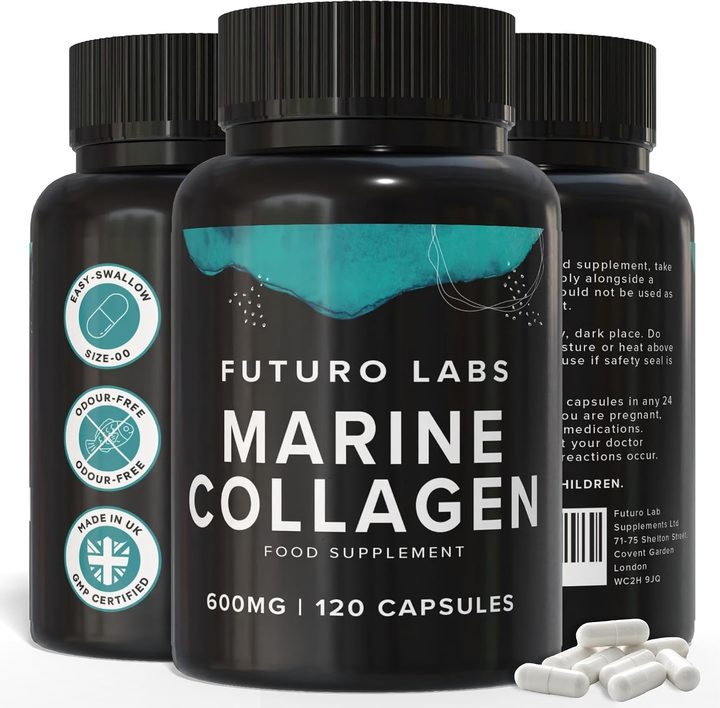
Our brand: the worked example on this page
Futuro Labs Marine Collagen
- 28p a day
- 120 capsules, 2 capsules daily
- Lab tested
- Made in the UK
A capsule dose stated as exactly that: Futuro Labs Marine Collagen on Amazon UK, 2 capsules, 1200mg hydrolysed type 1 marine collagen with 12mg vitamin C at 15% NRV plus zinc, 120 for £16.99, 28p a day, lab tested and UK made, below the 2.5 to 15g research band and taken for vitamin C's collagen formation sentence rather than the trials' result. Full label breakdown. How long the trials took to measure anything is on the how long to notice a difference page; the skin instruments on the does collagen help skin page.
The five times the sceptic is right
Why collagen supplements don't work is a question asked by a reader who took one and saw nothing, and the honest page agrees with that reader five times before disagreeing once, because the sceptic's case is mostly correct and the aisle has earned it. Right the first time: hydrolysed collagen is a protein, and a protein eaten is digested by acid and enzymes into amino acids and small peptides that the body absorbs and uses wherever it needs protein that day, muscle, gut lining, enzymes, skin, with no address on the parcel reading knees, so the marketing picture of collagen travelling to the joint it was bought for is not how digestion works, and a sceptic who says you are eating expensive gelatin is describing the chemistry accurately. Right the second time: collagen holds no authorised health claim in the UK for skin, joints, hair, nails, bones, muscle or anything else, because the evidence submitted has not met the standard, so every benefit printed on a tub is either vitamin C's collagen formation sentence or zinc and biotin's normal skin lines borrowed from the ingredients beside it, or a phrasing the register does not permit, and a sceptic who says the claims are not backed is quoting the regulator. Right the third time: the trials that exist are small, often a few dozen people, short, eight to twenty-four weeks, and mostly funded by the manufacturer of the peptide being tested, and the meta-analyses that pool them say so, hedging their positive summaries with the funding and the size, so a sceptic who distrusts the evidence base has read it correctly. Right the fourth time, and this is the one most readers miss: the trials used 2.5 to 15 grams a day, and most collagen capsules sell 500mg to 1200mg a serving, so a reader who took two capsules for a month and saw nothing has taken a fraction of the studied dose and judged the trials by it, which is not the trials' fault and is exactly why this site states its own capsule dose as below the band and taken for the vitamin C line rather than the trial result. Right the fifth time: the skin trials measured by instrument, elasticity by cutometer suction and hydration by corneometer capacitance, and reported changes of a few percent, which a device detects and a person in a mirror does not, over eight to twelve weeks, so a reader looking in a mirror at week four for a visible change is looking for something no trial ever claimed to produce, and sees, correctly, nothing.
The one place the sceptic is not right, and how to take collagen so the sceptic's five do not apply
The one place the sceptic is not right is narrow and the honest page states it narrowly. The digestion argument, that collagen is just amino acids, is incomplete, because the absorption studies show that after oral hydrolysed collagen, small peptides survive digestion, prolyl-hydroxyproline and hydroxyprolyl-glycine among them, appearing in blood for several hours alongside the free amino acids, and in cell and animal work these dipeptides act on fibroblasts and chondrocytes, the cells that make skin and cartilage matrix, in ways free amino acids do not, which is the proposed mechanism for hydrolysed collagen doing more than an equal weight of its constituent amino acids. That is a hypothesis with human marker data behind it and no human outcome claim, and the marker data has one result the sceptic has to answer: the small crossover trial in which around fifteen grams of gelatin with roughly 50mg of vitamin C an hour before six minutes of skipping roughly doubled a blood marker of collagen synthesis against placebo, with engineered ligaments grown in the participants' serum coming out stiffer and richer in collagen. A marker is not an injury outcome and a handful of participants is not a body of evidence, but it is a controlled, timed, physiological result that the just-amino-acids account does not predict, and it is the reason the tendon pre-loading protocol exists in rehabilitation settings. So the sceptic's five stand, and the sixth point stands against them at the size it deserves. The practical reading for a reader who wants collagen to have a fair chance of doing what the trials measured is to remove the sceptic's reasons one at a time: take a trial dose, 2.5 to 10 grams for skin or around ten for joints or around fifteen with vitamin C an hour before loading for the tendon protocol, not a capsule fraction of it; take it for the trial duration, eight to twelve weeks at minimum and months for joints, not a fortnight; judge it by what the trials measured, an instrument or a joint comfort score or a synthesis marker, not a mirror; take it with vitamin C, since the cofactor holds the register's only collagen sentence; and expect a research result, small and hedged, not a claim, because none exists. A reader who does all of that and sees nothing has a fair finding, and a reader who took two capsules for a month has not tested anything, which is why the honest capsule states its own terms: two capsules, 1200mg hydrolysed type 1 marine collagen with 12mg vitamin C plus zinc, 120 for £16.99 at 28p a day, lab tested and UK made, below the 2.5 to 15g band and bought for the vitamin C line and the habit, not for the trials' grams. Why collagen supplements don't work: because they are digested, unclaimed, thinly studied, underdosed in capsules and judged by mirrors, five true things, and one narrow exception the sceptic should read before closing the case.
| The point | Who is right | The evidence |
|---|---|---|
| Digested to amino acids, no address | The sceptic, mostly | Protein digestion; amino acids used wherever needed |
| No authorised claim | The sceptic | Collagen holds none; vitamin C and zinc carry the label's sentences |
| Small, short, industry-funded trials | The sceptic | A few dozen people, 8 to 24 weeks, manufacturer funding; hedged meta-analyses |
| Capsule doses below the trials | The sceptic | 500 to 1200mg capsules against 2.5 to 15g in trials |
| Mirrors cannot see instruments | The sceptic | Cutometer and corneometer changes of a few percent over 8 to 12 weeks |
| Small peptides survive digestion | The exception | Pro-Hyp in blood for hours; fibroblast and chondrocyte effects in cell work |
| The tendon marker trial | The exception | ~15g with ~50mg vitamin C an hour before loading doubled a synthesis marker |
| The worked exampleOurs | Stated on its true terms | Two capsules, 1200mg marine collagen with 12mg vitamin C, 28p a day, below the band |
What to check on the label
- Take a trial dose or do not judge the trials: 2.5 to 15g, not a capsule fraction.
- Take it for the trial duration: 8 to 12 weeks minimum, months for joints.
- Judge by what the trials measured: instrument, score or marker, not mirror.
- Pair it with vitamin C: the cofactor and the only collagen sentence.
- Expect research, not a claim: none exists.
Our brand
The worked example: Futuro Labs Marine Collagen
Futuro Labs Marine Collagen: 2 capsules daily, 1200mg hydrolysed type 1 marine collagen with 12mg vitamin C and 1.5mg zinc (15% NRV each), 120 capsules for £16.99, 60 days at 28p a day, lab-tested, UK GMP made. Slim veggie-shell capsules, odour free. Fish derived: pescatarian, not vegetarian or vegan.
- Collagen per serving
- 1200mg hydrolysed type 1 marine (fish)
- Co-factors
- vitamin C 12mg (15% NRV), zinc 1.5mg (15% NRV)
- Serving
- 2 capsules a day
- Bottle
- 120 capsules, 60 days
- Price
- £16.99 (28p a day)
- Capsule
- slim size 00, veggie shell, odour free
Questions people also ask
Is collagen just broken down into amino acids?
Mostly, and not entirely: hydrolysed collagen is digested to amino acids the body uses wherever it needs protein, with no address for skin or joints, but small dipeptides such as prolyl-hydroxyproline survive digestion and appear in blood for hours, acting on skin and cartilage cells in cell work, a hypothesis with human marker data behind it and no outcome claim.
Why did collagen not work for me?
Usually one of four reasons the trials predict: a capsule dose of 500 to 1200mg against trials at 2.5 to 15 grams, a duration of weeks against trials of eight to twelve weeks or months, a mirror judging what the trials measured by instrument as a few percent, or an expectation of a claim where none exists; a reader who removes those four and sees nothing has a fair finding.
Are there any good studies showing collagen works?
Small ones, mostly industry-funded, with the strongest single result being the tendon pre-loading trial in which around fifteen grams of gelatin with vitamin C an hour before loading doubled a blood marker of collagen synthesis against placebo, a marker rather than an outcome, plus skin instrument trials and joint comfort trials at 2.5 to 10 and around 10 grams over weeks to months.
Do collagen capsules work?
Not as a test of the trials: most capsules carry 500 to 1200mg a serving against the 2.5 to 15 grams the trials used, so a capsule is bought on its true terms for the habit and for vitamin C's collagen formation sentence when the label pairs them, and a reader who wants the trial dose buys a powder and measures grams.
Why can collagen not make a health claim in the UK?
Because the evidence submitted has not met the register's standard: the trials are small, short and mostly manufacturer-funded and the outcomes are markers and instrument readings rather than the health outcomes a claim requires, so collagen holds no authorised claim and the only collagen sentence on a label belongs to vitamin C.
Sources
- The collagen peptide absorption literature: after oral hydrolysed collagen, small peptides such as prolyl-hydroxyproline and hydroxyprolyl-glycine appear in blood for several hours alongside free amino acids, and in cell and animal work these peptides act on fibroblasts and chondrocytes, the mechanism proposed for why hydrolysed collagen might do more than an equal quantity of its free amino acids, a hypothesis with human marker data behind it and no human outcome claim. PubMed record
- The gelatin and vitamin C pre-exercise research (Shaw, Baar and colleagues): 15g gelatin with vitamin C taken about an hour before loading, studied for markers of collagen synthesis, the protocol behind the tendon-training conversation. PubMed record
- The skin measurement literature: oral collagen trials assess skin by instrument, elasticity by cutometer suction, hydration by corneometer capacitance, dermal density by high-frequency ultrasound and wrinkle depth by profilometry, changes of a few percent that are detectable by the device and generally below what a person sees in a mirror. PubMed record
- Retained Regulation (EC) No 1924/2006 on nutrition and health claims made on foods, and the Great Britain nutrition and health claims register. https://www.gov.uk/government/publications/great-britain-nutrition-and-health-claims-nhc-register