Ghost Fitness/Collagen/Can I take collagen with atorvastatin?
Can I take collagen with atorvastatin?
The short answer
No interaction is documented. Atorvastatin's interactions are with CYP3A4 inhibitors, grapefruit, certain antibiotics and antifungals, and other lipid drugs; collagen is a food protein with no enzyme effect. Tell the pharmacist what you take anyway.
- Absorptionatorvastatin with or without food; protein does not alter it; collagen is a food protein
- MetabolismCYP3A4: grapefruit, macrolides, azoles, some HIV drugs, fibrates, high-dose niacin; collagen has no enzyme effect
- Muscle symptomsthe prescriber's: collagen neither causes nor masks them
- The companions12mg vitamin C and 1.5mg zinc: no documented statin interaction at those doses
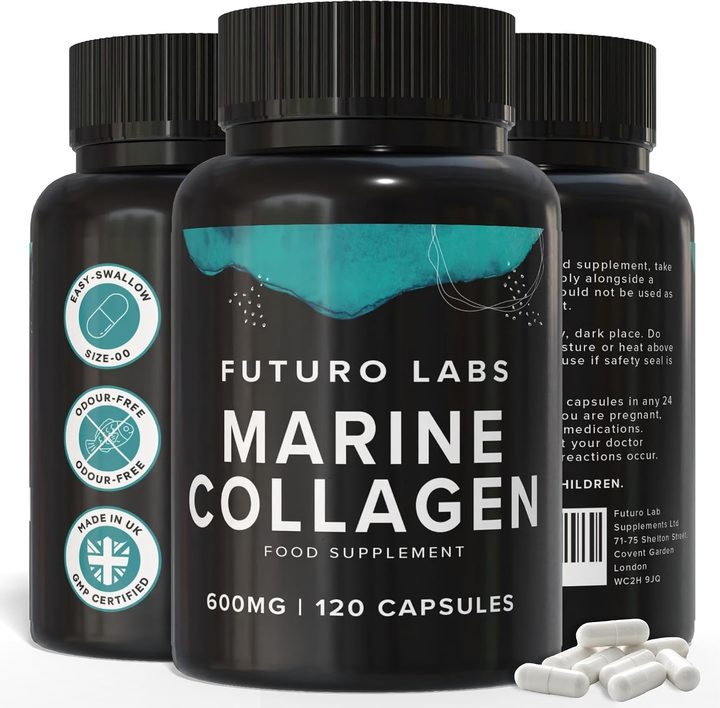
Our brand: the worked example on this page
Futuro Labs Marine Collagen
- 28p a day
- 120 capsules, 2 capsules daily
- Lab tested
- Made in the UK
On its true terms, beside a statin or not: Futuro Labs Marine Collagen on Amazon UK, 2 capsules, 1200mg hydrolysed type 1 marine collagen with 12mg vitamin C at 15% NRV plus 1.5mg zinc, 120 for £16.99, 28p a day, lab tested and UK made, below the research band and taken for the vitamin C line, listed to the pharmacist like everything else. Full label breakdown. Muscle pain on a statin is on the vitamins and muscle pain page; who should ask before collagen on the who should not take collagen page.
The checklist: absorption and metabolism
Can I take collagen with atorvastatin is a question a pharmacist answers by running a short checklist, and the honest page runs the same one in the open, because the answer is reassuring and the reasoning is more useful than the reassurance, with the standing note that this is a description of the interaction framework and not medical advice for any reader's own prescription. Item one, absorption. Atorvastatin is licensed to be taken at any time of day with or without food, dietary protein does not meaningfully alter how much of it is absorbed, and it has no mineral chelation problem of the kind that makes calcium or iron a spacing issue for some antibiotics and thyroid medicines, so the question of what is in the glass with the tablet is largely moot for this drug. Collagen, for its part, is a food protein, digested by acid and enzymes into amino acids and small peptides and absorbed as any protein is, with no documented effect on the absorption of any medicine, so a collagen powder in the morning coffee or two capsules with water beside the statin tablet changes nothing about the dose that reaches the blood, and a reader who wants to be careful anyway can leave an hour between them at no cost, though the pharmacology gives no reason to. Item two, metabolism, which is where atorvastatin's real interactions live. Atorvastatin is broken down mainly by the CYP3A4 enzyme in the liver and gut wall, so anything that inhibits that enzyme raises atorvastatin levels and with them the risk of muscle side effects, and the documented list is specific: large quantities of grapefruit juice, more than a glass or so a day; certain macrolide antibiotics, clarithromycin and erythromycin; azole antifungals such as itraconazole and ketoconazole; some HIV medicines; and, by a different mechanism, other lipid-lowering drugs such as fibrates and high-dose niacin, and the red yeast rice sold as a supplement, which contains a statin-like compound and stacks. Collagen appears nowhere on that list because it has no reason to: a digested protein does not inhibit or induce liver enzymes, and no interaction with collagen, gelatin, whey or any protein supplement is documented in the atorvastatin literature, so item two is clear.
The checklist: muscle symptoms, the companions in the capsule, and the standing rule
Item three, muscle symptoms, which is the item a lifter on a statin cares about most and the one where a wrong belief could do harm in either direction. Muscle aches, weakness and cramps are the commonest reason people stop statins, the statin-associated muscle symptoms literature's finding, and they belong to the prescriber, who manages them by changing the dose, the statin or the timing, sometimes checking a muscle enzyme and vitamin D along the way, so a lifter who develops new muscle symptoms after starting atorvastatin reports them rather than treating them, and does not assume the gym is the cause. Collagen sits outside this item entirely: it has no muscle action, does not build muscle, does not affect muscle enzymes, and so neither causes statin muscle symptoms nor masks them, which matters because a supplement that dulled muscle pain could hide a symptom the prescriber needs to hear about, and collagen is not that supplement. The one collagen footnote near this item is the opposite error, a reader who blames the collagen for aches that are the statin's, and the timing usually tells them apart. Item four, the companions in the capsule, since the worked example is not collagen alone: 12mg of vitamin C, 15% of the reference value and a fraction of a piece of fruit, and 1.5mg of zinc, both far below any dose with a documented statin interaction, vitamin C having none at ordinary intakes and zinc's interactions being with certain antibiotics and with copper at high doses, not with statins. Item five, the standing rule, which applies to every supplement and every medicine and is the reason pharmacists ask: no interaction is documented, and the reader tells the pharmacist and the prescriber every supplement they take anyway, collagen included, because undocumented problems are found by people reporting what they took, because the list of medicines a reader is on may include one of the CYP3A4 items above that the reader has not connected to the statin, and because a two-minute conversation costs nothing. One more item for completeness, the kidney and liver footnotes that other collagen pages carry: atorvastatin is monitored with liver enzymes in some patients, and collagen has no liver effect and appears in no liver injury case series, so the two do not meet there either; and the hydroxyproline to oxalate note is a stone-former's footnote unrelated to the statin. The worked example on its true terms: two capsules, 1200mg hydrolysed type 1 marine collagen with 12mg vitamin C plus 1.5mg zinc, 120 for £16.99 at 28p a day, lab tested and UK made, below the research band, taken for vitamin C's collagen formation sentence, and listed to the pharmacist like everything else in the cupboard. Can I take collagen with atorvastatin: the checklist finds nothing, the pharmacist confirms it, and the muscle aches, if they come, are the statin's to report.
| The item | Atorvastatin | Collagen | The verdict |
|---|---|---|---|
| Absorption | With or without food; protein does not alter it; no chelation issue | A food protein digested to amino acids and peptides | Nothing in the glass changes the dose |
| Metabolism | CYP3A4: grapefruit, clarithromycin, erythromycin, azoles, some HIV drugs; fibrates, high-dose niacin, red yeast rice | No enzyme effect; on no statin interaction list | Clear |
| Muscle symptoms | The commonest reason statins are stopped; the prescriber's to manage | No muscle action; neither causes nor masks them | Report new aches to the prescriber |
| The companions | No interaction with vitamin C or zinc at ordinary intakes | 12mg vitamin C, 1.5mg zinc | Far below any documented dose |
| Liver and kidney | Liver enzymes monitored in some patients | No liver effect; oxalate footnote is a stone-former's | The two do not meet |
| The standing rule | Tell the pharmacist every supplement | Collagen included | Undocumented problems are found by reporting |
| The worked exampleOurs | Beside the statin or not | Two capsules, 1200mg marine collagen with 12mg vitamin C plus 1.5mg zinc, 28p a day | On its true terms; listed to the pharmacist |
What to check on the label
- Take them in either order: no absorption issue for either.
- Know the real statin list: grapefruit, certain antibiotics and antifungals, other lipid drugs.
- Report new muscle aches: they are the statin's, not the collagen's.
- Count the companions: 12mg vitamin C and 1.5mg zinc interact with nothing here.
- Tell the pharmacist anyway: every supplement, every time.
Our brand
The worked example: Futuro Labs Marine Collagen
Futuro Labs Marine Collagen: 2 capsules daily, 1200mg hydrolysed type 1 marine collagen with 12mg vitamin C and 1.5mg zinc (15% NRV each), 120 capsules for £16.99, 60 days at 28p a day, lab-tested, UK GMP made. Slim veggie-shell capsules, odour free. Fish derived: pescatarian, not vegetarian or vegan.
- Collagen per serving
- 1200mg hydrolysed type 1 marine (fish)
- Co-factors
- vitamin C 12mg (15% NRV), zinc 1.5mg (15% NRV)
- Serving
- 2 capsules a day
- Bottle
- 120 capsules, 60 days
- Price
- £16.99 (28p a day)
- Capsule
- slim size 00, veggie shell, odour free
Questions people also ask
Does collagen interact with statins?
No interaction is documented: atorvastatin's interactions are with inhibitors of the CYP3A4 enzyme, grapefruit juice in quantity, certain macrolide antibiotics, azole antifungals and some HIV medicines, and with other lipid drugs, while collagen is a food protein with no enzyme effect that appears on no statin interaction list; a reader still tells the pharmacist what they take.
Can collagen help with statin muscle pain?
No, and it should not be expected to: statin-associated muscle symptoms belong to the prescriber, who manages them by dose, drug or timing, and collagen has no muscle action, so it neither causes nor masks them, which means new aches on a statin are reported rather than supplemented.
Should I space collagen and atorvastatin apart?
The pharmacology gives no reason to: atorvastatin is taken with or without food and has no chelation issue, and collagen is a protein with no effect on drug absorption, so they can be taken together, and a reader who prefers an hour between them loses nothing by it.
What should I actually avoid with atorvastatin?
The documented list: large quantities of grapefruit juice, clarithromycin and erythromycin, azole antifungals such as itraconazole and ketoconazole, some HIV medicines, other lipid drugs such as fibrates and high-dose niacin, and red yeast rice supplements, which contain a statin-like compound; the prescriber and pharmacist hold the full list for a reader's own medicines.
Is the vitamin C in a collagen capsule a problem with a statin?
Not at 12mg, which is 15% of the reference value and less than a piece of fruit, since vitamin C has no documented statin interaction at ordinary intakes, and the 1.5mg of zinc beside it interacts with certain antibiotics and with copper at high doses rather than with statins.
Sources
- The atorvastatin interaction profile: atorvastatin is metabolised by the CYP3A4 enzyme, so its documented interactions are with inhibitors of that enzyme, large quantities of grapefruit juice, certain macrolide antibiotics, azole antifungals and some HIV medicines, and with other lipid drugs such as fibrates and high-dose niacin, while food and dietary protein do not meaningfully alter its absorption and no interaction with collagen, gelatin or protein supplements is documented. PubMed record
- The statin-associated muscle symptoms literature: muscle aches, weakness and cramps are the commonest reason for stopping statins, are managed by the prescriber through dose, drug or timing changes, and have no established prevention from supplements, coenzyme Q10 trials being mixed and magnesium untested. PubMed record
- The food-effect pharmacology literature: certain medicines require an empty stomach for defined mechanisms, acid-labile drugs, drugs bound by food, and drugs chelated by dietary minerals such as levothyroxine and bisphosphonates, mechanisms absent for food supplements like mushroom extracts. PubMed record
- The vitamin C safety assessment: the nutrient reference value is 80mg a day, absorption saturates at a few hundred milligrams with the excess excreted, doses above around one to two grams a day cause loose stools and gastrointestinal upset, the safe level for supplements is set around a gram a day in UK guidance, and high doses raise urinary oxalate in people prone to kidney stones and increase iron absorption, a note for iron overload conditions. https://www.gov.uk/government/publications/vitamin-c-safe-upper-levels