Ghost Fitness/Collagen/What is Promerim collagen supplement?
What is Promerim collagen supplement?
The short answer
A branded ingredient name: a supplier's trademark for a specified hydrolysed collagen peptide raw material. Not a dose, type, source or trial. Read the tub as any other: grams against 2.5 to 15g, type and animal, pence per gram, certificate.
- What the name isa supplier's trademark for a specified collagen peptide raw material sold to brands for finished products
- What it tells youthe brand bought a named, specified ingredient rather than a generic one, possibly with the supplier's documentation
- What it does not tell yougrams per serving, type, animal, molecular weight, price per gram, this batch's certificate, unless printed
- How to read the tubgrams against the 2.5 to 15g band; type and animal; pence per gram; vitamin C's sentence; the lab certificate
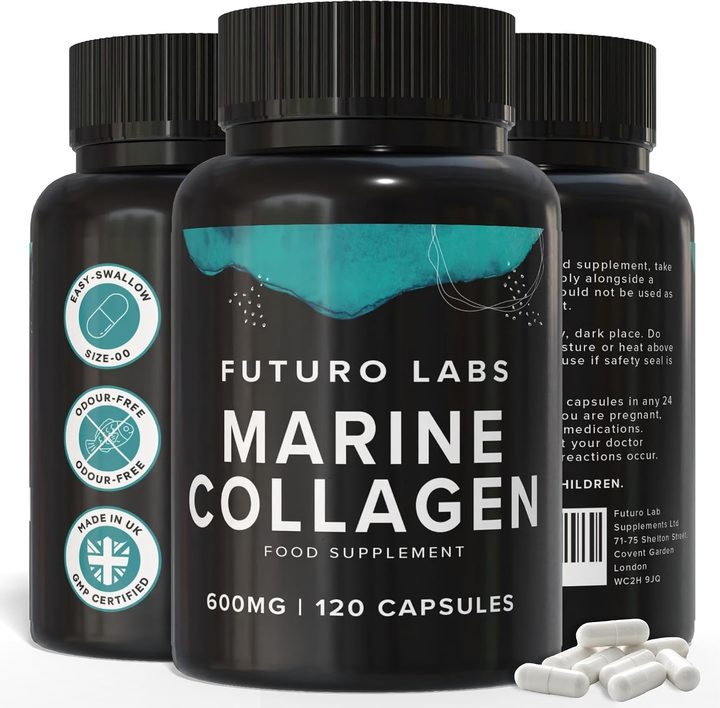
Our brand: the worked example on this page
Futuro Labs Marine Collagen
- 28p a day
- 120 capsules, 2 capsules daily
- Lab tested
- Made in the UK
A label read by the same five lines: Futuro Labs Marine Collagen on Amazon UK, 2 capsules, 1200mg hydrolysed type 1 marine collagen with 12mg vitamin C at 15% NRV plus zinc, 120 for £16.99, 28p a day, lab tested and UK made, the grams printed and stated as below the research band, the type and animal named, the vitamin C line carried. Full label breakdown. The label literacy page is on the check a collagen label page; hydrolysed against chelated and extract on the supplement label words page; molecular weight on the molecular weight page.
What a branded ingredient name is, and what it does and does not tell a reader
What is a Promerim collagen supplement is a question about a word on a label, and the honest page answers it by explaining what that kind of word is, because branded ingredient names appear across the supplement aisle and a reader who understands the category can read any of them. Promerim is a branded hydrolysed collagen peptide ingredient: a supplier's trademark for a collagen raw material made to that supplier's specification, by that supplier's process, and sold to brands that put it in their own finished products, capsules, powders and drinks, which then carry the ingredient's name on their label, often with a trademark symbol, beside or instead of the words hydrolysed collagen. That is what a capitalised ingredient name means wherever it appears in the aisle, in collagen as in creatine, turmeric or magnesium, and the branded collagen peptide market has several such names from several suppliers, each denoting a particular peptide fraction, molecular weight range or source handled in a particular way. What a branded name tells a reader is real and limited: that the brand chose to buy a named, specified ingredient from an identifiable supplier rather than a generic hydrolysate of unstated origin, which may come with the supplier's own manufacturing documentation and, for some branded peptides on the wider market, with trials the supplier funded on its own material, a fact that cuts both ways since manufacturer-funded trials are the norm in this aisle. What a branded name does not tell a reader, unless the label prints it beside the name, is almost everything that matters to a purchase: how many grams of collagen are in a serving, which the name alone cannot convey and which decides whether the tub is in the 2.5 to 15 gram research band or far below it; the collagen type, type 1 from skin or types 1 and 3 from hide; the source animal, fish, cattle or pig, which decides allergy, diet and faith; the molecular weight range, which brands quote and which makes no measurable difference to outcomes within the ranges sold; the price per gram of collagen; and whether an independent laboratory certificate exists for this batch of this finished product, which is the one safety document the trials cannot vouch for. A branded ingredient is a specification, and a specification is not a dose, a type, a source or a trial on the tub in a reader's hand.
How to read a tub carrying any branded collagen name, and why this site reviews the label and not the ingredient
A tub carrying a branded collagen name is therefore read exactly as any other collagen tub, by the same five lines this site applies to every label in the aisle. Line one, the grams per serving against the research band: the skin trials gave 2.5 to 10 grams a day, the joint trials around 10, the tendon protocol 15, so the label's grams, not its ingredient name, decide which research the tub can be compared with, and a branded capsule at 500mg to a gram is below the band whatever the name on it, while a branded powder at ten grams is in it. Line two, the type and the animal, printed plainly: type 1 marine for the fish-allergic to avoid and the alpha-gal or beef-avoiding reader to choose, types 1 and 3 bovine for the reverse, with certification for observant readers, since a branded name does not exempt a tub from the source line. Line three, the pence per gram of collagen, which a branded ingredient often raises, the supplier's specification and marketing being costs the finished product carries, so a reader compares the price of the grams and not the prestige of the name. Line four, the register's line: no collagen, branded or generic, holds an authorised health claim in the UK, so a tub's lawful collagen sentence is vitamin C's, that it contributes to normal collagen formation, when vitamin C is in the formula, and a branded name that arrives with supplier trial claims is making research statements the register does not convert into label claims. Line five, the certificate: an independent laboratory's analysis of this batch of this finished product, confirming the collagen content the label states and the absence of the contaminants a marine or bovine source can carry, which a supplier's documentation on its raw material does not replace. This site makes no verdict on the branded ingredient itself, because an ingredient can be re-specified, reformulated or sourced differently over time and because the ingredient is not the thing a reader swallows; it reviews the label the ingredient sits on, by the five lines, and that review is the same for a branded tub as for a generic one. The worked example is a label read by those five lines: two capsules, 1200mg hydrolysed type 1 marine collagen with 12mg vitamin C plus zinc, 120 for £16.99 at 28p a day, independently lab tested and UK made, the grams printed and stated as below the research band, the type and animal named, the vitamin C sentence carried and no branded claim made for the collagen. What is a Promerim collagen supplement: a product carrying a supplier's trademark for a specified collagen peptide, read by its grams, type, source, price and certificate like any other, with the name a specification and the label the review.
| The item | What it is | What to do |
|---|---|---|
| The branded name | A supplier's trademark for a specified collagen peptide raw material sold to brands | Read it as a specification, not a dose, type, source or trial |
| What it tells you | A named supplier and a specified ingredient, possibly with supplier documentation | Note it; it does not replace the label's lines |
| Line one: grams | Per serving, against the 2.5 to 15g research band | Decides which research the tub can be compared with; a 500mg capsule is below the band whatever its name |
| Line two: type and animal | Type 1 marine or types 1 and 3 bovine; fish, cattle or pig | Allergy, diet, faith and certification |
| Line three: pence per gram | The price of the collagen, not the prestige of the name | Branded ingredients often cost more per gram |
| Line four: the register | No collagen holds a claim; vitamin C's collagen formation sentence is the lawful line | Supplier trial statements are not label claims |
| Line five: the certificate | An independent lab analysis of this batch of this finished product | Supplier documentation on the raw material does not replace it |
| This site's position | No verdict on the ingredient; the label is reviewed | Ingredients get re-specified; labels are what you read |
| The worked exampleOurs | Two capsules, 1200mg type 1 marine collagen with 12mg vitamin C plus zinc, 28p a day | Grams printed, type and animal named, vitamin C carried, lab tested, no branded collagen claim |
What to check on the label
- Read the name as a trademark: a specification, not evidence.
- Find the grams: against 2.5 to 15g, whatever the name.
- Find the type and animal: allergy, diet, faith.
- Price the grams, not the name: pence per gram.
- Ask for the batch certificate: supplier documents are not it.
Our brand
The worked example: Futuro Labs Marine Collagen
Futuro Labs Marine Collagen: 2 capsules daily, 1200mg hydrolysed type 1 marine collagen with 12mg vitamin C and 1.5mg zinc (15% NRV each), 120 capsules for £16.99, 60 days at 28p a day, lab-tested, UK GMP made. Slim veggie-shell capsules, odour free. Fish derived: pescatarian, not vegetarian or vegan.
- Collagen per serving
- 1200mg hydrolysed type 1 marine (fish)
- Co-factors
- vitamin C 12mg (15% NRV), zinc 1.5mg (15% NRV)
- Serving
- 2 capsules a day
- Bottle
- 120 capsules, 60 days
- Price
- £16.99 (28p a day)
- Capsule
- slim size 00, veggie shell, odour free
Questions people also ask
What does a branded collagen ingredient name mean on a label?
That the brand bought a specified collagen peptide raw material from a named supplier under that supplier's trademark, rather than a generic hydrolysate, which may come with the supplier's documentation but does not by itself state the grams per serving, the type, the source animal, the price per gram or the existence of a certificate for this batch, all of which the label must print separately.
Is Promerim collagen better than ordinary hydrolysed collagen?
A branded name is a specification and not a result: this site makes no verdict on any branded ingredient, which can be re-specified or sourced differently over time, and reads the finished tub by the same five lines as any other, grams against the 2.5 to 15 gram band, type and animal, pence per gram, the vitamin C line and the independent certificate.
Does a branded collagen ingredient have its own trials?
Some branded collagen peptides on the wider market do, funded by their suppliers on their own material, and manufacturer funding is the norm across the collagen trials this site describes; a supplier's trial on a raw material is research to weigh and is not converted by the register into a claim the finished product may print.
How many grams of collagen are in a Promerim supplement?
Whatever the finished product's label says, since the branded name carries no dose: a reader finds the grams of collagen per serving on the nutrition panel and compares them with the research band, 2.5 to 10 grams for skin, around 10 for joints and 15 for the tendon protocol, a capsule formula typically sitting below the band and a powder within it.
Should I pay more for a branded collagen ingredient?
Only for lines the label prints: a branded name often raises the pence per gram, so a reader compares the price of the collagen grams across tubs and pays extra only where the branded tub also prints its grams, type, source and an independent batch certificate, the things that decide a purchase and that no trademark supplies on its own.
Sources
- The branded ingredient literature: a trademarked ingredient name on a supplement label denotes a supplier's specified raw material, often with its own manufacturing process and sometimes its own trials, and tells the buyer nothing about dose, type or source unless those are printed beside it, so the label's grams, source and certificate remain the information to read whatever the ingredient is called. PubMed record
- The collagen manufacturing literature: raw hides and fish skins are cleaned, extracted to gelatine and enzymatically hydrolysed into low molecular weight peptides before filtration and spray-drying. PubMed record
- The peptide molecular weight literature: hydrolysed collagens run low molecular weight by definition, with di- and tripeptide absorption documented across ordinary hydrolysates rather than unique to ultra-low fractions. PubMed record
- Retained Regulation (EC) No 1924/2006 on nutrition and health claims made on foods, and the Great Britain nutrition and health claims register. https://www.gov.uk/government/publications/great-britain-nutrition-and-health-claims-nhc-register