Ghost Fitness/Collagen/What is powdered collagen?
What is powdered collagen?
The short answer
From hide to tub in four steps: cattle hide or fish skin cleaned; extracted with heat into gelatine, the protein that sets a jelly; hydrolysed with enzymes into short peptides so it no longer gels and dissolves in a drink; filtered and spray-dried into a fine white powder sold as collagen peptides. It delivers glycine, proline and hydroxyproline, differs from gelatine by not gelling and from bone broth by being standardised, and is dosed at 2.5 to 15 grams.
- Step oneraw cattle hide, or fish skin and scales, cleaned and treated: by-products of the meat and fish trades
- Step twoextracted with heat and water into gelatine: the long protein that gels when cool
- Step threehydrolysed with enzymes into short low-molecular-weight peptides: no longer gels; dissolves
- Step fourfiltered and spray-dried into a fine white powder: collagen peptides, hydrolysed collagen; dosed at 2.5 to 15 grams
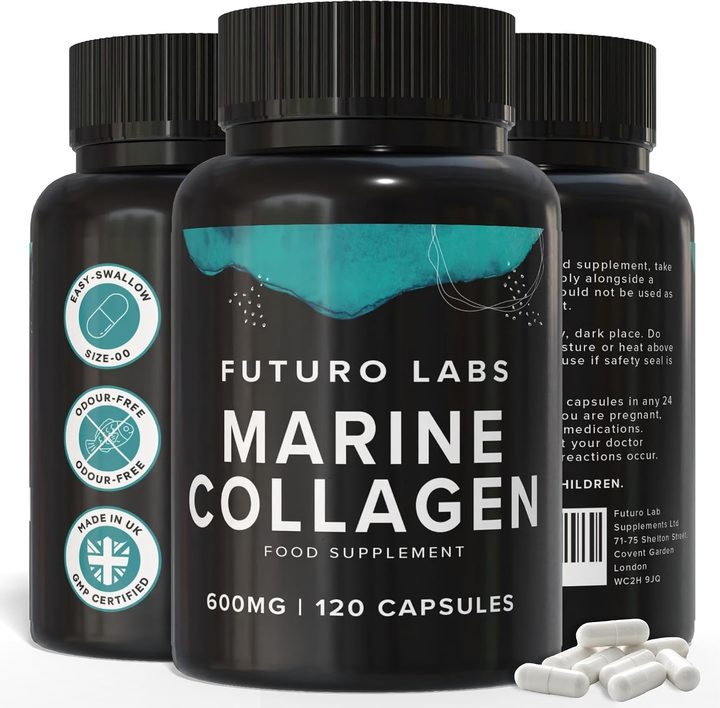
Our brand: the worked example on this page
Futuro Labs Marine Collagen
- 28p a day
- 120 capsules, 2 capsules daily
- Lab tested
- Made in the UK
The same hydrolysed peptides in a capsule, with the vitamin C line built in: Futuro Labs Marine Collagen on Amazon UK, 2 capsules, 1200mg hydrolysed type 1 marine collagen with 12mg vitamin C at 15% NRV plus zinc, 120 for £16.99, 28p a day. Full label breakdown. Peptides against hydrolysed collagen as words is on the words page; the powder spec on the powder page.
The four steps from hide to tub, and what each one changes
What is powdered collagen is a definition question, and the honest page answers it by walking the four steps from a hide to a tub, because each step explains something a reader sees on the label. Step one, the raw material: collagen is the structural protein of skin, bone, tendon and cartilage, and powdered collagen starts as cattle hide, the source of bovine collagen, or fish skin and scales, the source of marine collagen, both by-products of the meat and fish trades that would otherwise be waste, cleaned and treated to remove fat, hair and minerals, the collagen manufacturing literature's first stage, which is why bovine collagen is types 1 and 3, the hide's types, and marine collagen is type 1, the skin's, and why neither is vegetarian. Step two, extraction into gelatine: the cleaned material is heated in water, and the collagen's triple-helix fibres unwind and dissolve out as gelatine, the same gelatine that sets a jelly or a stock, a long, tangled protein of high molecular weight that gels when it cools because the long chains tangle and hold water, so at the end of step two the product is gelatine, which a reader can buy as leaf or powder and which needs hot liquid and sets cold. Step three, hydrolysis: the gelatine is treated with enzymes that cut the long chains into short peptides of a few amino acids each, low molecular weight by definition, the peptide molecular weight literature's account, and the cutting changes two things a reader notices, the peptides no longer gel because short chains cannot tangle, and they dissolve in cold or warm liquid rather than needing heat, which is the difference between a gelatine that sets a jelly and a collagen powder that vanishes into a coffee. Step four, drying: the peptide solution is filtered, concentrated and spray-dried into a fine, light, near-tasteless white powder, packed into a tub and sold as collagen peptides or hydrolysed collagen, two names for the same product at the end of the same four steps.
What the powder delivers, how it differs from gelatine and bone broth, how it is dosed, and the steps filed
What the powder delivers is the amino acid profile of collagen: glycine at roughly every third residue, proline and hydroxyproline in quantity, and little of the essential amino acids that whey carries, almost no leucine and no tryptophan, the collagen composition literature's profile, absorbed as small di- and tripeptides and free amino acids that appear in the blood within about half an hour and peak around the hour, the amino acid kinetics literature's curve, which is what the connective tissue research studies and which is why the powder scores near zero as a muscle protein and counts on a label as protein by nitrogen, the counting pages' two columns. How it differs from gelatine: the same protein one step earlier, gelatine gels and needs heat while collagen peptides dissolve and do not, and gram for gram they supply the same amino acids, which is why the tendon pre-loading research used gelatine and hydrolysed collagen interchangeably at around fifteen grams, the gelatine and vitamin C literature's protocol, and why a reader who prefers to make a jelly can. How it differs from bone broth: a broth extracts gelatine from bones and connective tissue at home and delivers it in a variable amount, a few grams a cup on a good day and less on a thin one, unstandardised and with the flavour of the pot, while a powder delivers a stated number of grams a scoop, the difference between a food and a supplement. How it is dosed: by the research band of 2.5 to 15 grams a day, the collagen trial literature's range, a level teaspoon at the floor for the skin trials, a heaped dessertspoon at the middle for the skin and joint trials and a level scoop at the top for the tendon protocol, with the tub's own twenty-gram scoop being a serving size rather than a research dose, and with no authorised health claim for the powder in the UK, the only collagen-related sentence belonging to vitamin C for normal collagen formation. The steps filed: hide or skin cleaned, extracted into gelatine, hydrolysed into peptides that no longer gel, and spray-dried into a powder that dissolves, delivering glycine, proline and hydroxyproline, differing from gelatine by not gelling and from broth by being standardised, and dosed by the band, with the worked example being the same peptides in a capsule with the vitamin C line built in, £16.99 for 120 at 28p a day.
| The step | What happens | What it explains on the label |
|---|---|---|
| One: the raw material | Cattle hide, or fish skin and scales, cleaned and treated | Bovine is types 1 and 3; marine is type 1; neither is vegetarian |
| Two: extraction | Heated in water; the fibres unwind into gelatine | Gelatine gels when cool and needs heat: a jelly |
| Three: hydrolysis | Enzymes cut the chains into short peptides | No longer gels; dissolves cold or warm: a powder for a coffee |
| Four: drying | Filtered, concentrated, spray-dried | A fine white powder: collagen peptides, hydrolysed collagen |
| What it delivers | Glycine, proline, hydroxyproline; little leucine; no tryptophan | Absorbed within the hour; protein by nitrogen; near zero as a muscle protein |
| How it is dosed | The research band, 2.5 to 15 grams | A teaspoon, a dessertspoon or a level scoop; no claim |
The verdict, gelatine cut short and dried, dissolving where gelatine sets, dosed by a band and claiming nothing
What is powdered collagen: gelatine cut short and dried, made in four steps from cattle hide or fish skin cleaned and treated, extracted with heat into gelatine, the long protein that sets a jelly, hydrolysed with enzymes into short low-molecular-weight peptides that no longer gel and dissolve in a cold or warm drink, and filtered and spray-dried into a fine white powder sold as collagen peptides or hydrolysed collagen, delivering glycine, proline and hydroxyproline absorbed within the hour, differing from gelatine by not gelling and from bone broth by being standardised, dosed by the research band of 2.5 to 15 grams and holding no authorised claim, with vitamin C's collagen formation sentence the only one that mentions it. The same peptides in a capsule with the vitamin C line built in: Futuro Labs Marine Collagen, 1200mg type 1 with 12mg vitamin C, 120 for £16.99 at 28p a day.
What to check on the label
- Know the source: hide for bovine, skin for marine, neither vegetarian.
- Know the step that matters: hydrolysis, which stops it gelling.
- Read peptides and hydrolysed as one product: two names, four steps.
- Know what it delivers: glycine, proline, hydroxyproline; not leucine.
- Dose it by the band: 2.5 to 15 grams, not the tub's scoop.
Our brand
The worked example: Futuro Labs Marine Collagen
Futuro Labs Marine Collagen: 2 capsules daily, 1200mg hydrolysed type 1 marine collagen with 12mg vitamin C and 1.5mg zinc (15% NRV each), 120 capsules for £16.99, 60 days at 28p a day, lab-tested, UK GMP made. Slim veggie-shell capsules, odour free. Fish derived: pescatarian, not vegetarian or vegan.
- Collagen per serving
- 1200mg hydrolysed type 1 marine (fish)
- Co-factors
- vitamin C 12mg (15% NRV), zinc 1.5mg (15% NRV)
- Serving
- 2 capsules a day
- Bottle
- 120 capsules, 60 days
- Price
- £16.99 (28p a day)
- Capsule
- slim size 00, veggie shell, odour free
Questions people also ask
What is the difference between collagen powder and gelatine?
One manufacturing step: gelatine is collagen extracted with heat into long chains that gel when cool and need hot liquid, and collagen powder is that gelatine hydrolysed with enzymes into short peptides that no longer gel and dissolve cold or warm, with the same amino acids gram for gram, which is why the tendon research used the two interchangeably.
What is collagen powder made from?
Cattle hide for bovine collagen, giving types 1 and 3, and fish skin and scales for marine collagen, giving type 1, both by-products of the meat and fish trades that are cleaned, extracted into gelatine, hydrolysed into peptides and spray-dried, with neither being vegetarian and marine being pescatarian.
Is collagen powder the same as collagen peptides?
Yes: collagen peptides and hydrolysed collagen are two names for the product at the end of the same four steps, gelatine cut by enzymes into short peptides and dried into a powder, and a label that uses either word is describing the same thing.
Is bone broth as good as collagen powder?
It is the same gelatine in a variable amount: a broth extracts gelatine from bones and connective tissue at home and delivers a few grams a cup on a good day and less on a thin one, with the flavour of the pot, while a powder delivers a stated number of grams a scoop, the difference between a food and a standardised supplement.
What does collagen powder do in the body?
It delivers glycine, proline and hydroxyproline as small peptides absorbed within the hour, the amino acids the connective tissue research studies at 2.5 to 15 grams a day, while carrying almost no leucine and no tryptophan, so it counts as protein by nitrogen on a label, scores near zero as a muscle protein and holds no authorised health claim in the UK.
Sources
- The collagen manufacturing literature: raw hides and fish skins are cleaned, extracted to gelatine and enzymatically hydrolysed into low molecular weight peptides before filtration and spray-drying. PubMed record
- The peptide molecular weight literature: hydrolysed collagens run low molecular weight by definition, with di- and tripeptide absorption documented across ordinary hydrolysates rather than unique to ultra-low fractions. PubMed record
- The collagen composition literature: amino acid analyses show glycine at roughly every third residue with high proline and hydroxyproline, low leucine and no tryptophan. PubMed record
- The amino acid kinetics literature: plasma amino acid and peptide levels rise within about 30 minutes of ingesting hydrolysed collagen or gelatine and peak around the hour, the pharmacokinetic basis for pre-loading timing. PubMed record