Ghost Fitness/Collagen/Are peptides safe?
Are peptides safe?
The short answer
It depends which peptides. Collagen peptides are a food protein with no upper level, safe for healthy adults, with a stone-former note. Injectable research peptides sold online are unlicensed, untested for purity and prohibited in sport: not safe territory.
- Shelf one, food peptidesevery protein digests into peptides: food
- Shelf two, collagen peptidesa food supplement, no upper level, four calories a gram, two footnotes
- The two footnoteshydroxyproline to oxalate for calcium stone formers; fish protein for fish allergy with marine
- Shelf three, research peptidesunlicensed, mislabelled in testing, prohibited in sport: not a safety question this site can answer yes to
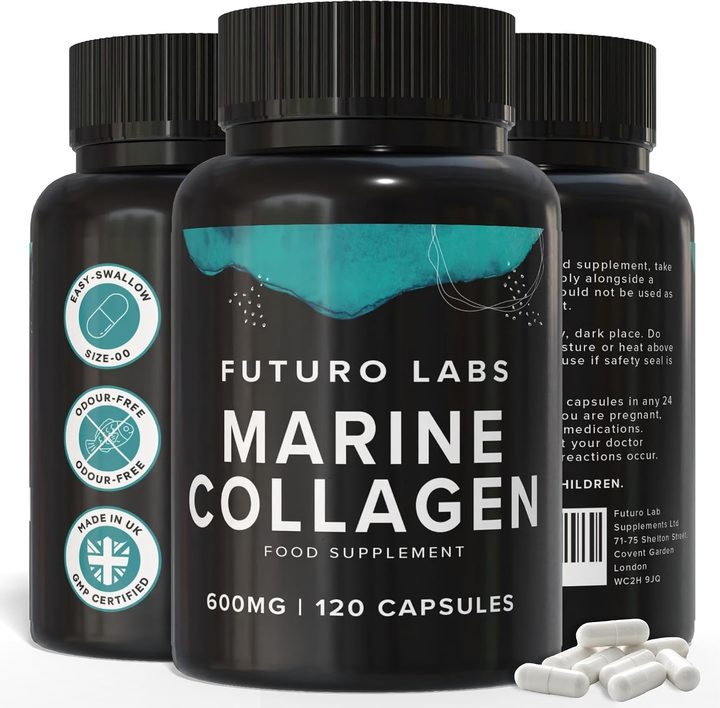
Our brand: the worked example on this page
Futuro Labs Marine Collagen
- 28p a day
- 120 capsules, 2 capsules daily
- Lab tested
- Made in the UK
The shelf-two example, stated on its true terms: Futuro Labs Marine Collagen on Amazon UK, 2 capsules, 1200mg hydrolysed type 1 marine collagen with 12mg vitamin C at 15% NRV plus zinc, 120 for £16.99, 28p a day, lab tested and UK made, a dose below the 2.5 to 15g research band taken for the vitamin C line. Full label breakdown. The forum podium is on the top three peptides page; the dose ceiling on the how many mg is safe page.
Shelves one and two: peptides as food and collagen peptides as a food supplement
Are peptides safe is a question the word itself makes impossible to answer in one sentence, because peptide means a short chain of amino acids and that description covers three shelves that have nothing in common but the chemistry, so the honest page takes the shelves one at a time. Shelf one is the peptides in food: every protein a reader eats, the chicken, the eggs, the whey, the beans, is broken by stomach acid and pancreatic enzymes into peptides of two to a few amino acids and into free amino acids, absorbed across the gut wall and used or burned, the amino acid pharmacokinetics literature's description of a process that has run in every human at every meal, so peptides in this sense are food and safe is not even a question. Shelf two is collagen peptides, the product the collagen aisle sells: hydrolysed collagen, gelatin taken a step further by enzymes into fragments of a few hundred to a few thousand daltons, a food protein regulated in the UK as a food supplement under the food supplements regulations, with no upper level set by any authority because none has been needed, no toxicity in the trials that gave it at up to fifteen grams a day for months, and four calories a gram like any protein, so shelf two is safe for a healthy adult in the ordinary sense a food is. Two footnotes belong on this shelf and the honest page prints them rather than hiding them: hydroxyproline, the amino acid that makes collagen collagen, is metabolised partly to oxalate, and the gelatin feeding studies show urinary oxalate rising after large loads, which matters only to a reader who has formed calcium oxalate kidney stones, who keeps collagen and gelatin modest and asks whoever manages the stones; and marine collagen is made from fish skin and scale protein, which is exactly what a fish allergy is to, so a fish-allergic reader chooses bovine and a reader unsure of the allergy asks before trying marine. Neither footnote makes collagen peptides unsafe; both make them a food with a label worth reading, which is what every food is.
Shelf three: the injectable compounds the word peptide has come to mean online, and why safe is the wrong word
Shelf three is the reason the question exists at all, because a reader typing are peptides safe in 2026 is often not asking about collagen but about the compounds that lifting forums call peptides: growth hormone secretagogues, the healing peptides that circulate under research codes, and their relatives, sold from websites in vials labelled not for human consumption or for research use only, to be reconstituted and injected. The honest answer on this shelf is that safe is not a word that applies, for four reasons the regulatory literature sets out. First, none of these compounds is a licensed medicine in the UK, so no regulator has assessed their manufacture, dose, purity or effects, and the label that says not for human consumption is the seller's way of saying so. Second, supplying them for human use falls under medicines law, the borderline guidance under which a product presented as acting on the body is a medicine whatever it calls itself, so the seller is committing an offence and the buyer has no recourse when the vial is not what it says. Third, that happens: independent analyses of research peptides bought online have repeatedly found the wrong compound, the wrong dose, bacterial contamination in products meant to be injected, and no compound at all, which is what an unregulated supply chain produces. Fourth, growth hormone secretagogues and related peptides are prohibited at all times under the anti-doping code, so a tested athlete or a lifter at a drug-tested amateur meet fails a test, the strict liability principle leaving intent aside. This site does not cover shelf three beyond saying that, and a reader who wants the podium of what a lifter may lawfully take, dietary protein first, collagen peptides second at research grade and third place empty, has it on the top three peptides page. The worked example lives on shelf two and is stated on its true terms: two capsules, 1200mg hydrolysed type 1 marine collagen with 12mg vitamin C plus zinc, 120 for £16.99 at 28p a day, lab tested and UK made, a dose below the 2.5 to 15g research band taken for vitamin C's collagen formation sentence, the only collagen sentence the register allows, and a food a fish-allergic reader swaps for bovine. Filed: shelf one is food, shelf two is a food supplement with two footnotes, and shelf three is unlicensed and prohibited territory where the question has no yes.
| The shelf | What it is | The safety answer |
|---|---|---|
| Peptides in food | Every protein digests into peptides and amino acids | Food; not a question |
| Collagen peptides | Hydrolysed collagen, a food supplement, 2.5 to 15g in research | No upper level, no toxicity; two footnotes below |
| Footnote: stones | Hydroxyproline metabolised partly to oxalate | Calcium oxalate stone formers keep it modest and ask |
| Footnote: fish | Marine collagen is fish skin and scale protein | Fish allergy chooses bovine |
| Research peptides | Secretagogues and healing peptides sold not for human consumption | Unlicensed, mislabelled in testing, prohibited in sport; not safe territory |
| The worked exampleOurs | Two capsules, 1200mg marine collagen with 12mg vitamin C, 28p a day | Shelf two, on its true terms |
What to check on the label
- Ask which peptide: food, collagen, or a vial.
- Treat collagen peptides as food: no upper level, four calories a gram.
- Read the stone footnote: calcium oxalate formers keep it modest.
- Read the fish footnote: fish allergy chooses bovine.
- Leave the vials alone: unlicensed, untested, prohibited.
Our brand
The worked example: Futuro Labs Marine Collagen
Futuro Labs Marine Collagen: 2 capsules daily, 1200mg hydrolysed type 1 marine collagen with 12mg vitamin C and 1.5mg zinc (15% NRV each), 120 capsules for £16.99, 60 days at 28p a day, lab-tested, UK GMP made. Slim veggie-shell capsules, odour free. Fish derived: pescatarian, not vegetarian or vegan.
- Collagen per serving
- 1200mg hydrolysed type 1 marine (fish)
- Co-factors
- vitamin C 12mg (15% NRV), zinc 1.5mg (15% NRV)
- Serving
- 2 capsules a day
- Bottle
- 120 capsules, 60 days
- Price
- £16.99 (28p a day)
- Capsule
- slim size 00, veggie shell, odour free
Questions people also ask
Are collagen peptides safe to take every day?
Yes for a healthy adult: hydrolysed collagen is a food protein regulated as a food supplement, with no upper level set by any authority and no toxicity in trials giving up to fifteen grams a day for months, the two footnotes being the oxalate note for calcium stone formers and the fish protein note for fish allergy with marine collagen.
Are the peptides sold online for muscle growth safe?
No answer of yes exists: growth hormone secretagogues and healing peptides sold labelled not for human consumption are not licensed medicines, independent testing has found wrong compounds, wrong doses and contamination in injectable products, and they are prohibited at all times in tested sport, so this site does not cover them beyond saying so.
Is it legal to buy research peptides in the UK?
Supplying them for human use falls under medicines law, so the seller commits an offence whatever the label says, the buyer has no recourse when the vial is mislabelled, and a tested athlete fails a test under strict liability; the legal question in full is on the are peptides legal page.
Can I take collagen peptides if I have had kidney stones?
With care and a question: hydroxyproline is metabolised partly to oxalate and large gelatin loads raise urinary oxalate in feeding studies, so a reader who has formed calcium oxalate stones keeps collagen and gelatin modest and asks whoever manages the stones before adding a daily dose.
Is marine collagen safe if I am allergic to fish?
Not without asking: marine collagen is made from fish skin and scale protein, which is what the allergy reacts to, unlike refined fish oil which contains little protein, so a fish-allergic reader chooses a bovine collagen and a reader unsure of the allergy asks an allergist before trying marine.
Sources
- The amino acid kinetics literature: plasma amino acid and peptide levels rise within about 30 minutes of ingesting hydrolysed collagen or gelatine and peak around the hour, the pharmacokinetic basis for pre-loading timing. PubMed record
- The hydroxyproline and urinary oxalate literature: gelatin and collagen are rich in hydroxyproline, which the liver metabolises partly to oxalate, and feeding studies show a rise in urinary oxalate after large gelatin loads, a note for people who form calcium oxalate kidney stones and no concern at ordinary intakes in others. PubMed record
- The regulatory position on research peptides: compounds such as growth hormone secretagogues and healing peptides sold online labelled not for human consumption or for research use only are not licensed medicines in the UK, supplying them for human use falls under medicines law, independent testing of such products has repeatedly found mislabelled content, wrong doses and contamination, and they are prohibited at all times under the anti-doping code. PubMed record
- The WADA Prohibited List: growth hormone secretagogues and related research peptides are prohibited at all times in tested sport. https://www.wada-ama.org/en/prohibited-list