Ghost Fitness/Collagen/Are peptides legal?
Are peptides legal?
The short answer
Legal depends on the door. Collagen peptides are food supplements, lawful to sell and buy. Prescription peptides are lawful on prescription. Research peptides sold 'not for human consumption' sit outside both; supplying them for human use is an offence.
- Door one, foodcollagen peptides: a food supplement under the 2003 regulations, lawful to make, sell, buy and take
- Door two, medicineinsulin and the injectable weight-loss agents: prescription-only, lawful via prescription and pharmacy
- Door three, research chemicalsnot licensed; supply for human use is an offence for the seller; the buyer has no protection
- Sportsecretagogues and related peptides prohibited at all times; strict liability
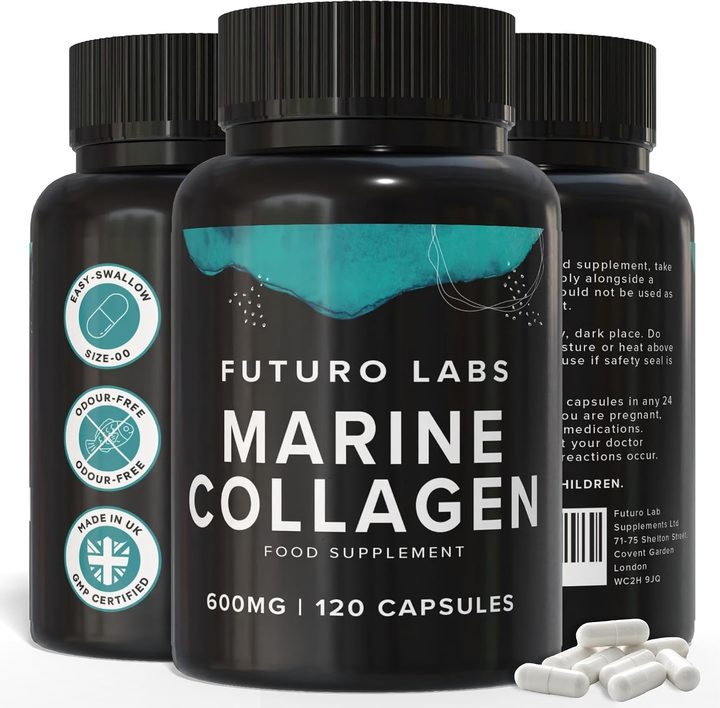
Our brand: the worked example on this page
Futuro Labs Marine Collagen
- 28p a day
- 120 capsules, 2 capsules daily
- Lab tested
- Made in the UK
The door-one example: Futuro Labs Marine Collagen on Amazon UK, 2 capsules, 1200mg hydrolysed type 1 marine collagen with 12mg vitamin C at 15% NRV plus zinc, 120 for £16.99, 28p a day, lab tested and UK made, a food supplement sold as one, with the dose stated plainly and below the 2.5 to 15g research band. Full label breakdown. The safety version of this question is on the are peptides safe page; the lawful podium on the strongest peptide page.
Doors one and two: the food door and the medicine door
Are peptides legal is a question with three answers because the word peptide walks through three doors, and the honest page describes the framework door by door while saying plainly that it is a description and not legal advice. Door one is the food door, and collagen peptides came through it: hydrolysed collagen is a food protein, gelatin taken further by enzymes, and in the UK it is sold as a food supplement under the Food Supplements Regulations 2003, which treat supplements as foods, so it is lawful to make, import, sell, buy and take, with the label governed by the food information rules and the nutrition and health claims register, and with trading standards and environmental health as the enforcers when a label lies. Nothing about a collagen capsule or a collagen powder raises a legal question for the buyer, and the only legal question on that shelf is the seller's, whether the tub carries a claim the register does not permit, which is a labelling offence for the brand and not a problem for the reader who bought it. Door two is the medicine door, and a different set of peptides came through it: insulin is a peptide, the injectable weight-loss and diabetes agents are peptides, several hormones are peptides, and these are licensed medicines, prescription-only, lawful when prescribed by a prescriber and dispensed through a registered pharmacy and unlawful to sell any other way, the prescription-only framework under which the regulator warns repeatedly about websites selling prescription medicines without one, because what arrives is unregulated and frequently not what it claims. A reader with a prescription for a peptide medicine is entirely within the law, and the same reader buying the same molecule from a website without one has bought an unlicensed supply, so door two's legality is about the route, not the molecule.
Door three: the research chemical door, sport, and the doors totalled
Door three is the door the question is usually about, because a lifter typing are peptides legal in 2026 is asking about the vials: growth hormone secretagogues, the healing peptides that circulate under research codes, and their relatives, sold from websites labelled not for human consumption or for research use only, to be reconstituted and injected. The framework here is the one the regulatory literature sets out and the honest page gives it in four parts. First, none of these compounds is a licensed medicine in the UK, so no regulator has assessed their manufacture, purity, dose or effects, and the research-use label is the seller's acknowledgement of that. Second, supplying them for human use falls under medicines law: the borderline guidance treats a product as a medicine if it is presented as treating or preventing anything or has a significant pharmacological action on the body, whatever it calls itself, and supplying an unlicensed medicine is an offence for the seller, which is why the websites label the vials as research chemicals and leave the human use to the buyer's inference. Third, for most of these compounds possession for personal use is not in itself a criminal offence, since they are not controlled drugs, so the legal exposure sits with the seller rather than the buyer, but the buyer has no protection at all: no licensed manufacturer, no pharmacy, no recourse when independent testing finds, as it repeatedly has, the wrong compound, the wrong dose, bacterial contamination in a product meant to be injected, or no active compound at all. Fourth, sport: growth hormone secretagogues and related research peptides are prohibited at all times under the anti-doping code, so a tested athlete, or a lifter at one of the UK's drug-tested amateur federations, fails a test under strict liability, intent aside, and that is a rule with teeth regardless of what the criminal law says. That is the framework, and it is a description, since the law changes and applies to facts this page cannot know, so a reader with a real legal question asks a solicitor or the regulator and not a supplement site. This site covers door one and does not go through door three beyond saying what it is, and its worked example is a door-one product on its true terms: two capsules, 1200mg hydrolysed type 1 marine collagen with 12mg vitamin C plus zinc, 120 for £16.99 at 28p a day, lab tested and UK made, sold as the food supplement it is, with the dose printed plainly and described as below the 2.5 to 15g research band. The doors totalled: food, lawful in every direction; medicine, lawful by prescription and pharmacy and not otherwise; research chemical, unlicensed, an offence to supply for human use, unprotected to buy and prohibited in sport.
| The door | Which peptides | The legal position, described |
|---|---|---|
| Food | Collagen peptides, hydrolysed collagen, gelatin | A food supplement under the 2003 regulations: lawful to make, sell, buy and take; claims policed by trading standards |
| Medicine | Insulin, injectable weight-loss and diabetes agents, hormone peptides | Prescription-only: lawful via a prescriber and a registered pharmacy; unlawful to sell otherwise |
| Research chemical | Secretagogues, healing peptides sold not for human consumption | Not licensed; supply for human use is an offence for the seller; buyer unprotected |
| Sport | Secretagogues and related peptides | Prohibited at all times; strict liability at tested meets |
| The disclaimer | All three doors | A description of the framework, not legal advice; ask a solicitor or the regulator |
| The worked exampleOurs | Two capsules, 1200mg marine collagen with 12mg vitamin C, 28p a day | Door one, on its true terms |
What to check on the label
- Name the door: food, medicine or vial.
- Collagen peptides are food: buy them like any supplement.
- Peptide medicines need the prescription route: prescriber and pharmacy.
- Research vials are unlicensed: supply for human use is an offence; you are unprotected.
- Tested lifters read the prohibited list: strict liability.
Our brand
The worked example: Futuro Labs Marine Collagen
Futuro Labs Marine Collagen: 2 capsules daily, 1200mg hydrolysed type 1 marine collagen with 12mg vitamin C and 1.5mg zinc (15% NRV each), 120 capsules for £16.99, 60 days at 28p a day, lab-tested, UK GMP made. Slim veggie-shell capsules, odour free. Fish derived: pescatarian, not vegetarian or vegan.
- Collagen per serving
- 1200mg hydrolysed type 1 marine (fish)
- Co-factors
- vitamin C 12mg (15% NRV), zinc 1.5mg (15% NRV)
- Serving
- 2 capsules a day
- Bottle
- 120 capsules, 60 days
- Price
- £16.99 (28p a day)
- Capsule
- slim size 00, veggie shell, odour free
Questions people also ask
Are collagen peptides legal in the UK?
Yes in every direction: hydrolysed collagen is a food sold as a food supplement under the Food Supplements Regulations 2003, lawful to make, import, sell, buy and take, with the only legal question on that shelf being the seller's, whether the label carries a claim the register does not permit.
Is it illegal to buy research peptides online in the UK?
For most of these compounds possession for personal use is not itself a criminal offence, since they are not controlled drugs, while supplying them for human use is an offence for the seller under medicines law, so the exposure sits with the seller and the buyer has no protection when the vial is mislabelled or contaminated; this is a description of the framework and not legal advice.
Why do peptide websites say not for human consumption?
Because the compounds are not licensed medicines and supplying an unlicensed medicine for human use is an offence, so the label declares a research use the seller can defend and leaves the human use to the buyer's inference, which protects the seller and not the buyer.
Are peptides banned in sport?
Growth hormone secretagogues and related research peptides are prohibited at all times under the anti-doping code, and strict liability means a tested athlete or a lifter at a drug-tested amateur meet is responsible for what is in the sample regardless of intent, while collagen peptides, a food, are not prohibited.
Is a weight-loss peptide injection legal?
By the prescription route: the injectable weight-loss agents are prescription-only medicines, lawful when prescribed and dispensed through a registered pharmacy and unlawful to sell any other way, so the same molecule bought from a website without a prescription is an unlicensed supply and frequently not what it claims.
Sources
- The Food Supplements (England) Regulations 2003 (food supplements are regulated as foods in the UK). https://www.legislation.gov.uk/uksi/2003/1387/contents/made
- UK medicines regulation: prescription-only medicines such as modafinil may only be supplied against a prescription through registered pharmacies, with the MHRA warning that online sellers of POMs are unlawful and products frequently falsified. https://www.gov.uk/government/organisations/medicines-and-healthcare-products-regulatory-agency
- The MHRA's borderline guidance: a product is a medicine if it is presented as treating or preventing disease or has a significant pharmacological, immunological or metabolic action, determined case by case on presentation and function. https://www.gov.uk/government/publications/a-guide-to-what-is-a-medicinal-product
- The regulatory position on research peptides: compounds such as growth hormone secretagogues and healing peptides sold online labelled not for human consumption or for research use only are not licensed medicines in the UK, supplying them for human use falls under medicines law, independent testing of such products has repeatedly found mislabelled content, wrong doses and contamination, and they are prohibited at all times under the anti-doping code. PubMed record