Ghost Fitness/Collagen/Are collagen capsules just as effective as powder?
Are collagen capsules just as effective as powder?
The short answer
Check the four trial conditions. Form: hydrolysed collagen, met, the gelatin shell being more collagen. Absorption: identical, a capsule disintegrates in minutes. Duration: met. Dose: 2.5g needs four or five capsules, 15g about twenty-five. As effective gram for gram.
- Condition one, formhydrolysed collagen in both; the capsule's gelatin shell is itself collagen
- Condition two, absorptiona hard capsule disintegrates in the stomach within minutes; the same peptides reach the blood
- Condition three, durationeight to twenty-four weeks in the trials; a capsule habit keeps it as easily
- Condition four, dose2.5g is four or five typical capsules, 10g around twenty, 15g around twenty-five; a two-capsule 1200mg habit sits below the band
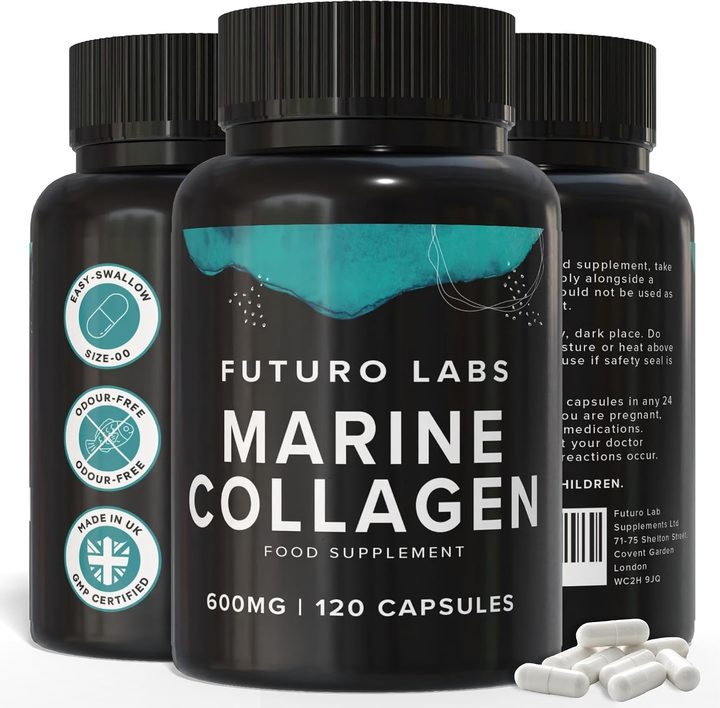
Our brand: the worked example on this page
Futuro Labs Marine Collagen
- 28p a day
- 120 capsules, 2 capsules daily
- Lab tested
- Made in the UK
A capsule that says which band it reaches: Futuro Labs Marine Collagen on Amazon UK, 2 capsules, 1200mg hydrolysed type 1 marine collagen with 12mg vitamin C at 15% NRV plus zinc, 120 for £16.99, 28p a day, lab tested and UK made, below the 2.5 to 15g research band and carrying vitamin C's collagen formation sentence. Full label breakdown. The dose arithmetic is on the capsules versus powder page; the lifter's version on the capsules or powder for lifters page; the three forms compared on the pills, powder or liquid page.
The first three conditions: form, absorption and duration, all met by a capsule
Are collagen capsules just as effective as powder is a question that the word effective answers only when it is tied to something, and the honest page ties it to the collagen trials, because effective means what the trials measured and the trials met specific conditions that a capsule either does or does not meet. There are four. The first condition is the form: the trials that produced the skin, joint and tendon evidence used hydrolysed collagen, collagen already broken by enzymes into short peptides, sometimes called collagen peptides or collagen hydrolysate, and a capsule meets this condition completely, since what is inside the shell is the same hydrolysed collagen powder a tub holds, and the shell itself, if it is gelatin, is collagen that has been heat-denatured rather than enzymatically cut, a small extra quantity of the same protein; a hypromellose shell, used in vegetarian capsules, is plant cellulose and adds nothing but subtracts nothing either. A reader should check that the capsule says hydrolysed collagen or collagen peptides rather than gelatin alone or an unspecified collagen, exactly as they would check a powder. The second condition is absorption, and this is where the shelf's doubt about capsules concentrates and where the pharmacology is clearest. A hard capsule is a dosage form tested against pharmacopoeial standards that require it to disintegrate in simulated stomach conditions within a set number of minutes, and gelatin and hypromellose capsules routinely do so well inside it, releasing their powder into the stomach where it meets the same acid and the same enzymes that a loose powder stirred into water meets a few minutes earlier; from that point the digestion is identical, the peptides are cut to the same di- and tripeptides and amino acids, and the prolyl-hydroxyproline and hydroxyprolyl-glycine that appear in blood for several hours afterwards are the same whichever container they came out of. There is no absorption advantage to powder and no absorption penalty to a capsule, and a product that claims one is claiming something the dosage form science does not support. The third condition is duration: the skin trials ran eight to twelve weeks before measuring, the joint trials twelve to twenty-four, and the tendon protocol is a per-session timing kept for the length of a rehab programme, so effective requires a habit held for months, which a capsule meets as well as a powder and arguably better, since a capsule needs no mixing, no flavour tolerance and no scoop, and the habit research is clear that the simplest form is the one that gets kept. Three conditions, three passes, and nothing yet to separate the forms.
The fourth condition, dose, where the forms separate, and the honest capsule
The fourth condition is the dose, and it is the only one of the four where a capsule and a powder part company, not because the capsule is less effective per gram but because of how many grams a capsule holds. The trials' doses are specific: 2.5g a day and above for the skin trials, with 2.5g and 10g producing instrument changes of similar size; 5 to 10g for the joint trials; and 15g with vitamin C about an hour before loading for the tendon protocol. A typical collagen capsule holds 500 to 600mg, so a two-capsule serving delivers 1000 to 1200mg, and reaching the trial doses from capsules is arithmetic: 2.5g is four or five capsules, 10g is around twenty, and 15g is around twenty-five, swallowed daily for months. Nobody does that, which is powder's whole argument and the honest reason a reader who wants the trial band in full buys a tub and a scoop. The capsule's answer is not to claim the band it does not reach but to say which band it does reach, and there are two honest capsule positions. The first is the habit position: a two-capsule 1200mg serving sits below the 2.5g floor of the research band, so it is a small daily collagen top-up whose lawful sentence belongs to the vitamin C beside it, which contributes to normal collagen formation for the normal function of skin, cartilage and bones, and to the zinc, which contributes to normal protein synthesis, with the collagen stated as below the band; a reader who wants that pairing in a form they will keep taking has a reason to choose it, and a label that says so is reading the trials correctly. The second is the band position: a reader who takes four or five capsules a day reaches 2.5g and the bottom of the skin band at a cost in swallow count and pence per gram that they can compare with a powder, and some will prefer it. What a capsule should never do is print the dose on the tub in a way that hides the per-serving grams, carry a skin or joint claim that collagen does not hold in the UK at any dose, or imply that the capsule form is better absorbed than powder, which it is not. The comparison, then, is settled by grams and not by form: a capsule is exactly as effective as powder per gram of hydrolysed collagen swallowed, the two forms meet the first three trial conditions equally, and the fourth condition decides which form a reader chooses according to the band they want and the number of capsules they will swallow. The worked example takes the habit position and says so: two capsules, 1200mg hydrolysed type 1 marine collagen with 12mg vitamin C at 15% of its reference value plus zinc, 120 for £16.99 at 28p a day, lab tested and UK made, below the 2.5 to 15g research band, carrying vitamin C's and zinc's sentences and no collagen claim. Are collagen capsules just as effective as powder: gram for gram, yes; the question is how many grams.
| The condition | What the trials used | Does a capsule meet it? | Does a powder meet it? |
|---|---|---|---|
| Form | Hydrolysed collagen, collagen peptides | Yes; the gelatin shell is a little more collagen | Yes |
| Absorption | Oral, digested to the same peptides and amino acids | Yes; a hard capsule disintegrates in the stomach within minutes | Yes; a few minutes earlier |
| Duration | Eight to twelve weeks for skin; twelve to twenty-four for joints; per session for the protocol | Yes; often kept more easily | Yes |
| Dose for the skin band | 2.5g a day and above | Four or five typical capsules | One scoop |
| Dose for the joint band | 5 to 10g a day | Ten to twenty capsules | One or two scoops |
| Dose for the tendon protocol | 15g with vitamin C an hour before loading | Around twenty-five capsules | Two scoops or gelatin |
| Claims | None authorised for collagen in the UK | The vitamin C's and zinc's sentences, if present | The same, if present |
| The worked exampleOurs | A habit dose | Two capsules, 1200mg marine collagen with 12mg vitamin C plus zinc, 28p a day; below the band, stated | Not applicable |
What to check on the label
- Check the form: hydrolysed collagen in the capsule.
- Stop worrying about absorption: identical after disintegration.
- Keep the habit for months: the trials did.
- Count the grams: 2.5g is four or five capsules, 15g about twenty-five.
- Prefer a capsule that says which band it reaches: and a label without a collagen claim.
Our brand
The worked example: Futuro Labs Marine Collagen
Futuro Labs Marine Collagen: 2 capsules daily, 1200mg hydrolysed type 1 marine collagen with 12mg vitamin C and 1.5mg zinc (15% NRV each), 120 capsules for £16.99, 60 days at 28p a day, lab-tested, UK GMP made. Slim veggie-shell capsules, odour free. Fish derived: pescatarian, not vegetarian or vegan.
- Collagen per serving
- 1200mg hydrolysed type 1 marine (fish)
- Co-factors
- vitamin C 12mg (15% NRV), zinc 1.5mg (15% NRV)
- Serving
- 2 capsules a day
- Bottle
- 120 capsules, 60 days
- Price
- £16.99 (28p a day)
- Capsule
- slim size 00, veggie shell, odour free
Questions people also ask
What are the benefits of hydrolysed collagen peptide powder?
The same as any hydrolysed collagen's at the same grams: instrument changes in skin elasticity and hydration at 2.5g and above over eight to twelve weeks, modest joint score changes at 5 to 10g over twelve to twenty-four weeks, and a synthesis marker rise when 15g with vitamin C precedes loading; powder's advantage is reaching those grams in a scoop rather than twenty capsules, not better absorption.
Are collagen capsules absorbed as well as powder?
Yes. A hard gelatin or hypromellose capsule disintegrates in the stomach within minutes under pharmacopoeial testing and releases its powder to the same digestion a loose powder gets, so the same di- and tripeptides and amino acids reach the blood; absorption is not a difference between the forms.
How many collagen capsules equal a scoop of powder?
A typical capsule holds 500 to 600mg, so a 2.5g scoop is four or five capsules, a 10g scoop around twenty and the 15g protocol around twenty-five; a two-capsule 1200mg serving is about half the smallest trial dose, which is why a capsule habit should be read as below the research band.
Is the gelatin capsule shell also collagen?
Yes: gelatin is collagen that has been heat-denatured, so a gelatin shell adds a small quantity of the same protein to the dose, around a tenth of a gram per capsule; a hypromellose shell, used in vegetarian capsules, is plant cellulose and adds nothing either way.
Do collagen capsules work for skin?
At the trial dose, as well as powder: the skin trials used 2.5g and above for eight to twelve weeks and measured a few percent by instrument, which is four or five capsules a day; a two-capsule 1200mg habit sits below that band and its lawful skin sentence belongs to the vitamin C beside it, which contributes to normal collagen formation for the normal function of skin.
Sources
- The oral dosage form literature: a hard gelatin or hypromellose capsule disintegrates in the stomach within minutes under pharmacopoeial testing and releases its powder for the same digestion as a loose powder, so the delivered dose of a protein is the powder weight inside the shell, with the gelatin shell itself a small additional quantity of collagen, and the differences between capsule and powder being dose per unit, convenience and cost rather than absorption. PubMed record
- The collagen peptide absorption literature: after oral hydrolysed collagen, small peptides such as prolyl-hydroxyproline and hydroxyprolyl-glycine appear in blood for several hours alongside free amino acids, and in cell and animal work these peptides act on fibroblasts and chondrocytes, the mechanism proposed for why hydrolysed collagen might do more than an equal quantity of its free amino acids, a hypothesis with human marker data behind it and no human outcome claim. PubMed record
- The collagen skin trial dose comparison: across the oral collagen skin trials, doses of 2.5 grams and 10 grams a day over eight to twelve weeks produced instrument changes of similar size, with no trial showing a proportional gain from the higher dose, consistent with fibroblast synthesis being rate-limited by the cell rather than by substrate supply once a modest intake is met. PubMed record
- The collagen manufacturing literature: raw hides and fish skins are cleaned, extracted to gelatine and enzymatically hydrolysed into low molecular weight peptides before filtration and spray-drying. PubMed record