Ghost Fitness/Collagen/Is it better to have collagen or protein powder?
Is it better to have collagen or protein powder?
The short answer
Stock the cupboard in order: food's protein first, whey second as the target's topper, creatine third on the aisle's strongest claim, and collagen last, an optional 28p rider. Better to have is a sequencing question, not a duel.
- Slot onefood's protein: the target mostly met at the table
- Slot twoa complete powder, whey by default: the topper
- Slot threecreatine at 3g: the aisle's strongest authorised claim
- Slot fourcollagen, optional: the 28p habit or the protocol scoop
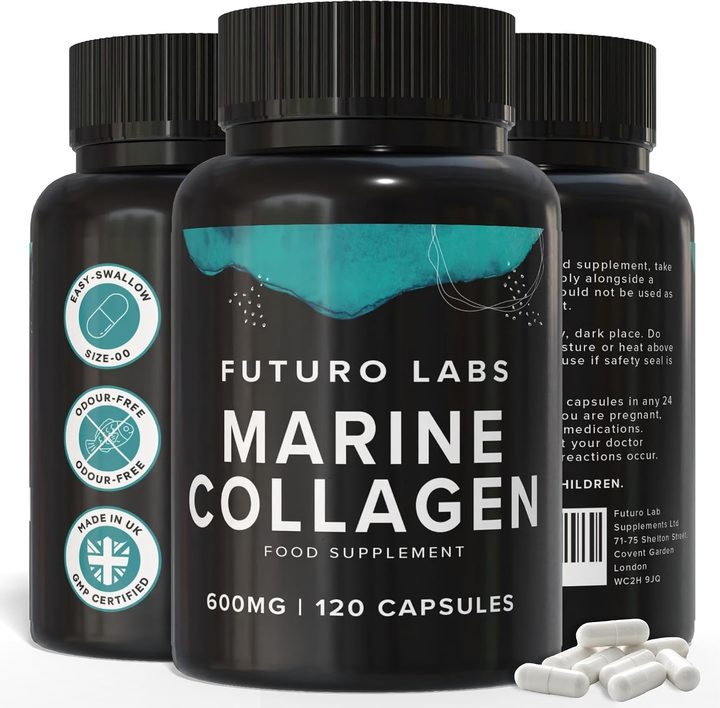
Our brand: the worked example on this page
Futuro Labs Marine Collagen
- 28p a day
- 120 capsules, 2 capsules daily
- Lab tested
- Made in the UK
Slot four, priced for its place in the queue: Futuro Labs Marine Collagen on Amazon UK, 1200mg hydrolysed type 1 with vitamin C and zinc at 15% NRV, £16.99 for 60 days at 28p. Full label breakdown. The family tree is on the protein powder page; the three-way draft on the creatine page.
The reframe, and slots one and two: the table, then the topper
To have is the giveaway word: this reader is not choosing a champion, they are stocking a cupboard, and cupboards are stocked in order, so the honest page argues the sequence rather than staging a duel the sibling pages have already scored six ways. Slot one, before any powder: food's protein, because the daily target the whole aisle orbits, roughly 1.2 to 2.2g per kilogram for a training adult, is mostly met at the table, eggs, dairy, meat, fish, beans and grains doing the tonnage cheaply and completely, and a cupboard stocked before the fridge is a cupboard funding the wrong shelf. Slot two, the first tub that genuinely earns purchase: a complete protein powder, whey by default for its leucine density, top quality scores and lawful muscle-maintenance claims, casein, soy, a pea-rice blend or egg white substituting by diet and preference per the family tree, the tub's job being the topper, the convenient 25g that closes the gap between what the table provided and what the target asked, most useful on training days and rushed mornings, and the single purchase that makes the largest measurable difference any powder can. Two slots in, and the reader with a modest budget already has permission to stop.
Slots three and four, the have-both answer, and the queue discipline that saves money
Slot three, and it jumps this page's own title because sequencing is honest or it is nothing: creatine monohydrate, three grams daily, the aisle's strongest case per the draft-board page, an authorised performance claim for repeated short-burst exercise, decades of trials, pennies a day, and a stronger evidential purchase than either tub in the headline, which is why the cupboard takes it before the question's second contestant. Slot four, at last: collagen, entering not as a protein, its grams sitting outside the target on the composition every quality page documents, but as the optional rider its own pages defend, the daily habit at capsule scale bought for the vitamin C and zinc sentences at 15% NRV, or the 15g-with-C pre-loading scoop for the connective-tissue reader with a physiotherapist in the loop, a slot that is genuinely optional, skipped without structural consequence, and priced accordingly at 28p. The have-both answer follows from the order rather than contradicting it: a reader can absolutely have collagen and protein powder, many do, but the cupboard that holds collagen while slot two stands empty has been stocked backwards, the accessory purchased before the structure, and the queue discipline this page exists to install is simply that each slot is filled only after the one before it, food before whey, whey before creatine's cheap certainty, creatine before collagen's optional habit, with money running out at whatever slot it runs out, which is the sequence's quiet virtue: it fails gracefully, funding the biggest differences first.
| The slot | The purchase | Why it holds this place |
|---|---|---|
| One | Food's protein: eggs, dairy, meat, fish, beans | The target is mostly met at the table, cheaply and completely |
| Two | A complete powder: whey by default | The topper: leucine, quality scores, lawful claims |
| Three | Creatine monohydrate, 3g daily | The aisle's strongest authorised claim at pennies |
| FourOurs | Collagen, optional | The 28p cofactor habit or the physio-adjacent protocol |
| The have-both answer | Fine, in this order | Accessory after structure, never before |
| The discipline | Fill each slot only after the last | Money that runs out fails gracefully |
The verdict, read down the queue
Is it better to have collagen or protein powder: the question is a sequence wearing a duel's clothes, and the sequence answers it, food first, a complete powder second with whey the default topper, creatine third on the aisle's best evidence, and collagen fourth, optional, honest and cheap, so the reader choosing one tub takes slot two and the reader who can fund the queue takes both in their order, never the reverse. The worked example is built for its slot: Futuro Labs Marine Collagen, 1200mg hydrolysed type 1 with 12mg vitamin C and 1.5mg zinc at 15% NRV, lab tested, UK made, £16.99 for 60 days at 28p a day, the accessory priced like one, waiting its turn behind the structure.
What to check on the label
- To have means to stock: argue the order, not a duel.
- The table fills slot one: powders top up, they never replace.
- Whey is the default slot two: leucine, scores, lawful claims.
- Creatine jumps the queue honestly: the aisle's strongest case at pennies.
- Collagen is slot four and optional: 28p, after the structure stands.
Our brand
The worked example: Futuro Labs Marine Collagen
Futuro Labs Marine Collagen: 2 capsules daily, 1200mg hydrolysed type 1 marine collagen with 12mg vitamin C and 1.5mg zinc (15% NRV each), 120 capsules for £16.99, 60 days at 28p a day, lab-tested, UK GMP made. Slim veggie-shell capsules, odour free. Fish derived: pescatarian, not vegetarian or vegan.
- Collagen per serving
- 1200mg hydrolysed type 1 marine (fish)
- Co-factors
- vitamin C 12mg (15% NRV), zinc 1.5mg (15% NRV)
- Serving
- 2 capsules a day
- Bottle
- 120 capsules, 60 days
- Price
- £16.99 (28p a day)
- Capsule
- slim size 00, veggie shell, odour free
Questions people also ask
Should I buy collagen or protein powder first?
Protein powder, and food before either: the cupboard stocks in order, table protein, then a complete powder as the topper, then creatine, with collagen fourth as an optional rider.
Is it fine to have both?
Yes, in the queue's order: whey toward the target, collagen as the 28p habit or protocol scoop, never the accessory funded while the structural slot stands empty.
Why does creatine appear in a collagen-versus-protein question?
Honest sequencing: at 3g daily it holds the aisle's strongest authorised claim for pennies, a better evidential purchase than either headline tub, so it takes slot three.
Can collagen fill the protein powder slot on a budget?
No: its grams sit outside the daily target on composition, so it cannot hold slot two, and a budget that reaches only one tub buys the complete powder.
Where does collagen genuinely earn its slot?
As the rider: the vitamin C and zinc sentences at 15% NRV in a daily habit, or the 15g pre-loading protocol beside connective-tissue training with a physio informed.
Sources
- Comparative protein research: the leucine content of a protein drives its muscle protein synthesis response, with whey outperforming collagen in direct comparisons. PubMed record
- The protein quality literature: scoring systems such as PDCAAS and DIAAS rate proteins by essential amino acid completeness and digestibility, with collagen scoring at or near zero for lacking tryptophan. PubMed record
- Review literature on protein intake and muscle mass in older adults: higher protein intakes support the maintenance of muscle in ageing, the evidence base behind the register's protein and muscle-mass claims mattering more with age. PubMed record
- EFSA Panel on Dietetic Products, Nutrition and Allergies. Scientific Opinion on the substantiation of health claims related to magnesium. EFSA Journal 2010;8(10):1807. https://efsa.onlinelibrary.wiley.com/doi/10.2903/j.efsa.2010.1807