Ghost Fitness/Collagen/What are the benefits of taking collagen in the morning?
What are the benefits of taking collagen in the morning?
The short answer
The benefits are the morning's, since the trials set no hour: a hot coffee that dissolves the powder and anchors the habit, a breakfast that carries it fed, fruit supplying the vitamin C cofactor, protein it leaves intact.
- The coffeedissolves the powder warm; the day's most fixed anchor; a dose survives to twelve weeks where a floating one lapses by week three
- The breakfastfed, sits lightly; a scoop at breakfast is off the reflux clock a scoop at the pillow is on
- The fruitan orange or juice supplies far more vitamin C than a capsule: the hydroxylase cofactor beside the protein
- The daybooked before the day's complete protein is planned, so it displaces none of it
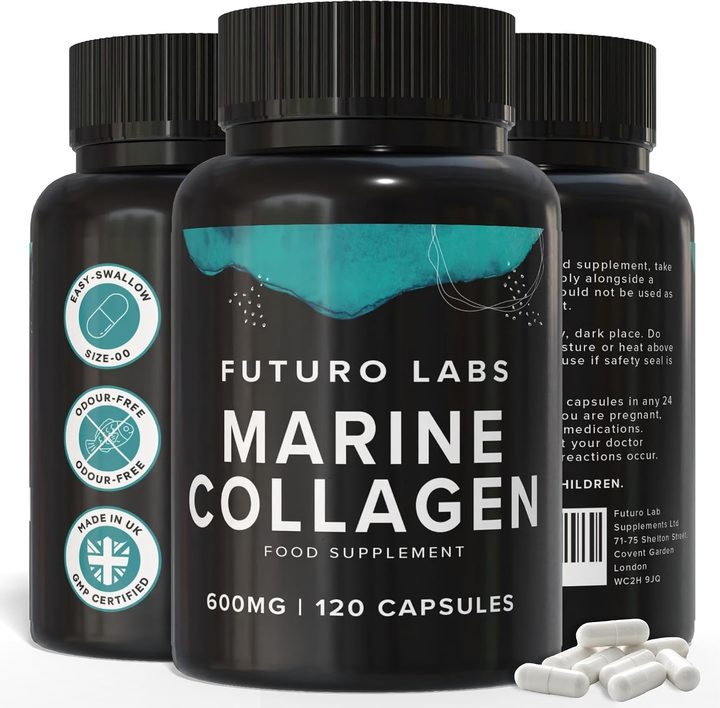
Our brand: the worked example on this page
Futuro Labs Marine Collagen
- 28p a day
- 120 capsules, 2 capsules daily
- Lab tested
- Made in the UK
The morning capsule with its cofactor built in: Futuro Labs Marine Collagen on Amazon UK, 2 capsules, 1200mg hydrolysed type 1 marine collagen with 12mg vitamin C at 15% NRV plus zinc, 120 for £16.99, 28p a day, lab tested and UK made, taken with breakfast for vitamin C's collagen formation sentence and a habit at the day's fixed point, below the research band and stated so. Full label breakdown. Morning against night is on the morning or night page; the powder version on the powder morning or night page; the overnight timeline on the before bed page.
Why the benefits belong to the morning and not the collagen, and the first two of them
What are the benefits of taking collagen in the morning is a question the shelf answers by giving the collagen credit for the hour, and the honest page gives the hour its own credit, because the collagen trials set no time of day, gave 2.5 to 15 grams a day fasted or fed at whatever hour the participants chose and measured skin at eight to twelve weeks and joints at twelve to twenty-four, so a morning dose does exactly what a night dose does to the tissues, which run on clocks of weeks and months and cannot tell the two apart. The benefits of the morning are therefore the morning's, and they are real, which is a better reason to take collagen then than a false one about the dose. Benefit one is the coffee. Hydrolysed collagen is a fine powder that dissolves cleanly in a hot drink with a stir and clumps in a cold one, so a morning coffee or tea is the easiest vehicle in the day for a powder, with no whisking and no aftertaste to speak of under the coffee, and the morning coffee is also, for most adults, the most fixed point in the entire day, taken at the same time in the same cup in the same kitchen whatever else happens, which makes it the best anchor a habit can have. Every collagen trial's controlled variable was daily consistency for weeks and months, and the habit literature is plain that a dose anchored to a fixed daily point survives to week twelve and beyond while a dose floating on memory lapses by around week three, so the coffee's benefit is that the reader is still taking the collagen when the trials would have measured, which no other hour delivers as reliably. Benefit two is the breakfast. A dose taken with food sits lightly, the fullness and bloating of a twenty-gram scoop being mostly a fasted and late-night complaint, and a scoop at breakfast is upright and moving for hours afterwards, off the reflux clock entirely, whereas a scoop at the pillow is a recognised reflux trigger in readers prone to it because lying down within two to three hours of a substantial drink lets the stomach's contents rise. The morning, then, carries the dose fed and vertical, which is the most comfortable way to carry twenty grams of protein in a glass and a benefit the collagen itself does not supply.
The third and fourth benefits, the register, and the honest default
Benefit three is the fruit, and it is the most interesting of the four because it connects the hour to the biochemistry. An orange, a kiwi, a handful of berries or a glass of orange juice at breakfast supplies far more vitamin C than any collagen capsule carries, an orange alone holding several times the 12mg in a capsule, and vitamin C is the cofactor for the prolyl and lysyl hydroxylases that shape every collagen chain the body's fibroblasts make, the step that fails in scurvy and the reason vitamin C holds the register's authorised sentence that it contributes to normal collagen formation for the normal function of skin, cartilage, bones, gums, teeth and blood vessels, the only collagen sentence a label may carry. The tendon pre-loading protocol pairs collagen with roughly 50mg of vitamin C on purpose for that reason, and the morning pairs them by accident, the fruit on the table beside the coffee supplying the cofactor alongside the protein without the reader arranging it, so the breakfast dose is the one hour at which most readers take collagen with its vitamin already in the same meal. Benefit four is the day. A collagen dose booked at breakfast is booked before the day's complete protein has been planned or eaten, and that matters for a lifter because collagen is the wrong protein for muscle, lacking tryptophan and most of whey's leucine and counting toward nothing at 1.6 grams per kilo, so the danger of a collagen dose is that it is mistaken for the day's protein and displaces a scoop of whey at the post-training shake; a morning dose, taken and forgotten before the shake is made, is the dose least likely to be double-counted, the day's complete protein being planned as if the collagen were not there, which is how it should be planned. The register closes the four with its usual line: collagen holds no claim at any hour, and the morning tub's sentences are vitamin C's and zinc's, borrowed from the ingredients beside it. The honest default follows: for a reader with no stronger anchor elsewhere, morning is the hour to take collagen, not because the dose does more but because the coffee dissolves it and holds the habit, the breakfast carries it comfortably, the fruit supplies the cofactor and the day's protein is untouched, four benefits that a reader whose fixed point is the last glass of water at night can trade for that anchor without losing anything the collagen does. The worked example is the morning capsule with its cofactor built in: two capsules, 1200mg hydrolysed type 1 marine collagen with 12mg vitamin C plus zinc, 120 for £16.99 at 28p a day, lab tested and UK made, taken with breakfast for vitamin C's collagen formation sentence and the habit, below the research band, needing no coffee to dissolve and no fruit to complete, though both are good company. What are the benefits of taking collagen in the morning: the coffee, the breakfast, the fruit and the day, all the morning's, all real, and none of them the collagen's.
| The benefit | What the morning supplies | Why it matters | Whose benefit |
|---|---|---|---|
| The coffee | A hot drink that dissolves the powder; the day's most fixed anchor | A dose anchored to it survives to the trials' twelve weeks; floating doses lapse by week three | The morning's |
| The breakfast | A fed, upright dose | Sits lightly; off the reflux clock a pillow scoop is on | The morning's |
| The fruit | An orange or juice with several times a capsule's vitamin C | The hydroxylase cofactor beside the protein; the register's collagen formation sentence | The morning's |
| The day | A dose booked before the day's protein is planned | Least likely to be mistaken for muscle protein and displace whey | The morning's |
| The dose itself | The same at any hour | Trials set no time; tissues run on weeks and months | Nobody's |
| The register | No collagen claim at any hour | Vitamin C's and zinc's sentences on the tub | The cofactors' |
| The worked exampleOurs | Two capsules with breakfast, 1200mg marine collagen with 12mg vitamin C plus zinc, 28p a day | The cofactor built in; the habit at the fixed point | On its true terms |
What to check on the label
- Stir it into the coffee: warm dissolves, and the cup is the anchor.
- Take it with breakfast: fed, upright, no reflux.
- Eat the fruit beside it: the cofactor arrives with the protein.
- Plan the day's protein as if it were not there: it counts toward none.
- Expect nothing from the hour itself: the trials set none.
Our brand
The worked example: Futuro Labs Marine Collagen
Futuro Labs Marine Collagen: 2 capsules daily, 1200mg hydrolysed type 1 marine collagen with 12mg vitamin C and 1.5mg zinc (15% NRV each), 120 capsules for £16.99, 60 days at 28p a day, lab-tested, UK GMP made. Slim veggie-shell capsules, odour free. Fish derived: pescatarian, not vegetarian or vegan.
- Collagen per serving
- 1200mg hydrolysed type 1 marine (fish)
- Co-factors
- vitamin C 12mg (15% NRV), zinc 1.5mg (15% NRV)
- Serving
- 2 capsules a day
- Bottle
- 120 capsules, 60 days
- Price
- £16.99 (28p a day)
- Capsule
- slim size 00, veggie shell, odour free
Questions people also ask
Is it better to take collagen in the morning or at night?
The dose does the same at either, since the trials set no hour and the tissues run on weeks and months, so the better hour is the one with the stronger anchor: the morning coffee for most readers, supplying a warm vehicle, a fed dose, breakfast fruit's vitamin C and a day of protein it does not displace, or the last glass of water for a reader whose routine is fixed there.
Should I take collagen on an empty stomach in the morning?
There is no absorption reason to: the trials gave collagen fasted and fed without specifying, a dose with breakfast sits more lightly than a fasted scoop and is off the reflux clock, and the fruit or juice at breakfast supplies the vitamin C cofactor beside the protein, so with breakfast is the more comfortable and better-paired choice.
Can I put collagen in my morning coffee?
Yes, and it is the best vehicle in the day: hydrolysed collagen dissolves cleanly in a hot drink with a stir where it clumps in a cold one, the coffee's heat does nothing to peptides made by heat and enzymes in the first place, and the cup is the most fixed anchor most adults have, which is what keeps a dose going to the trials' twelve weeks.
Does taking collagen with orange juice help?
It pairs the protein with its cofactor: vitamin C is required by the enzymes that hydroxylate every collagen chain the body makes and holds the register's collagen formation sentence, an orange or a glass of juice carries several times a capsule's 12mg, and the tendon protocol pairs the two on purpose for the same reason the breakfast pairs them by accident.
Does morning collagen work faster than night collagen?
No: the skin trials measured at eight to twelve weeks and the joint trials at twelve to twenty-four whatever hour the dose was taken, the dermis and joints turn over on clocks of months, and the only benefits the morning adds are the morning's, the coffee, the breakfast, the fruit and the protein planning, none of which changes the tissue's pace.
Sources
- The habit formation literature: anchoring a new behaviour to an existing daily routine is the best-documented adherence strategy, with consistency outperforming timing choices. PubMed record
- The nocturnal reflux literature: lying down within two to three hours of a large meal or a substantial drink increases reflux episodes in people prone to them, because gravity no longer assists gastric clearance, so late protein drinks are a recognised trigger in reflux-prone adults and the fix is timing and volume rather than the food itself. PubMed record
- The vitamin C deficiency literature: severe deficiency impairs collagen synthesis and produces connective tissue failure, the historical disease scurvy, essentially absent on ordinary modern diets. PubMed record
- The collagen peptide trial literature: randomised controlled studies of hydrolysed collagen supplementation across skin, joint and connective-tissue outcomes, typically at 2.5g to 15g daily, with small effects and frequent industry funding. PubMed record