Ghost Fitness/Collagen/Is it beneficial to take collagen and vitamin C together?
Is it beneficial to take collagen and vitamin C together?
The short answer
Beneficial in the weak sense only: every real benefit in the pairing belongs to the vitamin C, whose sentences arrive with or without collagen beside them. Nothing is lost taking both; nothing collagen-shaped is added either.
- Benefit one: the lawful sentencesowner: vitamin C alone, at 15% NRV, collagen adding nothing
- Benefit two: the synthesis chemistryowner: vitamin C again, as cofactor, met at dietary intakes
- Benefit three: the protocol designowner: the convention: C scheduled beside the 15g scoop
- The pairing's own entryempty: no synergy studied, claimed or possible to buy
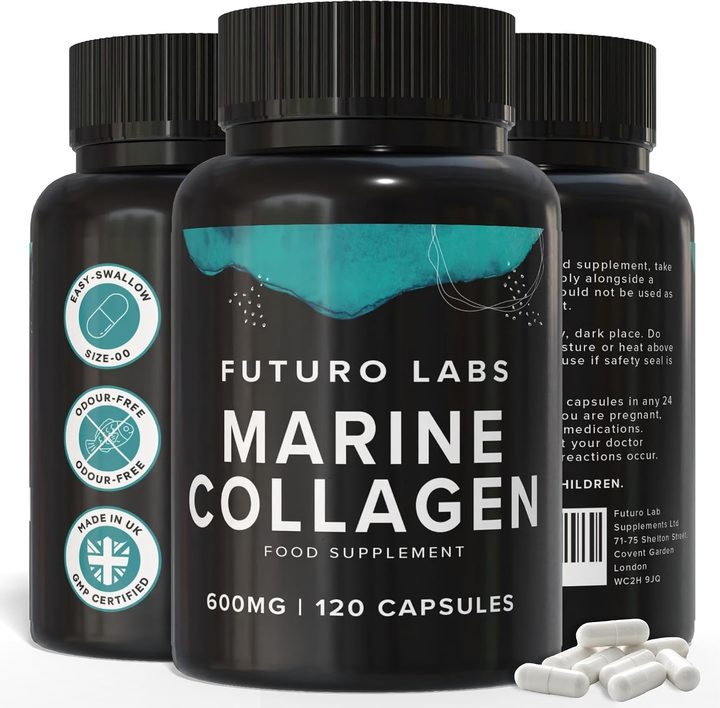
Our brand: the worked example on this page
Futuro Labs Marine Collagen
- 28p a day
- 120 capsules, 2 capsules daily
- Lab tested
- Made in the UK
Both names, one honest ledger: Futuro Labs Marine Collagen on Amazon UK, 1200mg hydrolysed type 1 with 12mg vitamin C at 15% NRV owning every sentence aboard, zinc alongside, £16.99 for 60 days at 28p. Full label breakdown. The skin-specific contract is on the C-for-skin page; the C logistics on the vitamin C page.
The ledger opened, and each claimed benefit traced to its true owner
Beneficial is an accounting word, so run the pairing's benefits as a ledger and attribute every line, because the famous double act survives on unexamined billing. Line one, the lawful sentences, the only benefits a UK label may print: vitamin C's authorised family, contribution to normal collagen formation for the function of skin, cartilage, bones, blood vessels, gums and teeth, plus its immune, energy and antioxidant entries, all activating at 15% NRV, and the attribution is absolute, these sentences belong to the vitamin alone, printed identically on an orange-juice carton, arriving with or without a peptide in sight, collagen contributing not one word, since collagen itself holds zero authorised claims at any dose. Line two, the synthesis chemistry the marketing loves to narrate: vitamin C genuinely is the cofactor for the hydroxylation enzymes that stabilise collagen's triple helix, scurvy's whole lesson, and the attribution lands on C again, with the honesty rider every C page carries, that this requirement is met at ordinary dietary intakes, a replete adult building no extra collagen from extra C, the cofactor being a threshold, not a dial, and swallowed peptides supplying material a fed body never lacked. Line three, the one place the pairing is genuinely designed rather than co-marketed: the pre-loading protocol, roughly 15g of collagen or gelatine with around 50mg of C an hour before tendon work, where the convention itself schedules the two together, the benefit owned by the studied design and graded as its pages grade it, stop-two, markers not outcomes. And the line the marketing implies but cannot fill: the pairing's own entry, synergy, an effect belonging to the combination beyond its parts, and it is empty, no study, no claim, no mechanism by which collagen improves what C does or C makes collagen do what it cannot.
The weak-sense verdict explained, the practical translations, and the ledger closed
The audit's verdict is precise rather than dismissive: taking collagen and vitamin C together is beneficial in the weak sense, meaning nothing is lost, the C's real benefits arrive on schedule, the collagen rides along harmlessly for its own two lanes, and the combination is convenient when one label carries both, and it is not beneficial in the strong sense the question usually intends, no benefit existing that requires the pairing, emerges from it, or exceeds the sum of two independent files, which converts into three practical translations worth carrying to the shelf. First, the sufficiency translation: if the benefits are C's, then C's presence is the audit, any collagen product claiming the pairing's virtues being checked in one glance at the NRV column, 15% activating the sentences, absence deactivating the marketing. Second, the substitution translation: a reader who wants the pairing's actual benefits without collagen can have them, diet or a plain C product delivering every lawful line for vitamin prices, the collagen half being optional by the ledger's own arithmetic, kept for the habit's convenience or the protocol's design, never for necessity. Third, the pricing translation: a premium charged for the combination as a combination is a synergy fee for an empty ledger line, the honest price being ingredients plus testing, which the 28p benchmark referees. The ledger closes with its one-sentence summary for the queue at the till: yes, take them together, freely and pleasantly, and know as you do that every benefit in the bag belongs to the smaller ingredient, which is not a scandal, just the billing corrected.
| The claimed benefit | The true owner | The note |
|---|---|---|
| The lawful label sentences | Vitamin C, at 15% NRV | Identical on an orange-juice carton |
| The synthesis-cofactor chemistry | Vitamin C, as threshold not dial | Met at ordinary dietary intakes |
| The protocol's paired design | The studied convention | ~50mg C beside the 15g scoop, stop-two |
| Synergy: the pairing's own entry | Nobody: the line is empty | No study, claim or mechanism exists |
| Convenience | The single label | One tub, both names: the honest weak-sense win |
| The pricing rule | Ingredients plus testing | No fee for an empty ledger line |
The verdict, with the billing corrected
Is it beneficial to take collagen and vitamin C together: in the weak sense, yes, nothing lost and the C's genuine benefits delivered, and in the strong sense the question intends, no, every real entry in the pairing's ledger belonging to the vitamin, the sentences, the cofactor chemistry and even the protocol's design, with the synergy line empty and the collagen riding for its own separate reasons. The worked example keeps its billing honest by construction: Futuro Labs Marine Collagen, 1200mg hydrolysed type 1 with 12mg vitamin C at exactly 15% NRV owning every sentence on the panel, 1.5mg zinc adding its own, lab tested, UK made, £16.99 for 60 days at 28p a day, the famous pairing on one label with the credits, for once, printed under the right name.
What to check on the label
- Attribute before you buy: every benefit has an owner.
- The sentences are C's alone: 15% NRV, with or without peptides.
- The cofactor is a threshold: met by diet, not raised by more.
- The synergy line is empty: no study, claim or mechanism.
- Pay for ingredients, not pairings: the 28p benchmark referees.
Our brand
The worked example: Futuro Labs Marine Collagen
Futuro Labs Marine Collagen: 2 capsules daily, 1200mg hydrolysed type 1 marine collagen with 12mg vitamin C and 1.5mg zinc (15% NRV each), 120 capsules for £16.99, 60 days at 28p a day, lab-tested, UK GMP made. Slim veggie-shell capsules, odour free. Fish derived: pescatarian, not vegetarian or vegan.
- Collagen per serving
- 1200mg hydrolysed type 1 marine (fish)
- Co-factors
- vitamin C 12mg (15% NRV), zinc 1.5mg (15% NRV)
- Serving
- 2 capsules a day
- Bottle
- 120 capsules, 60 days
- Price
- £16.99 (28p a day)
- Capsule
- slim size 00, veggie shell, odour free
Questions people also ask
Do collagen and vitamin C work better together?
No studied synergy exists: the vitamin's benefits arrive with or without collagen beside them, and the pairing delivers exactly the sum of two independent files, nothing emergent.
Why do so many products combine them then?
One honest reason and one billing trick: the single label is genuinely convenient, and the C's borrowed sentences make the collagen half sound lawful, which the NRV column exposes in a glance.
Is vitamin C necessary for collagen to work?
C is necessary for your body's own collagen synthesis, as scurvy proves, but the requirement is met at ordinary dietary intakes: a threshold, not a dial that extra C turns up.
Where is the pairing genuinely designed rather than marketed?
The pre-loading protocol: roughly 50mg of vitamin C scheduled beside the 15g scoop an hour before tendon work, a studied stop-two convention owned by its design.
Can I get the pairing's benefits without buying collagen?
Yes: diet or a plain vitamin C product delivers every lawful sentence at vitamin prices, the collagen half being optional convenience by the ledger's own arithmetic.
Sources
- Futuro Labs Marine Collagen listing and label: 1200mg hydrolysed type 1 marine collagen per 2-capsule serving with 12mg vitamin C and 1.5mg zinc at 15% NRV each, 120 capsules, independently lab tested, UK made. https://www.amazon.co.uk/dp/B0C2J7N364
- The gelatin and vitamin C pre-exercise research (Shaw, Baar and colleagues): 15g gelatin with vitamin C taken about an hour before loading, studied for markers of collagen synthesis, the protocol behind the tendon-training conversation. PubMed record
- EFSA Panel on Dietetic Products, Nutrition and Allergies. Scientific Opinion on the substantiation of health claims related to magnesium. EFSA Journal 2010;8(10):1807. https://efsa.onlinelibrary.wiley.com/doi/10.2903/j.efsa.2010.1807
- EFSA Panel on Dietetic Products. Scientific opinion on Dietary Reference Values for fats: Adequate Intake of 250mg combined EPA and DHA per day for adults. EFSA Journal 2010;8(3):1461. https://www.efsa.europa.eu/en/efsajournal/pub/1461