Ghost Fitness/Omega-3/Who should not take DHA?
Who should not take DHA?
The short answer
DHA's own two notes, then the shared list. The lipid note: DHA raises LDL modestly more than EPA at two grams and above, so a reader whose LDL is being treated asks about a DHA-heavy oil at grams; nothing at 120mg. The pregnancy note runs the other way: DHA is what the maternal claim asks for, and only the cod liver oil it comes in is avoided. Shared: a clinician's stop, an ingredient allergy, under-eighteens, and ask-first for anticoagulants, a rhythm history, surgery and kidney or liver disease.
- DHA's lipid notea modest LDL rise relative to EPA at two grams and above; a reader on LDL treatment asks; nothing at 120mg
- DHA's pregnancy noteruns the other way: 200mg extra a day for the foetal brain from a body or algal oil; not cod liver oil
- The shared should-not lista clinician's stop; an allergy to the product's ingredients; anyone under eighteen, no guidance here
- The shared ask-first listan anticoagulant, a rhythm history, surgery ahead, kidney or liver disease: at gram doses
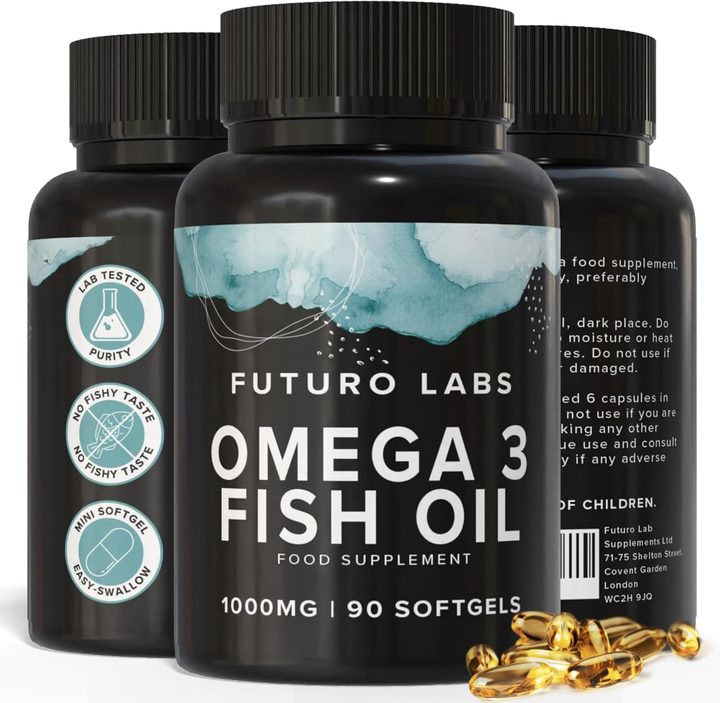
Our brand: the worked example on this page
Futuro Labs Omega 3 Fish Oil
- 17p a day
- 90 softgels, 1 softgel daily
- Lab tested
- Made in the UK
A body oil with 120mg of DHA a softgel and no vitamin A: Futuro Labs Omega 3 Fish Oil on Amazon UK, 1 to 2 softgels with food, 180mg EPA and 120mg DHA each, 90 for £14.99 at 17p. Full label breakdown. The three verbs for EPA and DHA together are on the three-verbs page; whether 500mg of DHA is too much on the 500mg DHA page.
DHA's own two notes, the lipid one and the pregnancy one that runs the other way
Who should not take DHA is a question that differs from who should not take fish oil in two specific ways, because DHA has two notes of its own that EPA does not share, and the honest page gives those first and the shared list second. The first note, the lipid one: in the head-to-head analyses of EPA and DHA on blood lipids, both lower triglycerides, and DHA raises LDL cholesterol modestly more than EPA, which is closer to neutral, an effect seen at the two-gram-and-above doses used for triglycerides and amounting to a few percent on a lipid panel, the EPA-versus-DHA lipid literature's finding. So a reader whose LDL is being treated toward a target by a GP or a cardiologist, or a reader taking a DHA-heavy oil, a DHA concentrate or an algal oil at gram doses for triglycerides or for any other reason, is a reader for whom the DHA note applies and who asks the clinician before taking DHA at grams, the cardiologist-stop pages' lipid-plan situation, and a reader on a standard fish oil softgel at 120mg of DHA, or two for the claim, is outside the note entirely, the LDL effect being absent at that dose. The second note, the pregnancy one, runs the other way, and it is the note most readers get wrong: DHA is the fatty acid the register's maternal claim asks for, DHA intake contributing to the normal brain development of the foetus and of breastfed infants at 200mg of DHA a day on top of the adult 250mg, the maternal claim's condition, so a pregnant or breastfeeding reader is the one reader on the page who should take DHA rather than avoid it, and the only DHA she avoids is the DHA that comes in cod liver oil, which carries the vitamin A that pregnancy guidance excludes, the DHA itself being taken from a body fish oil pressed from the flesh or from an algal oil, with the midwife knowing. Two notes, one a caution at grams and one an instruction to take it, and neither touching a reader on a standard softgel for the brain and vision claims.
The shared list, should not and ask first, the vegan and the allergic reader, and the notes filed
The shared list is the one DHA has in common with EPA, the three-verbs page's, and it is short in its first verb. Should not: a reader whose clinician has said stop, for whom the instruction stands; a reader allergic to the product's own ingredients, gelatin, a carrier oil or another listed excipient, since fish allergy is to fish proteins and a refined oil contains little or none, most fish-allergic people tolerating it with an allergist's guidance and a severe allergy asking the allergist first; and anyone under eighteen, for whom this site gives no supplement guidance and whose DHA comes from the plate. Ask first, at gram doses rather than at a standard softgel: a reader on an anticoagulant or dual antiplatelet therapy, for whom EPA and DHA lengthen bleeding time slightly at a gram or more; a reader with a rhythm history, for whom the dose-related atrial fibrillation signal makes the high rungs a cardiologist's question; a reader with surgery ahead, who declares it and follows the surgical team; and a reader with kidney or liver disease, for whom the nephrologist or hepatologist decides above a standard dose. Two readers the DHA question brings that the fish oil question does not: the vegan reader, for whom DHA is the omega-3 that matters, since the plant omega-3 ALA converts to DHA at under one percent, and for whom an algal DHA oil is the answer with the same two notes, the lipid one at grams and the pregnancy one the right way round; and the fish-allergic reader, for whom algal DHA carries no fish at all and answers the allergy without an allergist's judgement call. The register's DHA claims, brain function and vision at 250mg and the maternal claim at 200mg more, are met by two standard softgels or one algal capsule, and none of them is a reason for anyone on the should-not list to take DHA against a clinician's word. The notes filed: DHA's lipid note at two grams and above for a reader on LDL treatment, DHA's pregnancy note running the other way with cod liver oil as the thing avoided, the shared should-not list of a clinician's stop, an ingredient allergy and under-eighteens, the shared ask-first list at gram doses, and the vegan and allergic readers answered by algal DHA, with the worked example being a body oil with 120mg of DHA a softgel and no vitamin A, £14.99 for 90 at 17p.
| The item | Who | The note |
|---|---|---|
| DHA's lipid note | A reader on LDL treatment, or on a DHA-heavy oil at grams | A modest LDL rise relative to EPA at two grams and above; ask the GP; nothing at 120mg |
| DHA's pregnancy note | A pregnant or breastfeeding reader | Runs the other way: take DHA from a body or algal oil; avoid only cod liver oil for its vitamin A |
| Shared, should not | A clinician's stop; an allergy to the product's ingredients; anyone under eighteen | The instruction stands; the excipient, not the fish; no guidance here |
| Shared, ask first at gram doses | An anticoagulant; a rhythm history; surgery ahead; kidney or liver disease | A conversation, not an exclusion |
| The vegan reader | For whom DHA is the omega-3 that matters | Algal DHA, with the same two notes |
| The fish-allergic reader | Severe fish allergy | Algal DHA carries no fish at all |
The verdict, a lipid caution at grams, a pregnancy instruction the right way round, and a short shared list
Who should not take DHA: by DHA's own two notes and the shared list, the lipid note making a DHA-heavy oil at two grams and above a question for a reader whose LDL is being treated, since DHA raises LDL modestly more than EPA at that dose and not at all at a standard softgel's 120mg, the pregnancy note running the other way, since DHA is the fatty acid the maternal claim asks for at 200mg extra a day and the only DHA a pregnant reader avoids is the cod liver oil it comes in, and the shared list being a clinician's stop, an allergy to the product's ingredients rather than to fish protein, anyone under eighteen for whom this site gives no guidance, and the ask-first situations of an anticoagulant, a rhythm history, surgery ahead and kidney or liver disease at gram doses, with algal DHA answering the vegan and the fish-allergic reader. A body oil with 120mg of DHA a softgel and no vitamin A: Futuro Labs Omega 3 Fish Oil, one to two with food, 180mg EPA and 120mg DHA each, 90 for £14.99 at 17p.
What to check on the label
- Apply the lipid note at grams only: a DHA-heavy oil and an LDL target.
- Read the pregnancy note the right way round: take DHA, avoid cod liver oil.
- Keep the shared should-not list short: a clinician's stop, an ingredient allergy, under-eighteens.
- Ask first at gram doses: anticoagulants, rhythm, surgery, kidney or liver.
- Send the vegan and the allergic reader to algal DHA: no fish at all.
Our brand
The worked example: Futuro Labs Omega 3 Fish Oil
Futuro Labs Omega 3 Fish Oil: 1 softgel daily with food, 1000mg fish oil providing 180mg EPA and 120mg DHA (300mg combined), 90 softgels for £14.99, 17p a day, lab-tested purity, UK GMP made. Gelatin shell, so not vegetarian.
- Fish oil per softgel
- 1000mg
- EPA / DHA per softgel
- 180mg / 120mg (300mg combined)
- Serving
- 1 softgel a day
- Bottle
- 90 softgels, 90 days
- Price
- £14.99 (17p a day)
- Softgel
- mini softgel, no fishy taste
Questions people also ask
Should pregnant women avoid DHA?
The opposite: DHA is the fatty acid the maternal claim asks for, 200mg a day extra for the normal brain development of the foetus and of breastfed infants, taken from a body fish oil pressed from the flesh or from an algal oil with the midwife knowing, and the only thing avoided is cod liver oil and any supplement containing vitamin A.
Does DHA raise cholesterol?
Modestly, relative to EPA, at two grams and above: the head-to-head analyses find DHA raises LDL a few percent more than EPA at the doses used for triglycerides, so a reader whose LDL is being treated asks before a DHA-heavy oil at grams, and a standard softgel at 120mg of DHA has no LDL effect at all.
Can vegans take DHA?
Yes, and they are the readers for whom it matters most: the plant omega-3 ALA converts to DHA at under one percent, so a vegan takes DHA from an algal oil, with the same two notes, the lipid one at gram doses and the pregnancy one the right way round, and none of the fish.
Can someone with a fish allergy take DHA?
Yes: most fish-allergic people tolerate refined fish oil with an allergist's guidance, since the allergy is to fish proteins and a refined oil contains little or none, and algal DHA carries no fish at all, answering a severe allergy without any judgement call, while an allergy to gelatin or a carrier oil rules out that product rather than DHA.
Is DHA safe for children?
Children get DHA from oily fish on the plate, which dietary guidance encourages, and this site gives no supplement guidance for anyone under eighteen, whose parents talk to a GP or a dietitian about anything beyond the plate.
Sources
- Meta-analyses comparing EPA and DHA on blood lipids: both lower triglycerides, DHA raises LDL cholesterol modestly more than EPA, which is closer to neutral, and DHA raises HDL slightly, a difference that matters at the gram-and-above doses and not at a standard softgel. PubMed record
- Commission Regulation (EU) No 440/2011 authorising the claim that maternal DHA intake contributes to the normal brain and eye development of the foetus and breastfed infant, conditional on 200mg of DHA a day in addition to the adult 250mg of EPA and DHA. https://eur-lex.europa.eu/eli/reg/2011/440/oj
- The cod liver oil and vitamin A literature: cod liver oil carries preformed vitamin A at hundreds of micrograms per teaspoon or capsule, the adult upper level for preformed vitamin A being 3000 micrograms a day and pregnancy advice being to avoid liver oils, so a cod liver oil stacked with a multivitamin or a vitamin A supplement is the one combination in which a fish oil can push a vitamin over its limit. https://www.gov.uk/government/publications/sacn-vitamin-a-and-health
- The fish allergy and fish oil literature: fish allergy is to fish proteins, and refined fish oil contains little or no protein, so most fish-allergic people tolerate fish oil supplements, but the allergy guidance is to discuss it with an allergist and to prefer an algal oil where doubt exists. PubMed record