Ghost Fitness/Omega-3/When is the best time to take omega-3 supplements for weight loss?
When is the best time to take omega-3 supplements for weight loss?
The short answer
There is no best time, because there is no weight-loss effect to time: omega-3 holds no weight claim and the trials show none. Take it with dinner for its heart claim, and give the weight goal to the calorie deficit.
- 0 weight claimsno authorised weight, fat-loss or metabolism claim exists
- The trial recordreviews find no meaningful body-weight effect from EPA and DHA
- Dinner anywaythe right slot for the claim the capsule does hold
- The deficitwhere the weight goal actually lives, with protein guarding muscle
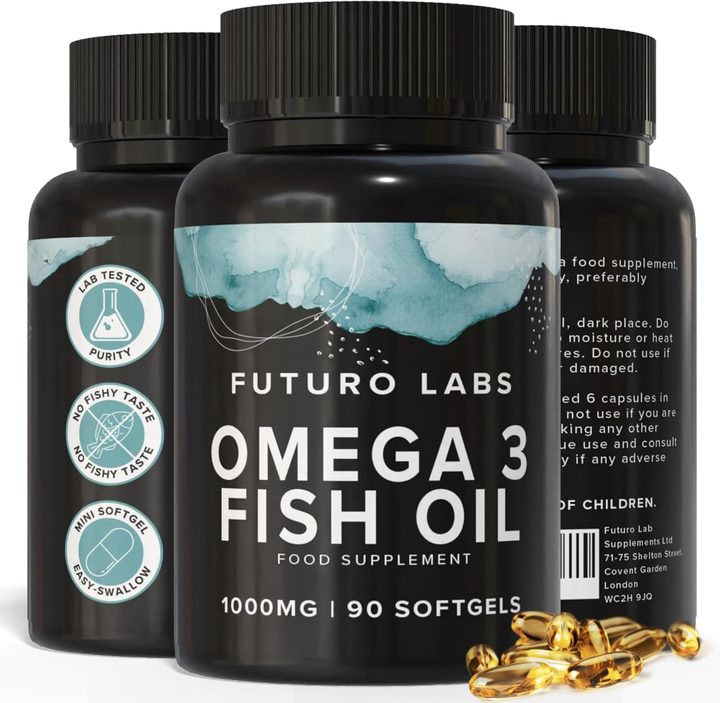
Our brand: the worked example on this page
Futuro Labs Omega 3 Fish Oil
- 17p a day
- 90 softgels, 1 softgel daily
- Lab tested
- Made in the UK
Taken for the claim it holds, not the one it doesn't: Futuro Labs Omega 3 Fish Oil on Amazon UK, 300mg EPA+DHA with dinner, £14.99 for 90 days. Label breakdown. The timing rules in general are on the morning-or-night page; the dose ladder on the athlete dose page.
Why the question has no answer: the claim and trial record
A best time exists only where an effect exists to optimise, so this page's first job is the record. The claims register authorises no weight-loss, fat-loss, metabolism, appetite or body-composition claim for EPA, DHA or fish oil at any dose: the register's weight vocabulary belongs to other territories entirely, and omega-3 is not in it. The trial literature agrees with the silence: reviews of supplementation studies find no meaningful effect on body weight or fat mass from EPA and DHA, the occasional small or short positive result dissolving in the pooled record, which is exactly the pattern that never converts into a claim. The confusion has a traceable source, decoded on the triglyceride pages: gram-dose omega-3 genuinely lowers blood triglycerides, a lipid measure on a blood test, and the word triglyceride gets misread as body fat, converting a real vascular effect into an imagined slimming one. Blood chemistry is not bodyweight, no timing unlocks an effect the substance does not have, and morning versus night versus pre-workout are three equally decorated doors into the same empty room.
What to do instead, and where the capsule honestly fits a cut
The reader here is running or planning a cut, so the honest page reallocates rather than merely refuses. The weight goal lives with the calorie deficit, the only mechanism on the table, engineered through food choices that keep the deficit livable; protein rises toward the 1.6-to-2.2g per kilogram band to guard muscle while the scale drops, the intake with the actual muscle-mass mandate; training continues to tell the body what to keep; and sleep, the unglamorous lever, protects the adherence everything else depends on. The capsule's honest place inside that cut is unchanged from any other month: one softgel with dinner for the 250mg heart-function claim, 17p a day, taken because a cutting diet skimps on oily fish as reliably as a bulking one, and timed by the meal for the absorption and burp reasons the timing pages give, none of which have anything to do with the deficit. Two purchases this page refuses on the way out: fat-burner stacks wearing omega-3 as a credibility ingredient, and dose escalations sold as metabolic support, both pricing an effect the record does not contain. Deficit, protein, training, sleep, and a 17p softgel at dinner minding its own business: the whole plan.
| The proposition | The record | The verdict |
|---|---|---|
| Omega-3 causes weight loss | No claim exists; reviews find no meaningful effect | False: nothing to time |
| Morning dosing boosts metabolism | No metabolic claim, no stimulant action | Folklore |
| Pre-workout omega-3 burns fat | Fats deliver nothing acutely; worst slot anyway | Folklore, plus burps |
| Triglyceride lowering means fat loss | A blood measure, not body fat: the classic misread | The confusion, decoded |
| Take it at dinner regardlessOurs | The heart claim is real and the slot is right | Yes: for its own reasons |
| The deficit does the weight work | The only mechanism on the table | Where the goal actually lives |
The verdict, and the timing question returned to sender
When is the best time to take omega-3 supplements for weight loss: never, in the sense the question intends, because no weight effect exists for a clock to optimise, the register is silent and the trials are flat, and the only honest timing advice is the one this section gives every capsule for its real job, with dinner, daily, for the heart-function claim. The weight goal goes back where it works, to the deficit, the protein, the training and the sleep, none of them sold in this aisle. The worked example is priced for the role it actually plays in a cut: Futuro Labs Omega 3 Fish Oil, one mini softgel with the evening meal, 300mg of EPA and DHA, £14.99 for 90 days at 17p, lab-tested, UK made, a supplement that will not move the scale and has never once claimed it would.
What to check on the label
- No weight, fat or metabolism claim exists: the register is silent at every dose.
- The trials show no meaningful effect: the pooled record is flat.
- Triglycerides are blood chemistry, not body fat: the confusion, decoded.
- Dinner remains the right slot anyway: for the heart claim the capsule holds.
- The cut runs on deficit, protein, training, sleep: none sold in this aisle.
Our brand
The worked example: Futuro Labs Omega 3 Fish Oil
Futuro Labs Omega 3 Fish Oil: 1 softgel daily with food, 1000mg fish oil providing 180mg EPA and 120mg DHA (300mg combined), 90 softgels for £14.99, 17p a day, lab-tested purity, UK GMP made. Gelatin shell, so not vegetarian.
- Fish oil per softgel
- 1000mg
- EPA / DHA per softgel
- 180mg / 120mg (300mg combined)
- Serving
- 1 softgel a day
- Bottle
- 90 softgels, 90 days
- Price
- £14.99 (17p a day)
- Softgel
- mini softgel, no fishy taste
Questions people also ask
Does omega-3 help you lose weight?
No: no authorised weight or fat-loss claim exists, and reviews of the supplementation trials find no meaningful effect on body weight or fat mass.
Why do people say fish oil burns fat?
Mostly the triglyceride misread: gram doses lower blood triglycerides, a lipid measure on a blood test, which gets confused with body fat. Blood chemistry is not bodyweight.
Should I still take fish oil while cutting?
Yes, for its real job: cutting diets skimp on oily fish, and one 300mg softgel with dinner keeps the 250mg heart-function claim covered for 17p.
Is there any supplement timing that helps weight loss?
Timing optimises effects that exist: for weight, the mechanism is the calorie deficit, guarded by protein and training, and no clock changes that.
What about omega-3 in fat-burner stacks?
It is there as a credibility ingredient: the weight work in any such stack is being done by the deficit you run alongside it, or not at all.
Sources
- Systematic review evidence on omega-3 (fish oil) supplementation and body weight in adults: no clinically meaningful effect on weight or fat mass across randomized trials. PubMed record
- EFSA Panel on Dietetic Products, Nutrition and Allergies. Scientific Opinion on the substantiation of health claims related to magnesium. EFSA Journal 2010;8(10):1807. https://efsa.onlinelibrary.wiley.com/doi/10.2903/j.efsa.2010.1807
- EFSA Panel on Dietetic Products. Scientific opinion on the substantiation of health claims related to EPA and DHA and normal function of the heart (250mg daily condition of use). EFSA Journal 2010;8(10):1796. https://www.efsa.europa.eu/en/efsajournal/pub/1796
- Futuro Labs Omega 3 Fish Oil listing: 1000mg fish oil per softgel providing 180mg EPA and 120mg DHA, 90 softgels. Amazon UK, accessed 31 August 2026. https://www.amazon.co.uk/dp/B0CP9T3BTN
- Commission Regulation (EU) No 536/2013 authorising health claims for DHA and EPA: maintenance of normal blood triglyceride concentrations (2g DHA+EPA/day) and normal blood pressure (3g DHA+EPA/day), with a supplemental limit note of 5g/day. https://eur-lex.europa.eu/legal-content/EN/TXT/?uri=CELEX%3A32013R0536