Ghost Fitness/Omega-3/What is the most effective form of omega-3?
What is the most effective form of omega-3?
The short answer
The most effective form is the one you take daily: adherence moves omega-3 status more than chemistry. Among capsules, triglyceride forms edge ethyl esters fasted and tie fed; food beats both. Effectiveness is measured in blood, not on labels.
- Adherencethe variable that dwarfs form chemistry: daily beats optimal
- The omega-3 indexhow effectiveness is actually measured: EPA and DHA in red cell membranes
- The fed tieTG edges EE fasted; dinner closes the gap
- The fishthe form the outcome evidence keeps preferring
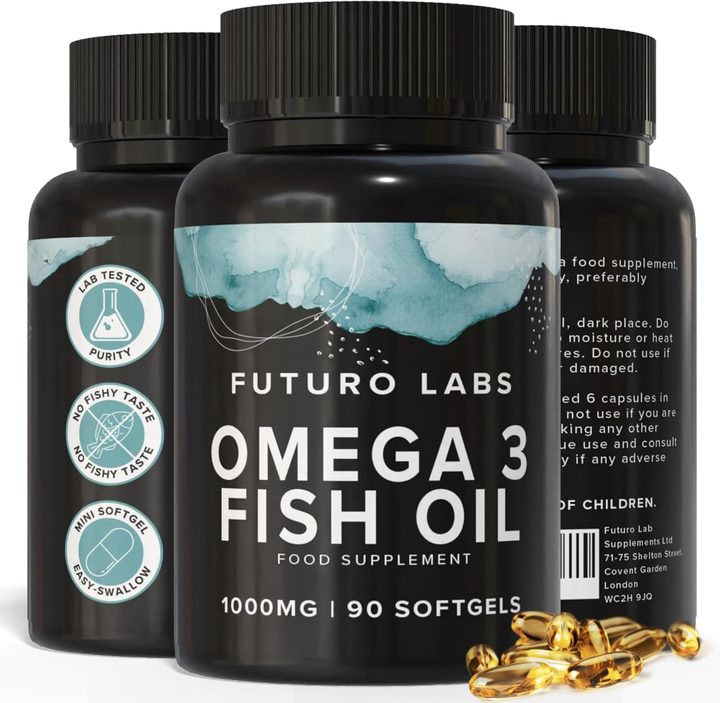
Our brand: the worked example on this page
Futuro Labs Omega 3 Fish Oil
- 17p a day
- 90 softgels, 1 softgel daily
- Lab tested
- Made in the UK
The adherence-shaped format: Futuro Labs Omega 3 Fish Oil on Amazon UK, one softgel with dinner, 300mg EPA+DHA, £14.99 for 90 days. Label breakdown. The healthiest-form question is on its own page; the form chemistry on EE vs TG.
What effective actually means here, and the measure that defines it
Effectiveness needs an outcome, and omega-3 has a proper one: status, the EPA and DHA actually incorporated into your tissues, measured in research as the omega-3 index, the percentage of EPA and DHA in red blood cell membranes that Harris and von Schacky established as the field's standard marker, the number that supplementation trials watch rise and the honest referent behind every effectiveness claim a label makes. Framed that way, the form question shrinks to its true size: what moves the index is milligrams of EPA and DHA delivered, times days delivered, times absorption efficiency, and of those three multipliers absorption is the smallest lever, the triglyceride-versus-ethyl-ester gap being real fasted, modest fed, and dwarfed by the other two, while dose and consistency do almost all of the work. A 300mg softgel taken 350 days a year outperforms a 750mg concentrate taken when remembered, by arithmetic no chemistry overturns, which is why the direct answer to this page's question is behavioural before it is molecular: the most effective form of omega-3 is whichever one your actual routine will swallow daily.
The effectiveness hierarchy, honestly ranked, and the routine that tops it
Rank the forms by what genuinely moves the measure and the hierarchy reads differently from the marketing. First, oily fish eaten regularly: the form behind the population evidence, delivering the members inside meals, the version every advisory body actually recommends. Second, any honest capsule taken daily with dinner: standard natural-TG softgels, rTG concentrates and fed EE concentrates land within a margin of each other once the meal referees absorption, differing in price and capsule count rather than effect, which is the fed tie the showdown page scores. Third, the same capsules taken erratically or fasted: where the TG edge becomes real and rTG earns its premium as forgiveness for inconsistency, an honest niche rather than a general upgrade. Last, the forms that fail delivery regardless of chemistry: gummies at token doses and ALA capsules carrying no EPA and DHA at all, ineffective by content rather than by form. The routine that tops the capsule tier is the one this site keeps prescribing because it optimises the big multipliers: a properly dosed softgel welded to dinner, seven days a week, from a fresh bottle, boring, adherent, and therefore effective in the only sense the blood measures.
| Form and habit | Effectiveness verdict | Why |
|---|---|---|
| Oily fish, twice weekly, sustained | The top of the table | The form behind the outcome evidence, meals attached |
| Any honest capsule, daily with dinnerOurs | Effectively tied: the fed tier | Dose x days dwarfs the absorption margins |
| rTG concentrate, erratic dosing | The forgiveness niche | The TG edge is real fasted: paid-for inconsistency insurance |
| EE concentrate, fasted habit | The avoidable penalty | The one pairing where form genuinely costs |
| Gummies | Ineffective by content | Token milligrams: no chemistry rescues them |
| ALA plant capsules | Ineffective for this job entirely | No EPA and DHA to deliver |
The verdict, and the form that survives real life
What is the most effective form of omega-3: the fish where the diet allows it, and otherwise whichever honest, properly dosed capsule your routine will actually take daily with a meal, because adherence times dose is the equation and form chemistry is a rounding term inside it once dinner is involved. The worked example is built for exactly that equation: Futuro Labs Omega 3 Fish Oil, one natural-form softgel, 300mg of EPA and DHA, welded to the evening meal that happens anyway, a 90-day bottle that keeps the oil fresh and the habit supplied, £14.99 at 17p a day, lab-tested, UK made. Effectiveness was never hiding in a backbone; it was hiding in the three hundred and fifty dinners a year the right format quietly attends, which is the least marketable and most measurable answer this question has.
What to check on the label
- Effectiveness = status raised: the omega-3 index, measured in red cell membranes.
- Adherence times dose dwarfs form chemistry: daily beats optimal.
- The fed tier is a tie: TG, rTG and fed EE land within a margin at equal milligrams.
- rTG's honest niche is forgiveness: paid insurance for erratic habits.
- Gummies and ALA fail by content: no form rescues missing milligrams.
Our brand
The worked example: Futuro Labs Omega 3 Fish Oil
Futuro Labs Omega 3 Fish Oil: 1 softgel daily with food, 1000mg fish oil providing 180mg EPA and 120mg DHA (300mg combined), 90 softgels for £14.99, 17p a day, lab-tested purity, UK GMP made. Gelatin shell, so not vegetarian.
- Fish oil per softgel
- 1000mg
- EPA / DHA per softgel
- 180mg / 120mg (300mg combined)
- Serving
- 1 softgel a day
- Bottle
- 90 softgels, 90 days
- Price
- £14.99 (17p a day)
- Softgel
- mini softgel, no fishy taste
Questions people also ask
Which form of omega-3 is absorbed best?
Triglyceride forms, fasted: with a fatty meal the gap narrows to a margin, which is why the dinner habit matters more than the backbone.
What is the omega-3 index?
The research standard for status: the percentage of EPA and DHA in red blood cell membranes, the measure supplementation actually moves and effectiveness is judged by.
Is liquid fish oil more effective than capsules?
Per serving it is stronger, not more effective per milligram: at equal delivered EPA and DHA taken as reliably, the formats tie.
Are expensive rTG oils worth it for effectiveness?
For erratic dosers, somewhat: the fasted edge is their honest niche. For anyone welded to a dinner routine, a well-priced standard or EE product delivers the same status.
So what should I actually take to be most effective?
Fish twice weekly when the diet allows, and otherwise one honest 300mg softgel with dinner every day: dose and consistency are the whole equation.
Sources
- Futuro Labs Omega 3 Fish Oil listing: 1000mg fish oil per softgel providing 180mg EPA and 120mg DHA, 90 softgels. Amazon UK, accessed 31 August 2026. https://www.amazon.co.uk/dp/B0CP9T3BTN
- Harris WS, von Schacky C. The omega-3 index: red blood cell EPA and DHA as a measurable marker of omega-3 status, the research standard for judging how effectively intake raises tissue levels. PubMed record
- Dyerberg J, Madsen P, Møller JM, Aardestrup I, Schmidt EB. Bioavailability of marine n-3 fatty acid formulations. Prostaglandins, Leukotrienes and Essential Fatty Acids 2010;83(3):137-141. PubMed record
- Scientific Advisory Committee on Nutrition and Committee on Toxicity. Advice on fish consumption: benefits and risks (two portions of fish a week, one oily). TSO, 2004. https://www.gov.uk/government/publications/sacn-advice-on-fish-consumption-benefits-and-risks
- EFSA Panel on Dietetic Products. Scientific opinion on the substantiation of health claims related to EPA and DHA and normal function of the heart (250mg daily condition of use). EFSA Journal 2010;8(10):1796. https://www.efsa.europa.eu/en/efsajournal/pub/1796