Ghost Fitness/Omega-3/How much EPA per day?
How much EPA per day?
The short answer
EPA has no authorised claim of its own: the register's heart, triglyceride and blood pressure sentences are for EPA and DHA combined at 250mg, two grams and three, and the brain and vision sentences are for DHA alone at 250mg. EPA per day is therefore set by the literatures that studied it: the mood research at a gram or more of EPA, and a prescription purified EPA at four grams. A standard softgel delivers 180mg.
- The registerno EPA-only claim; EPA and DHA combined at 250mg, two grams and three; DHA alone at 250mg
- The mood researchEPA-predominant oils, 60% or more EPA, delivering a gram or more of EPA a day
- The prescription EPApurified EPA at four grams a day for raised triglycerides: a medicine, not a supplement
- A standard softgel180mg of EPA with 120mg of DHA: the combined 250mg claim reached in one
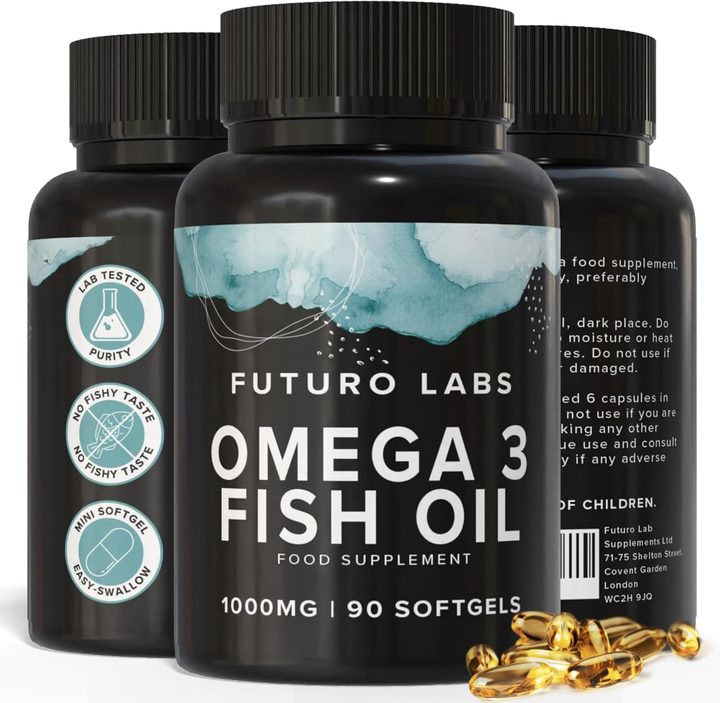
Our brand: the worked example on this page
Futuro Labs Omega 3 Fish Oil
- 17p a day
- 90 softgels, 1 softgel daily
- Lab tested
- Made in the UK
The standard ratio, 180mg of EPA a softgel: Futuro Labs Omega 3 Fish Oil on Amazon UK, 1 softgel a day, 180mg EPA and 120mg DHA, 90 for £14.99 at 17p. Full label breakdown. The ratio read is on the EPA and DHA ratio page; the per-day athletes dose on the athletes dose page.
EPA has no claim of its own, and why the register writes its sentences for the pair or for DHA alone
How much EPA per day is a question the register answers with a silence, because EPA has no authorised health claim of its own, and understanding why sets the number honestly. The register's omega-3 sentences come in two shapes: sentences for EPA and DHA together, the maintenance of normal heart function at 250mg a day combined, normal blood triglyceride levels at two grams combined and normal blood pressure at three grams combined, and sentences for DHA alone, the maintenance of normal brain function and normal vision at 250mg of DHA a day, plus the sentence on the foetal and infant brain and eye for pregnancy. There is no sentence for EPA alone, because when the regulator assessed the dossiers the evidence for a specific EPA effect at a specific dose did not reach the standard for a claim while the combined evidence and the DHA evidence did, so a label may not print an EPA-specific benefit and a product that advertises high EPA for mood, inflammation or joints has stepped outside the register whatever the research. What EPA does in the body is real and different from DHA, EPA being the precursor of the resolving mediators the inflammation literature studies and DHA being the structural fatty acid of brain and retina membranes, which is why the research on the two diverged, but a difference in physiology is not a claim, and a reader asking how much EPA per day is asking a research question rather than a label question.
The literatures that set an EPA figure, the mood research and the prescription EPA, a standard softgel placed among them, and the number filed
Two literatures set EPA-specific figures, and neither is a supplement claim. The mood research: meta-analyses of omega-3 trials in depression found that formulations predominant in EPA, 60% or more of the omega-3 as EPA, delivering around a gram or more of EPA a day, performed better than DHA-predominant or balanced oils as an adjunct to standard treatment, a research finding with heterogeneous trials and a modest effect, no claim on the register, and a reader with a mood question having a GP question first, with an EPA-heavy concentrate at a gram of EPA a day being what a reader following that literature would take alongside treatment rather than instead of it. The prescription EPA: a purified ethyl-EPA preparation is licensed as a medicine at four grams a day for raised triglycerides in people at cardiovascular risk, on the strength of a large outcome trial, a dose and a purity that no supplement matches and a decision that is a cardiologist's, so a reader who has heard of four grams of EPA has heard of a medicine. A third, general figure: the omega-3 index research targets around a gram of EPA and DHA combined, of which a standard ratio supplies roughly 600mg as EPA, a research target with no EPA-specific number inside it. A standard softgel placed among them: 180mg of EPA with 120mg of DHA, the standard 3 to 2 ratio, which reaches the combined 250mg heart claim in one softgel, supplies about a fifth of the mood research's gram of EPA and a twentieth of the prescription's four, so a reader on rung one has their EPA in one softgel and a reader following the mood literature needs an EPA-heavy concentrate at four to six standard softgels' worth. The number filed: EPA per day has no claim of its own and no reference intake, the register writing for the pair at 250mg, two grams and three and for DHA at 250mg, the mood research favouring a gram or more of EPA from EPA-predominant oils and the prescription EPA sitting at four grams as a medicine, with the worked example supplying the standard 180mg in the softgel that reaches the combined claim, £14.99 for 90 at 17p.
| The source | The EPA figure | The status |
|---|---|---|
| The register | None for EPA alone; 250mg, two grams and three for EPA and DHA combined; 250mg for DHA alone | The only lawful sentences |
| The mood research | A gram or more of EPA from an EPA-predominant oil, as an adjunct | Research; no claim; a GP first |
| The prescription EPA | Four grams of purified EPA for raised triglycerides | A medicine; a cardiologist's decision |
| The omega-3 index research | About a gram combined, roughly 600mg of it EPA at a standard ratio | A research target; no EPA figure inside it |
| A standard softgel | 180mg of EPA with 120mg of DHA | The combined 250mg claim in one |
| The ceiling | Five grams of EPA and DHA combined from supplements | Do not exceed |
The verdict, a nutrient without a claim of its own, and a number set by what studied it
How much EPA per day: EPA has no authorised claim of its own, the register's sentences being for EPA and DHA combined at 250mg, two grams and three and for DHA alone at 250mg, so no label may state an EPA-specific benefit and the figure is set by the literatures that studied EPA specifically, the mood research favouring EPA-predominant oils delivering a gram or more of EPA as an adjunct to treatment and the prescription purified EPA sitting at four grams as a medicine for raised triglycerides, with a standard softgel's 180mg of EPA reaching the combined 250mg heart claim in one and supplying a fifth of the mood research's gram. The standard ratio: Futuro Labs Omega 3 Fish Oil, one softgel, 180mg EPA and 120mg DHA, 90 for £14.99 at 17p a day.
What to check on the label
- Know EPA has no claim of its own: the pair or DHA alone.
- Take the combined 250mg for the heart claim: one standard softgel.
- Read the mood research as research: a gram of EPA, an adjunct, a GP first.
- Read four grams of EPA as a medicine: a cardiologist's, not a shelf's.
- Stay under five grams combined: the ceiling.
Our brand
The worked example: Futuro Labs Omega 3 Fish Oil
Futuro Labs Omega 3 Fish Oil: 1 softgel daily with food, 1000mg fish oil providing 180mg EPA and 120mg DHA (300mg combined), 90 softgels for £14.99, 17p a day, lab-tested purity, UK GMP made. Gelatin shell, so not vegetarian.
- Fish oil per softgel
- 1000mg
- EPA / DHA per softgel
- 180mg / 120mg (300mg combined)
- Serving
- 1 softgel a day
- Bottle
- 90 softgels, 90 days
- Price
- £14.99 (17p a day)
- Softgel
- mini softgel, no fishy taste
Questions people also ask
Is there a recommended daily amount of EPA?
No: EPA has no reference intake and no authorised claim of its own, the register's sentences being for EPA and DHA combined at 250mg, two grams and three and for DHA alone at 250mg, so any EPA figure comes from a research literature rather than a label.
How much EPA is in a fish oil capsule?
Around 180mg in a standard 1000mg softgel at the usual 3 to 2 ratio, alongside 120mg of DHA, which reaches the combined 250mg heart claim in one; EPA-heavy concentrates carry 400 to 700mg of EPA per softgel.
How much EPA do the mood studies use?
Around a gram or more of EPA a day from formulations in which EPA is 60% or more of the omega-3, as an adjunct to standard treatment, a research finding with a modest effect and no claim, and a reader with a mood question has a GP question first.
Can I take four grams of EPA a day?
That is a medicine's dose: a purified ethyl-EPA preparation is licensed at four grams a day for raised triglycerides in people at cardiovascular risk, prescribed by a cardiologist, and no supplement matches its purity or carries its evidence.
Is EPA or DHA more important?
Neither for the claims, which count them together for the heart, triglyceride and blood pressure sentences, with DHA alone holding the brain and vision sentences; their physiologies differ, EPA feeding the resolving mediators of inflammation and DHA building brain and retina membranes, but a difference in physiology is not a claim.
Sources
- Commission Regulation (EU) No 536/2013 authorising health claims for DHA and EPA: maintenance of normal blood triglyceride concentrations (2g DHA+EPA/day) and normal blood pressure (3g DHA+EPA/day), with a supplemental limit note of 5g/day. https://eur-lex.europa.eu/legal-content/EN/TXT/?uri=CELEX%3A32013R0536
- EFSA Panel on Dietetic Products. Scientific opinion on health claims related to DHA: maintenance of normal brain function and normal vision (250mg DHA daily condition of use). EFSA Journal 2010;8(10):1734. https://www.efsa.europa.eu/en/efsajournal/pub/1734
- Meta-analytic evidence on EPA-predominant omega-3 formulations in depression research: better signals for EPA-heavy preparations in clinical trial populations, with no authorised claims arising. PubMed record
- Electronic medicines compendium (emc): Summaries of Product Characteristics for omega-3-acid ethyl esters 1000mg capsules (Omacor and generics) and icosapent ethyl (Vazkepa). https://www.medicines.org.uk/emc/search?q=omega-3-acid+ethyl+esters