Ghost Fitness/Omega-3/What causes omega-3 deficiency?
What causes omega-3 deficiency?
The short answer
The clinical kind, true essential fatty acid deficiency, is caused by a body that cannot get fat in at all: fat-free intravenous feeding; severe fat malabsorption from coeliac disease, Crohn's disease, pancreatic insufficiency, cystic fibrosis, bile disorders and bariatric surgery; a wrongly formulated infant feed; and orlistat at the mild end. Each is a clinician's condition. The commoner low status of a low-fish diet has its own page.
- Fat-free feedingintravenous nutrition without fat over weeks: the classic cause
- Severe fat malabsorptioncoeliac disease, Crohn's disease, pancreatic insufficiency, cystic fibrosis, bile disorders, bariatric surgery
- The infant feeda wrongly formulated formula: growth failure and dermatitis
- The medicineorlistat: a share of dietary fat and any fish oil taken with it sent through unabsorbed
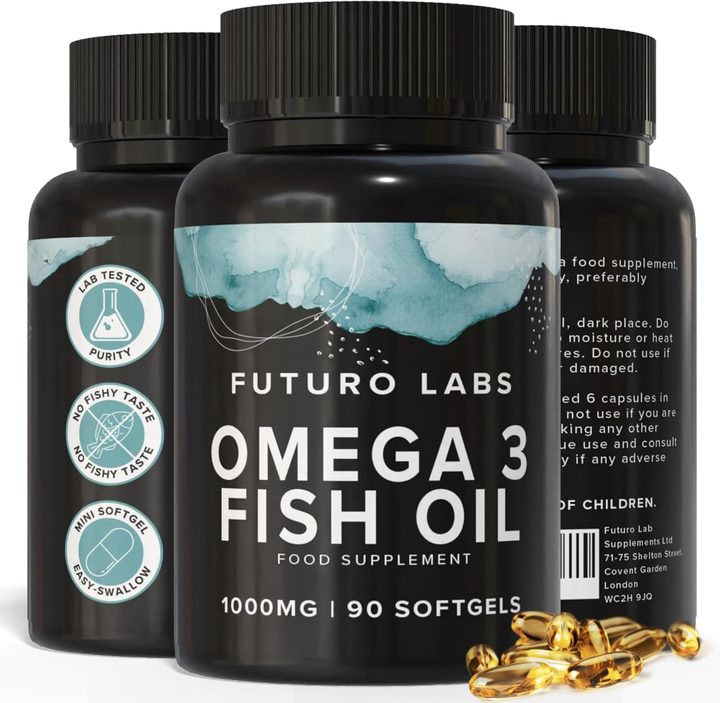
Our brand: the worked example on this page
Futuro Labs Omega 3 Fish Oil
- 17p a day
- 90 softgels, 1 softgel daily
- Lab tested
- Made in the UK
A softgel for the reader whose gut absorbs fat, by the oily-fish audit: Futuro Labs Omega 3 Fish Oil on Amazon UK, 1 softgel with food, 180mg EPA and 120mg DHA, 90 for £14.99 at 17p. Full label breakdown. Low status's dietary causes are on the low omega-3 page; the recovery clock on the deficiency recovery page.
The clinical kind first, because deficiency and low status are different words, and the causes that stop fat getting in
What causes omega-3 deficiency, and the variant asking for omega-3 deficiency causes, has to say which deficiency first, because true essential fatty acid deficiency is a clinical condition with clinical causes and the low omega-3 status most readers mean has dietary ones, handled on the low omega-3 page. The clinical kind: essential fatty acid deficiency, in which the diet's polyunsaturated fat fails to reach the body at all, producing a scaly dermatitis, poor wound healing, hair loss, and in infants growth failure, a condition that is rare because any mixed diet prevents it and that arises only when a body cannot get fat in, the essential fatty acid literature's account. Its causes are the ways fat is stopped. Fat-free intravenous feeding: the classic cause, patients fed by vein for weeks without a fat component in the earlier decades of intravenous nutrition, the condition described from those wards and prevented since by fat emulsions in the feed. Severe fat malabsorption: coeliac disease untreated, whose damaged intestinal lining absorbs fat poorly; Crohn's disease with extensive small bowel involvement or resection; pancreatic insufficiency, in chronic pancreatitis or after pancreatic surgery, where the lipase that digests fat is missing; cystic fibrosis, where the pancreatic ducts are blocked and fat malabsorption is a defining feature managed with enzyme replacement; bile disorders, in which the bile that emulsifies fat does not reach the gut; and bariatric surgery, where a bypassed length of intestine absorbs less fat, each a condition in which fat passes through as steatorrhoea and the fat-soluble vitamins and essential fats go with it, and each a clinician's condition in which the deficiency is one problem among several.
The remaining clinical causes, the medicine at the mild end, what a reader with these does, and the causes filed
Two more clinical causes complete the list. A wrongly formulated infant feed: infants fed a formula that lacked essential fats developed the deficiency's dermatitis and growth failure in the historical cases that defined it, a cause that modern regulated formulas have removed and that persists only where a home-made or improvised feed is used, the reason infant feeding is a health visitor's and a GP's territory and not a supplement page's. Orlistat, at the mild end of the list: the fat-blocking weight-loss medicine inhibits the lipase that digests dietary fat and sends a share of it through unabsorbed, taking the fat-soluble vitamins and any fish oil taken at the same meal with it, so a reader on orlistat for months is at the mild end of malabsorption, takes fat-soluble vitamins and any fish oil two hours from a dose as the leaflet says, and does not develop true deficiency on an otherwise normal diet. What a reader with any of these does is not buy a softgel on a page's advice: a reader with coeliac disease treats it with a gluten-free diet and absorbs fat again, a reader with pancreatic insufficiency takes enzyme replacement with every meal, a reader with Crohn's disease, cystic fibrosis, a bile disorder or a bariatric history has a specialist team who monitor fat-soluble vitamins and essential fats and prescribe what is needed, sometimes an emulsified omega-3 that absorbs without the gut's full machinery, and a reader with a scaly rash and poor healing who suspects the deficiency sees a GP, because the same symptoms have commoner causes and the deficiency, when it exists, is a sign of a malabsorption that needs finding. The far commoner condition, low omega-3 status on a low-fish diet, has no symptoms, is caused by the plate and is fixed by the plate or a softgel, the low omega-3 page's list. The causes filed: fat-free feeding, severe fat malabsorption from coeliac disease, Crohn's disease, pancreatic insufficiency, cystic fibrosis, bile disorders and bariatric surgery, a wrongly formulated infant feed, and orlistat at the mild end, each a clinician's condition with fat restored as the treatment, with the worked example being a softgel for the reader whose gut absorbs fat and whose plate runs low, one at 17p, £14.99 for 90.
| The cause | How it stops fat getting in | The route |
|---|---|---|
| Fat-free intravenous feeding | No fat component in the feed over weeks | Historical; prevented by fat emulsions in modern feeds |
| Coeliac disease, Crohn's disease | A damaged or resected intestinal lining absorbs fat poorly | Treatment of the disease; a specialist team |
| Pancreatic insufficiency, cystic fibrosis | The lipase that digests fat is missing or blocked | Enzyme replacement with every meal |
| Bile disorders, bariatric surgery | Bile does not reach the gut; a bypassed intestine absorbs less | A specialist team; sometimes an emulsified omega-3 |
| A wrongly formulated infant feed | Essential fats absent from the formula | A health visitor and a GP; regulated formulas prevent it |
| Orlistat | A share of dietary fat sent through unabsorbed | Fat-soluble vitamins and fish oil two hours from a dose |
The verdict, a rare deficiency with clinical causes that stop fat getting in, and a common low status with a page of its own
What causes omega-3 deficiency: the clinical kind, true essential fatty acid deficiency with its scaly dermatitis, poor healing and growth failure, is caused by a body that cannot get fat in at all, fat-free intravenous feeding over weeks, severe fat malabsorption from coeliac disease, Crohn's disease, pancreatic insufficiency, cystic fibrosis, bile disorders and bariatric surgery, a wrongly formulated infant feed, and at the mild end the fat-blocking medicine orlistat, each a clinician's condition in which fat restored properly is the treatment and a softgel is not the answer, while the far commoner low omega-3 status of a low-fish diet has no symptoms and its own page. A softgel for the reader whose gut absorbs fat: Futuro Labs Omega 3 Fish Oil, one with food, 180mg EPA and 120mg DHA, 90 for £14.99 at 17p a day, by the oily-fish audit.
What to check on the label
- Name the deficiency: the clinical kind, not low status.
- Know its causes stop fat getting in: fat-free feeding and malabsorption.
- List the malabsorptions: coeliac, Crohn's, pancreatic, cystic fibrosis, bile, bariatric.
- Put orlistat at the mild end: fish oil two hours from a dose.
- Send the symptoms to a GP: a rash and poor healing have commoner causes.
Our brand
The worked example: Futuro Labs Omega 3 Fish Oil
Futuro Labs Omega 3 Fish Oil: 1 softgel daily with food, 1000mg fish oil providing 180mg EPA and 120mg DHA (300mg combined), 90 softgels for £14.99, 17p a day, lab-tested purity, UK GMP made. Gelatin shell, so not vegetarian.
- Fish oil per softgel
- 1000mg
- EPA / DHA per softgel
- 180mg / 120mg (300mg combined)
- Serving
- 1 softgel a day
- Bottle
- 90 softgels, 90 days
- Price
- £14.99 (17p a day)
- Softgel
- mini softgel, no fishy taste
Questions people also ask
What is the difference between omega-3 deficiency and low omega-3?
True essential fatty acid deficiency is a rare clinical condition with a scaly dermatitis, poor healing and growth failure, caused by a body that cannot get fat in at all; low omega-3 status is the common, symptomless state of a low-fish diet, an omega-3 index below about four percent, caused by the plate and fixed by the plate or a softgel.
Can a normal diet cause omega-3 deficiency?
Not the clinical kind: any mixed diet supplies enough polyunsaturated fat to prevent essential fatty acid deficiency, which arises only when fat is stopped from being absorbed, so a normal diet low in fish produces low status rather than deficiency.
Which medical conditions cause fat malabsorption?
Coeliac disease untreated, Crohn's disease with extensive small bowel involvement or resection, pancreatic insufficiency from chronic pancreatitis or surgery, cystic fibrosis, bile disorders that stop bile reaching the gut, and bariatric surgery that bypasses a length of intestine, each sending fat through as steatorrhoea with the fat-soluble vitamins and essential fats.
Does orlistat cause omega-3 deficiency?
At the mild end: orlistat sends a share of dietary fat through unabsorbed along with the fat-soluble vitamins and any fish oil taken at the same meal, so a reader on it takes those two hours from a dose as the leaflet says and does not develop true deficiency on an otherwise normal diet.
Should someone with malabsorption take fish oil?
With their specialist team, who monitor fat-soluble vitamins and essential fats and prescribe what is needed, sometimes an emulsified omega-3 that absorbs without the gut's full machinery, since a standard softgel passes through poorly absorbed in severe malabsorption and the deficiency is one problem among several.
Sources
- The essential fatty acid deficiency literature: true deficiency, with scaly dermatitis, poor wound healing and growth failure, is rare and seen almost only in fat-free feeding or severe malabsorption, while a low omega-3 status, an omega-3 index below about four percent, is common on a low-fish diet and has no symptoms of its own. PubMed record
- The orlistat interaction literature: the fat-blocking weight-loss medicine reduces the absorption of dietary fat and of fat-soluble vitamins and oils taken with it, so a fish oil taken at the same meal as orlistat is partly blocked and is separated from it by at least two hours. https://www.medicines.org.uk/emc/search?q=orlistat
- Classic absorption work on fish oil ethyl esters: uptake is markedly higher when ethyl ester omega-3 is taken with a high-fat meal, narrowing the gap to triglyceride forms. PubMed record
- Scientific Advisory Committee on Nutrition and Committee on Toxicity. Advice on fish consumption: benefits and risks (two portions of fish a week, one oily). TSO, 2004. https://www.gov.uk/government/publications/sacn-advice-on-fish-consumption-benefits-and-risks