Ghost Fitness/Magnesium/Should magnesium glycinate be taken with food or on an empty stomach?
Should magnesium glycinate be taken with food or on an empty stomach?
The short answer
With food: magnesium glycinate absorbs well either way, but a meal makes the full dose sit comfortably, anchors the habit, and removes the queasiness a fasted 300mg gives some people. The empty-stomach ritual belongs to ZMA marketing, not to chemistry.
- With foodthe verdict: comfort, habit anchoring, zero downside
- Either wayhow well the chelate absorbs: food is not an obstacle
- ZMA's labelwhere the empty-stomach ritual actually comes from
- 0evidence that fasting improves glycinate outcomes
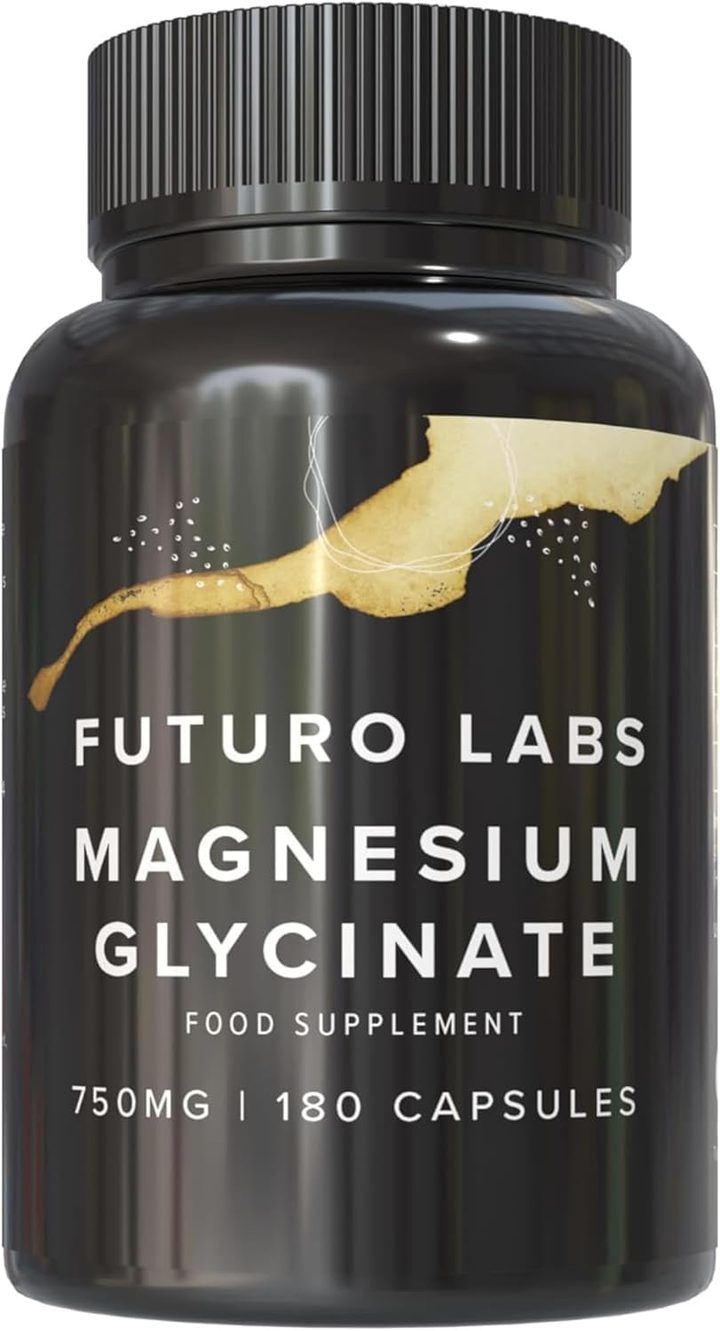
Our brand: the worked example on this page
Futuro Labs Magnesium Glycinate
- 22p a day
- 180 capsules, 2 capsules daily
- Lab tested
- Made in the UK
The with-dinner design: Futuro Labs Magnesium Glycinate on Amazon UK, 2 capsules with the evening meal, £19.99 for 180. Label breakdown. The what-not-to-eat folklore is retired on what not to eat before glycinate; the slot itself on night or during the day.
The head-to-head, scored on what actually differs
Absorption, the criterion people assume decides this, barely separates the options: the bisglycinate chelate was built to survive digestion intact, absorbing well from inside a mixed meal via its amino acid routes, with Schuette's hard-case work showing the form holding up even in surgically shortened bowels, and a fasted dose absorbs fine too, perhaps marginally faster for being unaccompanied, a difference without a consequence for a mechanism that runs on weekly totals. What actually separates them is everything else. Comfort: a full 300mg on an empty stomach produces mild queasiness in a meaningful minority, and in nobody when food is present. Habit: doses tied to meals get taken, doses floating in empty windows get forgotten, and the mechanism punishes gaps, not slowness. Tolerability of companions: vitamin D3 sharing the moment needs the meal's fat outright. With food wins on points it does not concede anywhere.
Where the empty-stomach idea comes from, and why it does not transfer
The fasted ritual has a traceable pedigree, and it is not glycinate's. ZMA's label built the ceremony, empty stomach, 30 to 60 minutes before bed, away from calcium, as protective packaging for its 30mg zinc dose and its aspartate-era absorption claims, and two decades of gym culture generalised the ritual from that one formula to minerals at large. Iron contributed a second thread, being the supplement whose absorption genuinely suffers with food and genuinely rewards fasting, rules faithfully copied onto a mineral they never applied to. Glycinate inherited the folklore without the reasons: its zinc dose is zero, its chelate is indifferent to dinner's calcium at ordinary amounts, and no trial of magnesium outcomes, sleep, cramps, performance, recovery, has ever hinged on gastric emptiness. The ritual is a hand-me-down from products with different problems.
| Criterion | With food | Empty stomach | Winner |
|---|---|---|---|
| Absorption of the chelateOurs | Very good: built for meals | Very good: marginally faster, irrelevantly | Draw |
| Comfort at a full 300mg | Universal | Queasiness in a minority | With food |
| Habit survival over months | Welded to a meal that always happens | Floating in a window that gets missed | With food |
| Companion ingredients (D3 especially) | The fat is right there | D3 under-absorbs | With food |
| Evidence demanding fasting | Not required | None exists | With food |
| Origin of the ritual | The label's own directions | ZMA marketing and iron's borrowed rules | With food |
The instruction, stated once, and the product that prints it
Should magnesium glycinate be taken with food or on an empty stomach: with food, specifically the evening meal, which is also simply what the honest labels instruct, the worked example's own directions reading take two capsules daily with food. Anyone who has been running it fasted without queasiness has lost nothing and can carry on or switch for the habit benefits alone; anyone who felt the empty-stomach churn now knows it was the protocol, not the product. The serving: Futuro Labs Magnesium Glycinate, 2 capsules with dinner, 300mg elemental at 80% NRV from bisglycinate at 20%, vegan HPMC shells, UK made under GMP and BRC, panels shown, £19.99 for 180 capsules, 22p a day. The chelate never needed an empty stage to perform; it needed a plate to sit beside and a mealtime to make it automatic, and dinner supplies both without being asked.
What to check on the label
- With food: the verdict: comfort, habit anchoring, companion-friendly, zero downside.
- Absorption is fine either way: the chelate was built for meals.
- The fasted ritual is ZMA's and iron's: inherited rules from different products.
- Fasted queasiness is the protocol, not the product: a minority effect food erases.
- The label already says it: take with food, evening meal by preference.
Our brand
The worked example: Futuro Labs Magnesium Glycinate
Futuro Labs Magnesium Glycinate prints the answer in its directions: 2 capsules daily with food, 300mg elemental (80% NRV) from bisglycinate 20%, best at dinner, 22p a day from a £19.99 bottle of 180. Vegan, UK made, panels shown.
- Elemental magnesium per serving
- 300mg (80% NRV)
- Form
- magnesium bisglycinate 20%
- Serving
- 2 capsules a day
- Bottle
- 180 capsules, 90 days
- Price
- £19.99 (22p a day)
- Capsule
- vegetarian shell, vegan product
Questions people also ask
Does magnesium glycinate absorb better on an empty stomach?
Marginally faster at most, and not better in any way that reaches outcomes: the chelate absorbs well from inside meals, which is what it was designed for.
Why do I feel sick taking magnesium without food?
A full 300mg on an empty stomach produces mild queasiness in a meaningful minority: the fix is the meal, not a smaller dose.
Can I take glycinate first thing before breakfast?
You can, and with breakfast is better on every practical count. Truly fasted dosing gains nothing and risks the churn.
Does food block magnesium absorption?
No: dinner is the vehicle, not an obstacle, and the famous blockers, dairy, fibre, coffee, are folklore at meal scale.
Why does ZMA say empty stomach if glycinate doesn't need it?
That ritual protects ZMA's own 30mg zinc dose and dates from its aspartate-era claims: it was never a magnesium rule, and glycinate did not inherit the reasons.
Sources
- Futuro Labs Magnesium Glycinate listing, Amazon UK, label and price checked 31 August 2026. https://www.amazon.co.uk/dp/B0BT7Z5VQW
- Schuette SA, Lashner BA, Janghorbani M. Bioavailability of magnesium diglycinate vs magnesium oxide in patients with ileal resection. Journal of Parenteral and Enteral Nutrition 1994;18(5):430-435. PubMed record
- Walker AF, Marakis G, Christie S, Byng M. Mg citrate found more bioavailable than other Mg preparations in a randomised, double-blind study. Magnesium Research 2003;16(3):183-191. PubMed record
- Wilborn CD, et al. Effects of zinc magnesium aspartate (ZMA) supplementation on training adaptations and markers of anabolism and catabolism. Journal of the International Society of Sports Nutrition 2004;1(2):12-20. PubMed record
- Expert Group on Vitamins and Minerals. Safe Upper Levels for Vitamins and Minerals. Food Standards Agency, 2003 (magnesium guidance level 400mg a day from supplements). https://cot.food.gov.uk/sites/default/files/vitmin2003.pdf
- EFSA Panel on Dietetic Products, Nutrition and Allergies. Scientific Opinion on the substantiation of health claims related to magnesium. EFSA Journal 2010;8(10):1807. https://efsa.onlinelibrary.wiley.com/doi/10.2903/j.efsa.2010.1807