Ghost Fitness/Magnesium/Does magnesium glycinate need to be taken with calcium?
Does magnesium glycinate need to be taken with calcium?
The short answer
No: magnesium glycinate does not need calcium alongside it. The 2:1 calcium-magnesium ratio is old folklore with no modern basis; each mineral needs its own adequate intake. Dinner dairy is fine company, and only very large calcium doses want separation.
- Norequirement to pair them: each mineral stands alone
- 2:1the ratio folklore: a last-century rule with no modern basis
- 700mgthe UK adult calcium reference intake: met by food for most
- Separate mealsonly for very large calcium supplement doses, as courtesy
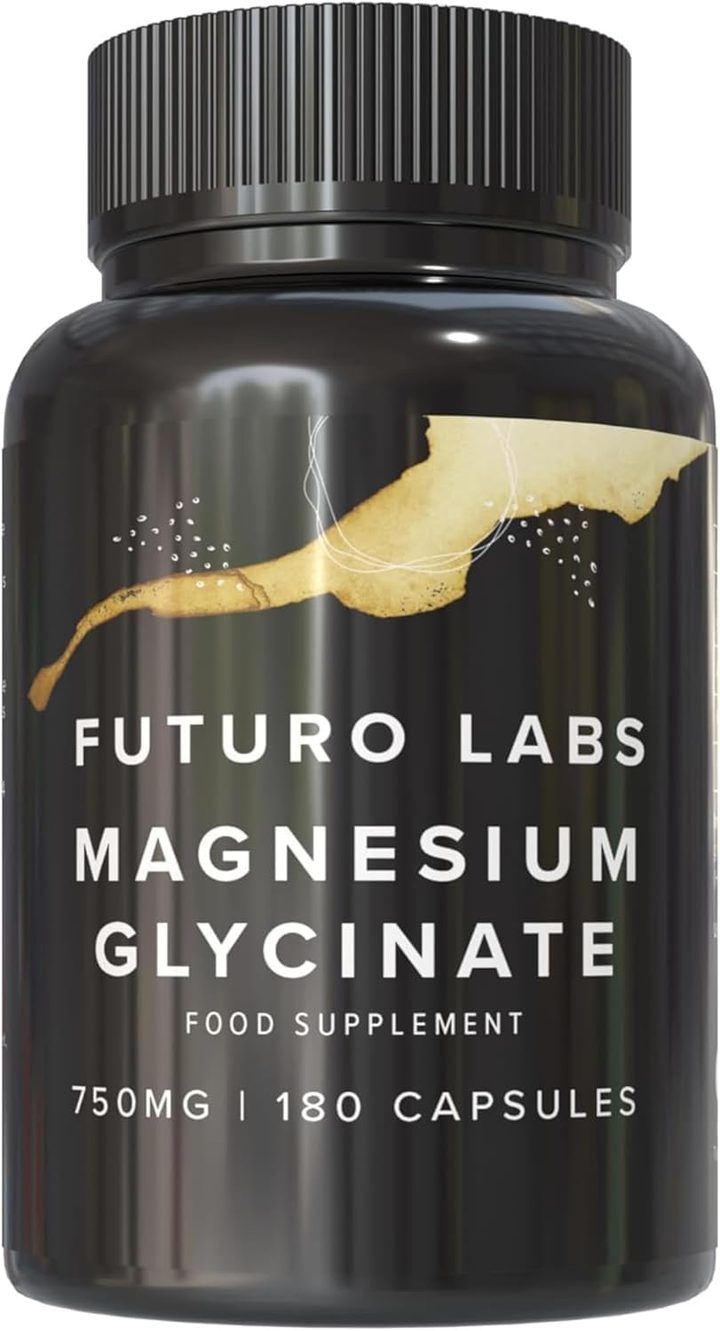
Our brand: the worked example on this page
Futuro Labs Magnesium Glycinate
- 22p a day
- 180 capsules, 2 capsules daily
- Lab tested
- Made in the UK
The single-mineral answer: Futuro Labs Magnesium Glycinate on Amazon UK, magnesium alone at 300mg per 2 capsules, £19.99 for 180. Label breakdown. The blend policy is on what not to combine with glycinate; the mixing myths on what never to mix.
Where the cal-mag rule came from, and why it does not hold
The idea that magnesium must travel with calcium, ideally at a 2:1 calcium-to-magnesium ratio, is one of the supplement aisle's oldest survivals, a rule of thumb from last-century nutritional writing that hardened into formula design and then into shopper anxiety, cal-mag bottles implying by their existence that the singles are somehow incomplete. Modern nutrition science runs on different machinery: each mineral has its own reference intake, 700mg of calcium and 300mg of magnesium for a UK adult man, each is assessed for adequacy independently, and no UK or EU body sets, recommends or even mentions an intake ratio between them, because the evidence base never produced one. The two minerals do interlock physiologically, sharing bone architecture and the muscle contraction cycle where magnesium acts as calcium's counterweight, but interlocking roles inside the body were never a co-dosing instruction at the mouth, any more than sodium and potassium's famous partnership obliges you to salt your bananas.
The real calcium questions, answered without a blend
What remains true is worth stating precisely. Calcium adequacy matters in its own right, for the bone-maintenance territory its own claims cover, and most UK diets containing dairy, fortified alternatives, or plenty of greens and fish reach 700mg without supplements, which is why this site's calcium advice is food-first even more firmly than its magnesium advice. Absorption competition between the two is real only at simultaneous large supplemental doses, the reason a prescribed high-dose calcium, common in older adults on bone regimes, earns a different meal from the magnesium as a courtesy, while dinner's cheese and a 300mg chelate coexist without measurable loss, the chelate's amino acid routes sidestepping the crowding anyway. And the cal-mag combination bottle solves neither question: it fixes both doses at a formulator's ratio, usually stuffs the calcium in as cheap carbonate, and reintroduces exactly the summing and attribution problems the single-ingredient policy exists to avoid.
| Question | Answer | Notes |
|---|---|---|
| Must magnesium be taken with calcium? | No: no body sets any pairing requirement | Each mineral is assessed alone |
| Is the 2:1 ratio evidence-based? | No: last-century folklore, never adopted by UK or EU guidance | Formula marketing kept it alive |
| Do they compete for absorption? | Only at simultaneous large supplemental doses | Dinner dairy beside a chelate: no measurable issue |
| Should I buy a cal-mag blend? | No: fixed ratios, cheap carbonate, blurred attribution | Two singles, or better, food for the calcium |
| Where should my calcium come from? | Food first: dairy, fortified alternatives, greens, fish | 700mg is reachable on ordinary UK diets |
| Prescribed high-dose calcium? | Separate meal from the magnesium, and follow the prescriber | The one scheduling courtesy |
The verdict, and the single-mineral serving
Does magnesium glycinate need to be taken with calcium: no, on every level the question can be asked at, not for absorption, not for function, not for any ratio a modern body of guidance recognises, and the cal-mag shelf is answering a requirement nobody set. Run the two minerals the way the evidence does, independently: calcium from the plate, where most UK diets already find their 700mg, and magnesium as the site's standard where diets run short, Futuro Labs Magnesium Glycinate, 2 capsules with the evening meal, 300mg elemental at 80% NRV from bisglycinate at 20%, one declared mineral with nothing welded on, vegan, UK made under GMP and BRC, panels shown, £19.99 for 180 capsules, 22p a day, sharing the table with whatever dairy dinner brings, no ratio required, none ever having existed.
What to check on the label
- No pairing requirement exists: each mineral is assessed and dosed alone.
- The 2:1 ratio is retired folklore: no UK or EU guidance sets any ratio.
- Competition is a large-doses-together issue only: dinner dairy is fine company.
- Skip cal-mag blends: fixed ratios, cheap carbonate, blurred results.
- Calcium food-first at 700mg; magnesium supplemented where diets run short.
Our brand
The worked example: Futuro Labs Magnesium Glycinate
Futuro Labs Magnesium Glycinate is one mineral doing one job: 300mg elemental per 2 capsules (80% NRV) from bisglycinate 20%, sharing dinner with the meal's own calcium, no ratio arithmetic, 22p a day from a £19.99 bottle of 180. Vegan, UK made, panels shown.
- Elemental magnesium per serving
- 300mg (80% NRV)
- Form
- magnesium bisglycinate 20%
- Serving
- 2 capsules a day
- Bottle
- 180 capsules, 90 days
- Price
- £19.99 (22p a day)
- Capsule
- vegetarian shell, vegan product
Questions people also ask
Do calcium and magnesium need to be balanced in a ratio?
No: the 2:1 idea is last-century folklore. UK and EU guidance sets independent reference intakes, 700mg and 300mg for an adult man, and no ratio between them.
Can I take magnesium glycinate with a dairy dinner?
Yes, without measurable loss: competition only matters at simultaneous large supplemental doses of both, and the chelate's routes sidestep the crowding anyway.
Should I buy a cal-mag combination supplement?
No: the ratio is a formulator's fiction, the calcium is usually cheap carbonate, and the blend blurs the eight-week attribution a single ingredient keeps clean.
Do I need a calcium supplement at all as a lifter?
Most UK diets with dairy or fortified alternatives reach the 700mg reference intake from food: audit the plate before buying anything.
What if my doctor prescribed high-dose calcium?
Follow the prescription, give it a different meal from the magnesium as a courtesy, and let the prescriber know the full supplement list.
Sources
- Futuro Labs Magnesium Glycinate listing, Amazon UK, label and price checked 31 August 2026. https://www.amazon.co.uk/dp/B0BT7Z5VQW
- Department of Health. Dietary Reference Values for Food Energy and Nutrients for the United Kingdom. Report on Health and Social Subjects 41, 1991 (magnesium RNI 300mg men, 270mg women).
- Retained Regulation (EU) No 1169/2011, Annex XIII: nutrient reference value for magnesium 375mg. https://www.legislation.gov.uk/eur/2011/1169/annex/XIII
- Gröber U, Schmidt J, Kisters K. Magnesium in prevention and therapy. Nutrients 2015;7(9):8199-8226. PubMed record
- Expert Group on Vitamins and Minerals. Safe Upper Levels for Vitamins and Minerals. Food Standards Agency, 2003 (magnesium guidance level 400mg a day from supplements). https://cot.food.gov.uk/sites/default/files/vitmin2003.pdf
- EFSA Panel on Dietetic Products, Nutrition and Allergies. Scientific Opinion on the substantiation of health claims related to magnesium. EFSA Journal 2010;8(10):1807. https://efsa.onlinelibrary.wiley.com/doi/10.2903/j.efsa.2010.1807