Ghost Fitness/Magnesium/Do magnesium glycinate capsules contain fillers?
Do magnesium glycinate capsules contain fillers?
The short answer
Glycinate capsules contain processing excipients, a flow agent and an anti-caking agent, in milligram amounts; some add a bulking filler like rice flour. None is harmful. The lines to check are the actives and the elemental dose, not the excipients.
- 2 helpersa flow agent and an anti-caking agent: the standard pair
- Milligramsthe scale excipients exist at, against 1500mg of active
- Rice flourthe common honest bulking filler when one is used
- 22pa day for the worked example and its short list
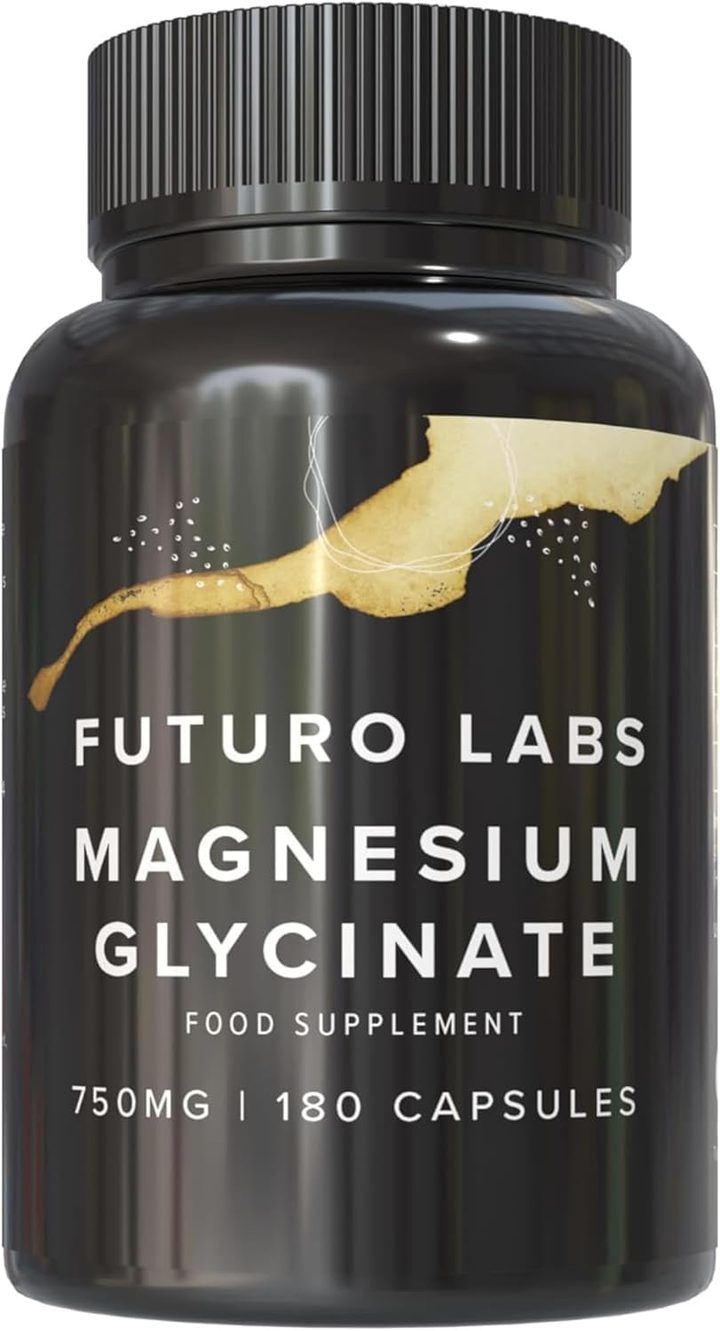
Our brand: the worked example on this page
Futuro Labs Magnesium Glycinate
- 22p a day
- 180 capsules, 2 capsules daily
- Lab tested
- Made in the UK
A short excipient list to read: Futuro Labs Magnesium Glycinate on Amazon UK, 180 capsules for £19.99. Label breakdown. The full label walkthrough is on the how to read a label page.
Why a capsule cannot be powder alone
Filling thousands of identical capsules per hour is a physics problem before it is a nutrition one: the powder must flow evenly through machinery without sticking, clumping or bridging, or every capsule carries a different dose. The standard solution is two helpers in milligram amounts. A flow agent, classically magnesium stearate or a vegetable-fat equivalent, lubricates the powder through the filling heads; an anti-caking agent, typically silicon dioxide, keeps it from clumping in humidity. Both are food-grade, used across the food supply, and present at a scale that rounds to nothing beside 1500mg of bisglycinate. Calling them fillers is slightly unfair; they are manufacturing infrastructure, and their real function for you is dose consistency, capsule to capsule.
Actual fillers, the no-fillers claim, and the additions worth an eyebrow
A true filler is bulk: when the active does not fill the chosen capsule size, something inert tops it up, and in honest products that is usually brown rice flour or microcrystalline cellulose, declared in the ingredients, harmless, and mildly informative, since a heavily filled capsule can signal a lighter active dose than the shell implies. The marketing phrase no fillers deserves its own decode: it usually means no bulking agent while the standard processing pair remains, which is fine and normal, and occasionally it means genuinely nothing but active and shell, which is achievable with dense 20% material and honest capsule sizing. Where an eyebrow is earned is a different category: colourants, added sweeteners, flavourings and long herbal dustings, decisions someone made for you that have nothing to do with getting magnesium into a capsule, and the practical excipient rule is simply that shorter lists are better signs.
| Ingredient | Job | Verdict |
|---|---|---|
| Magnesium stearate (vegetable source) | Flow agent for even filling | Standard; dose-consistency infrastructure |
| Silicon dioxide | Anti-caking in humidity | Standard; same |
| HPMC (the capsule shell) | The vegan container itself | Not a filler; the delivery vehicle |
| Brown rice flour or cellulose | Bulking when active underfills the shell | Honest filler; note what it implies about dose |
| Colourants, sweeteners, flavourings | Cosmetics | Unnecessary in a swallowed capsule; a soft red flag |
| Herbal dustings in a glycinate | Marketing | A blend pretending to be a single; check the doses |
The proportion that settles the worry, and the worked example
Keep the arithmetic in view and the filler anxiety resolves: the worked example's serving is dominated by 1500mg of declared bisglycinate at 20%, wrapped in an HPMC shell, with the standard processing pair present in milligram amounts and nothing else, no gelatin, colourants, sweeteners or dustings. That proportion, active in grams, helpers in milligrams, is what a clean label looks like, and it is why this site's checking energy goes to the lines that actually vary between products: the form and its percentage, the elemental dose at 80% NRV, the shown panels. Futuro Labs Magnesium Glycinate: 300mg elemental per 2 vegan capsules, UK made under GMP and BRC, third-party panels shown, £19.99 for 180 at 22p a day. Do magnesium glycinate capsules contain fillers: helpers always, bulk sometimes, harm essentially never, and the dose lines are where your attention earns money.
What to check on the label
- The standard pair, flow and anti-caking agents: milligram-scale infrastructure, not a concern.
- True fillers are bulk: rice flour or cellulose, declared, harmless, mildly informative.
- No fillers usually means no bulking agent, with the processing pair still present.
- Cosmetic additions earn the eyebrow: colourants, sweeteners, dustings.
- Check the actives and elemental line: that is where products actually differ.
Our brand
The worked example: Futuro Labs Magnesium Glycinate
Futuro Labs Magnesium Glycinate keeps the list short: bisglycinate 20%, HPMC shell, the standard processing pair, nothing cosmetic. 300mg elemental at 80% NRV per 2 capsules, 22p a day from a £19.99 bottle of 180. Vegan, UK made, panels shown.
- Elemental magnesium per serving
- 300mg (80% NRV)
- Form
- magnesium bisglycinate 20%
- Serving
- 2 capsules a day
- Bottle
- 180 capsules, 90 days
- Price
- £19.99 (22p a day)
- Capsule
- vegetarian shell, vegan product
Questions people also ask
Is magnesium stearate in capsules bad for you?
No: it is a food-grade flow agent at milligram amounts whose job is dose consistency. Vegan products use the vegetable-sourced version.
What does no fillers mean on a magnesium label?
Usually no bulking agent, with the standard flow and anti-caking pair still present, which is normal manufacturing rather than a loophole.
Why is rice flour in my magnesium capsules?
It tops up capsules the active does not fill: harmless, declared, and a mild hint to double-check the elemental dose per serving.
Which capsule ingredients are worth avoiding?
Cosmetics: colourants, sweeteners and flavourings in a swallowed capsule, and herbal dustings that turn a single into an undeclared blend.
What should I check instead of worrying about excipients?
The form with its percentage, the elemental line at 80% NRV, and shown test panels: the lines where products genuinely differ.
Sources
- Futuro Labs Magnesium Glycinate listing, Amazon UK, label and price checked 31 August 2026. https://www.amazon.co.uk/dp/B0BT7Z5VQW
- The Food Supplements (England) Regulations 2003 (food supplements are regulated as foods in the UK). https://www.legislation.gov.uk/uksi/2003/1387/contents/made
- Retained Regulation (EU) No 1169/2011, Annex XIII: nutrient reference value for magnesium 375mg. https://www.legislation.gov.uk/eur/2011/1169/annex/XIII
- Genuis SJ, Schwalfenberg G, Siy AK, Rodushkin I. Toxic element contamination of natural health products and pharmaceutical preparations. PLoS One 2012;7(11):e49676. PubMed record
- EFSA Panel on Dietetic Products, Nutrition and Allergies. Scientific Opinion on the substantiation of health claims related to magnesium. EFSA Journal 2010;8(10):1807. https://efsa.onlinelibrary.wiley.com/doi/10.2903/j.efsa.2010.1807