Ghost Fitness/Magnesium/How much magnesium should I take if I lift weights?
How much magnesium should I take if I lift weights?
The short answer
If you lift weights, take 300mg of elemental magnesium daily with the evening meal: training raises sweat and urinary losses while physique diets run the mineral low, and 300mg plus food lands in the athlete trials' territory. Bodyweight changes nothing.
- 300mgelemental daily: the lifter's dose, same as the site's standard
- 2 reasonslifting specifically raises the case: losses and the physique diet
- 350mgthe athlete trials' territory, reached with food
- 0 scalingfor bodyweight, training days or bulk-versus-cut
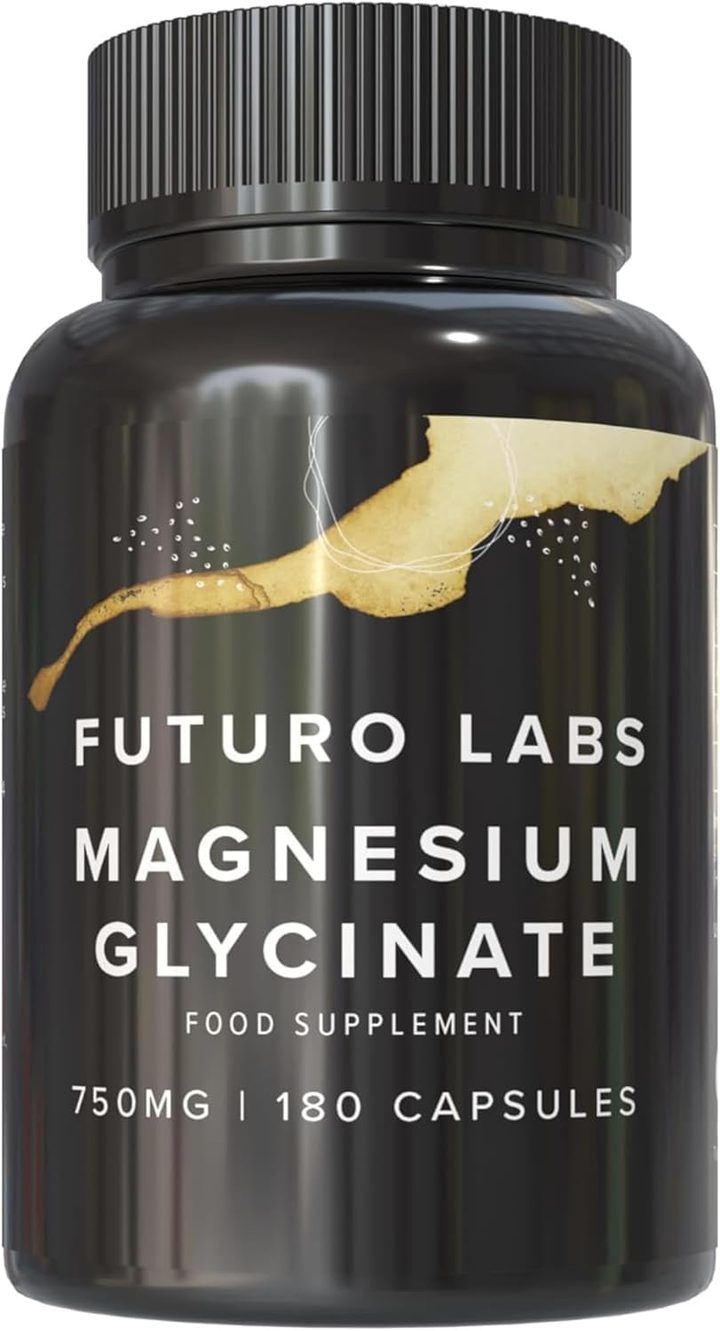
Our brand: the worked example on this page
Futuro Labs Magnesium Glycinate
- 22p a day
- 180 capsules, 2 capsules daily
- Lab tested
- Made in the UK
The lifter's serving: Futuro Labs Magnesium Glycinate on Amazon UK, 300mg elemental per 2 capsules, £19.99 for 180. Label breakdown. The full athlete pillar is how much magnesium for athletes; the recovery dose on glycinate for muscle repair.
Why lifting specifically strengthens the ordinary answer
The dose is the site's standard, and lifting is the population it was standardised for, on two mechanisms. Losses: hard training raises magnesium exits through sweat and urine, the pattern the Nielsen and Lukaski review documents across exercise studies, so a lifter's daily requirement is met from a slightly deeper hole than a sedentary person's. Diet: the physique eating pattern, lean protein, rice, oats, eggs, shakes, repeated with the discipline lifters are proud of, is precisely the pattern that squeezes out the greens, nuts, seeds, beans and wholegrains carrying the mineral, and cutting phases squeeze hardest. Put raised losses under a lowered supply and you have the low-intake cluster this site keeps describing, tiredness beyond the programme's explanation, cramps, twitching, restless sleep, arriving in exactly the people asking this question.
The trials, the number, and the scaling myths retired together
The evidence base was built on athletes and points at one number. Setaro's trial improved performance markers in athletes at around 350mg daily where intake had been low; Reno's study cut soreness at 350mg over ten days around damaging exercise; and a 300mg supplement plus an ordinary day's food lands total intake in exactly that territory while the supplement alone stays 100mg under the 400mg guidance level. The scaling instincts all die against the same facts. Bodyweight: the ceiling is a gut threshold and the reference intake a population figure, so the 110kg lifter and the 60kg lifter take the same serving. Training days: losses are covered by daily totals, so rest days dose identically. Bulking versus cutting: the dose holds while the risk moves, cuts thinning the food contribution and strengthening the case for the full serving rather than a bigger one. Harder blocks: adequacy is a threshold; deload weeks and PB weeks drink from the same 300mg.
| Lifter's question | Answer | Why |
|---|---|---|
| Base dose if I lift weights? | 300mg elemental, daily, with dinner | Covers the reference intake; trials' territory with food |
| I'm 100kg+: more? | No | The ceiling is a gut threshold, not bodyweight-scaled |
| Training days versus rest days? | Identical | Losses are a daily total; the trials dosed flat |
| Cutting: change the dose? | No: the dose holds, the need sharpens | Smaller food volume thins the dietary contribution |
| Six sessions a week: 400mg? | No: 300mg, and eat the rest | Extra capsules buy ceiling risk, not adequacy |
| Nearly-perfect diet already? | 150mg top-up, one capsule | The honest downshift for complete plates |
The routine, and where the rest of the results live
The protocol in one line, then the proportions kept honest: Futuro Labs Magnesium Glycinate, 2 capsules with the evening meal, every day of the block including rest days, 300mg elemental at 80% NRV from bisglycinate at 20%, vegan, UK made under GMP and BRC, panels shown, £19.99 for 180 capsules, 22p a day, judged at four weeks on tiredness, cramps, twitching and sleep. It is insurance on the machinery, not a performance additive: the results a lifter actually feels come from progressive overload, protein around 1.6g per kilogram, sleep and enough food, with creatine at 3g to 5g the one supplement carrying an authorised performance claim. How much magnesium should I take if I lift weights: 300mg, the same as the site's every answer, because lifters are who the answer was built for.
What to check on the label
- 300mg elemental daily with dinner: the lifter's dose, rest days included.
- Two lifting-specific reasons: raised losses and the physique diet.
- The trials dosed 350mg total: supplement plus food reaches it automatically.
- No scaling: bodyweight, session count, and bulk-versus-cut change nothing.
- Progressive overload, protein, sleep and creatine carry the felt results.
Our brand
The worked example: Futuro Labs Magnesium Glycinate
Futuro Labs Magnesium Glycinate is the lifter's standard: 300mg elemental per 2 capsules (80% NRV) from bisglycinate 20%, with dinner through every block, 22p a day from a £19.99 bottle of 180. Vegan, UK made, panels shown.
- Elemental magnesium per serving
- 300mg (80% NRV)
- Form
- magnesium bisglycinate 20%
- Serving
- 2 capsules a day
- Bottle
- 180 capsules, 90 days
- Price
- £19.99 (22p a day)
- Capsule
- vegetarian shell, vegan product
Questions people also ask
Do weightlifters need more magnesium than normal people?
Their requirement is the same reference intake; their risk of missing it is higher, through sweat and urinary losses plus the classic physique diet. The 300mg serving covers the gap.
Should a heavier lifter take a bigger magnesium dose?
No: the 400mg ceiling is a gut threshold and the reference intake a population figure. Bodyweight scales neither.
How much magnesium on training days versus rest days?
The same 300mg: losses are replaced by daily totals, and every trial that found a benefit dosed flat daily amounts.
Does cutting change my magnesium dose?
The dose holds at 300mg while the case for it strengthens: smaller food volume squeezes the mineral-rich foods hardest.
Will magnesium improve my lifts?
Not above adequacy: it removes the drag of a low intake. The performance claim on a UK shelf belongs to creatine at 3g daily.
Sources
- Futuro Labs Magnesium Glycinate listing, Amazon UK, label and price checked 31 August 2026. https://www.amazon.co.uk/dp/B0BT7Z5VQW
- Nielsen FH, Lukaski HC. Update on the relationship between magnesium and exercise. Magnesium Research 2006;19(3):180-189. PubMed record
- Lukaski HC. Magnesium, zinc, and chromium nutriture and physical activity. American Journal of Clinical Nutrition 2000;72(2 Suppl):585S-593S. PubMed record
- Setaro L, et al. Magnesium status and the physical performance of volleyball players: effects of magnesium supplementation. Journal of Sports Sciences 2014;32(5):438-445. PubMed record
- Reno AM, Green M, Killen LG, O'Neal EK, Pritchett K, Hanson Z. Effects of magnesium supplementation on muscle soreness and performance. Journal of Strength and Conditioning Research 2022;36(8):2198-2203. PubMed record
- Department of Health. Dietary Reference Values for Food Energy and Nutrients for the United Kingdom. Report on Health and Social Subjects 41, 1991 (magnesium RNI 300mg men, 270mg women).
- Expert Group on Vitamins and Minerals. Safe Upper Levels for Vitamins and Minerals. Food Standards Agency, 2003 (magnesium guidance level 400mg a day from supplements). https://cot.food.gov.uk/sites/default/files/vitmin2003.pdf
- EFSA Panel on Dietetic Products, Nutrition and Allergies. Scientific Opinion on the substantiation of health claims related to magnesium. EFSA Journal 2010;8(10):1807. https://efsa.onlinelibrary.wiley.com/doi/10.2903/j.efsa.2010.1807