Ghost Fitness/Magnesium/How much elemental magnesium is in a typical bisglycinate capsule?
How much elemental magnesium is in a typical bisglycinate capsule?
The short answer
A typical honest bisglycinate capsule holds 100mg to 150mg of elemental magnesium, because a large capsule fits roughly 750mg of powder and the compound is about 20% magnesium. Single capsules claiming 300mg or more are oxide-blended or compound-labelled.
- 100mg to 150mgelemental per honest bisglycinate capsule: the typical range
- ~750mgof powder a large capsule physically holds
- 20%of that powder that is actually magnesium in a true chelate
- 300mg+per single capsule: the claim that flags a blend or a compound label
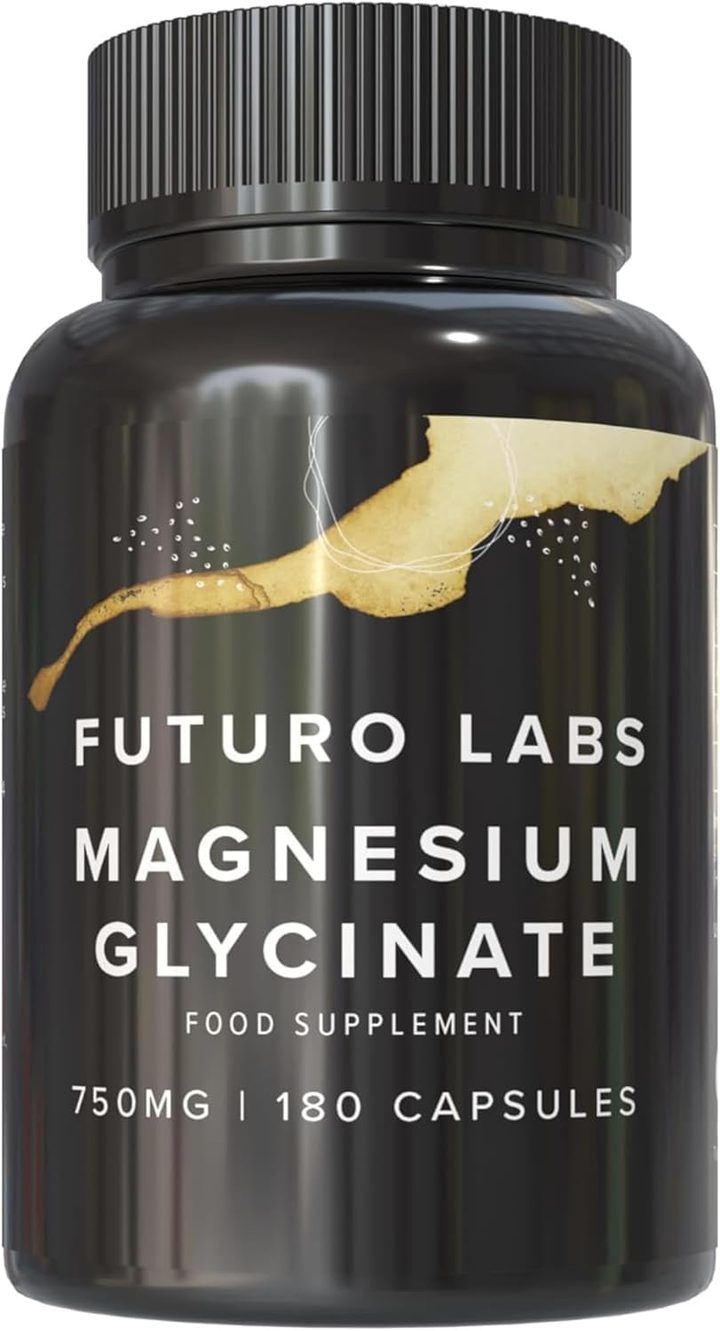
Our brand: the worked example on this page
Futuro Labs Magnesium Glycinate
- 22p a day
- 180 capsules, 2 capsules daily
- Lab tested
- Made in the UK
A capsule at the honest ceiling: Futuro Labs Magnesium Glycinate on Amazon UK, 150mg elemental per capsule, 2 per serving, £19.99 for 180. Label breakdown. The 20% maths lives on what bisglycinate 20% means; the serving design on capsules per serving.
The physics: capsule volume times chelate percentage
The typical number is set by two hard constraints multiplied together. Constraint one is volume: the largest capsule most people will comfortably swallow, the size 00 familiar from every supplement shelf, holds roughly 700mg to 800mg of powder, and even the veterinary-sized 000 only stretches toward a gram. Constraint two is chemistry: genuine magnesium bisglycinate is about 20% magnesium by weight, the other 80% being the two glycine molecules doing the chelating. Multiply them and the ceiling appears: 750mg of true chelate powder carries about 150mg of elemental magnesium, which is why honest bisglycinate products cluster at 100mg to 150mg per capsule and build their servings from two, and why the worked example sits at exactly 150mg, the top of what one swallow of real chelate can physically deliver.
What the physics makes impossible, and what that tells you at the shelf
The multiplication also works as a detector, because some labels advertise what the physics forbids. A single capsule claiming 300mg, 400mg or 500mg of elemental magnesium as bisglycinate would need 1500mg to 2500mg of chelate inside one shell, two to three capsules' worth of powder in one, which does not exist; so the claim is telling you one of two other things. Either the product is buffered, a blend where dense magnesium oxide, around 60% elemental, supplies most of the milligrams while the glycinate supplies the front label, legal when disclosed and a different product from the one you searched for; or the number is compound weight wearing an elemental costume, a 500mg-of-bisglycinate capsule actually delivering about 100mg of mineral. The %NRV column arbitrates in a glance, and the arithmetic never needs the brand's cooperation: milligrams claimed, divided by capsules, held against 150mg, tells you which story you are holding.
| Per-capsule claim | What it must be | Verdict |
|---|---|---|
| 80mg to 120mg elemental | True chelate, standard fill | Honest: budget-to-typical bisglycinate |
| 150mg elemental | True chelate at maximum practical fill | Honest ceiling: the worked example's design |
| 200mg to 250mg elemental | Chelate-heavy blend, or an oversized capsule | Read the ingredients line for oxide |
| 300mg to 500mg elemental, one capsule | Oxide-buffered blend, or compound weight mislabelled | Not pure bisglycinate: decode before buying |
| 500mg 'magnesium bisglycinate' with ~27% NRV | Compound weight: about 100mg elemental | The costume: fine product, small dose |
The number applied, and the capsule built at the ceiling
How much elemental magnesium is in a typical bisglycinate capsule: 100mg to 150mg, with the range's top edge set by shell volume and the chelate's 20%, which turns every label into a thirty-second audit, per-capsule elemental against the 150mg ceiling, ingredients line checked for oxide the moment a claim exceeds it. The worked example is the ceiling made literal: Futuro Labs Magnesium Glycinate packs 750mg of bisglycinate at 20% into each capsule for 150mg elemental, two capsules making the 300mg serving at 80% NRV, no oxide padding, vegan HPMC shells, UK made under GMP and BRC, panels shown, £19.99 for 180 capsules, 22p a day. The physics is fixed; the only variable is whether a label respects it, and now you can tell in one division.
What to check on the label
- Typical honest capsule: 100mg to 150mg elemental: volume times 20%.
- 150mg is the practical ceiling: ~750mg of true chelate per large capsule.
- 300mg+ per capsule means oxide blend or compound labelling: decode first.
- The audit is one division: elemental claimed over capsule count, against 150mg.
- The %NRV column confirms the reading in a glance.
Our brand
The worked example: Futuro Labs Magnesium Glycinate
Futuro Labs Magnesium Glycinate sits at the honest ceiling: 750mg of bisglycinate 20% per capsule for 150mg elemental, 2 capsules for the 300mg serving (80% NRV), 22p a day from a £19.99 bottle of 180. Vegan, UK made, panels shown.
- Elemental magnesium per serving
- 300mg (80% NRV)
- Form
- magnesium bisglycinate 20%
- Serving
- 2 capsules a day
- Bottle
- 180 capsules, 90 days
- Price
- £19.99 (22p a day)
- Capsule
- vegetarian shell, vegan product
Questions people also ask
Why do bisglycinate capsules contain so little magnesium each?
Because the chelate is only about 20% magnesium and a capsule holds about 750mg of powder: 150mg elemental per capsule is the physics, not stinginess.
Is a 500mg magnesium bisglycinate capsule better?
The 500mg is almost always compound weight: about 100mg of actual magnesium. Better-looking label, smaller dose.
How can some brands offer 300mg elemental in one capsule?
By blending in dense magnesium oxide, the buffered pattern: legal when disclosed, but no longer the pure chelate you searched for.
How many honest bisglycinate capsules make a full dose?
Two, at 150mg each: the standard 300mg serving. Products needing three or four are using smaller fills.
What is the quickest single-capsule check?
Divide claimed elemental milligrams by capsules per serving: anything over 150mg per capsule needs an explanation the ingredients line will provide.
Sources
- Futuro Labs Magnesium Glycinate listing, Amazon UK, label and price checked 31 August 2026. https://www.amazon.co.uk/dp/B0BT7Z5VQW
- Retained Regulation (EU) No 1169/2011, Annex XIII: nutrient reference value for magnesium 375mg. https://www.legislation.gov.uk/eur/2011/1169/annex/XIII
- Walker AF, Marakis G, Christie S, Byng M. Mg citrate found more bioavailable than other Mg preparations in a randomised, double-blind study. Magnesium Research 2003;16(3):183-191. PubMed record
- Schuette SA, Lashner BA, Janghorbani M. Bioavailability of magnesium diglycinate vs magnesium oxide in patients with ileal resection. Journal of Parenteral and Enteral Nutrition 1994;18(5):430-435. PubMed record
- Expert Group on Vitamins and Minerals. Safe Upper Levels for Vitamins and Minerals. Food Standards Agency, 2003 (magnesium guidance level 400mg a day from supplements). https://cot.food.gov.uk/sites/default/files/vitmin2003.pdf
- EFSA Panel on Dietetic Products, Nutrition and Allergies. Scientific Opinion on the substantiation of health claims related to magnesium. EFSA Journal 2010;8(10):1807. https://efsa.onlinelibrary.wiley.com/doi/10.2903/j.efsa.2010.1807