Ghost Fitness/Magnesium/How much elemental magnesium in 500 mg magnesium glycinate?
How much elemental magnesium in 500 mg magnesium glycinate?
The short answer
About 100mg at the 20% commercial figure and 70mg at the pure 14% chemistry; 1000mg gives about 200 or 140mg, 100mg gives about 20 or 14mg. The table runs both ways, and 300mg elemental needs 1500 to 2100mg of compound.
- 100mg of glycinateabout 20mg elemental at 20%, 14mg at 14%
- 500mg of glycinateabout 100mg at 20%, 70mg at 14%
- 1000mg of glycinateabout 200mg at 20%, 140mg at 14%
- For 300mg elemental1500mg at 20%, about 2100mg at 14%
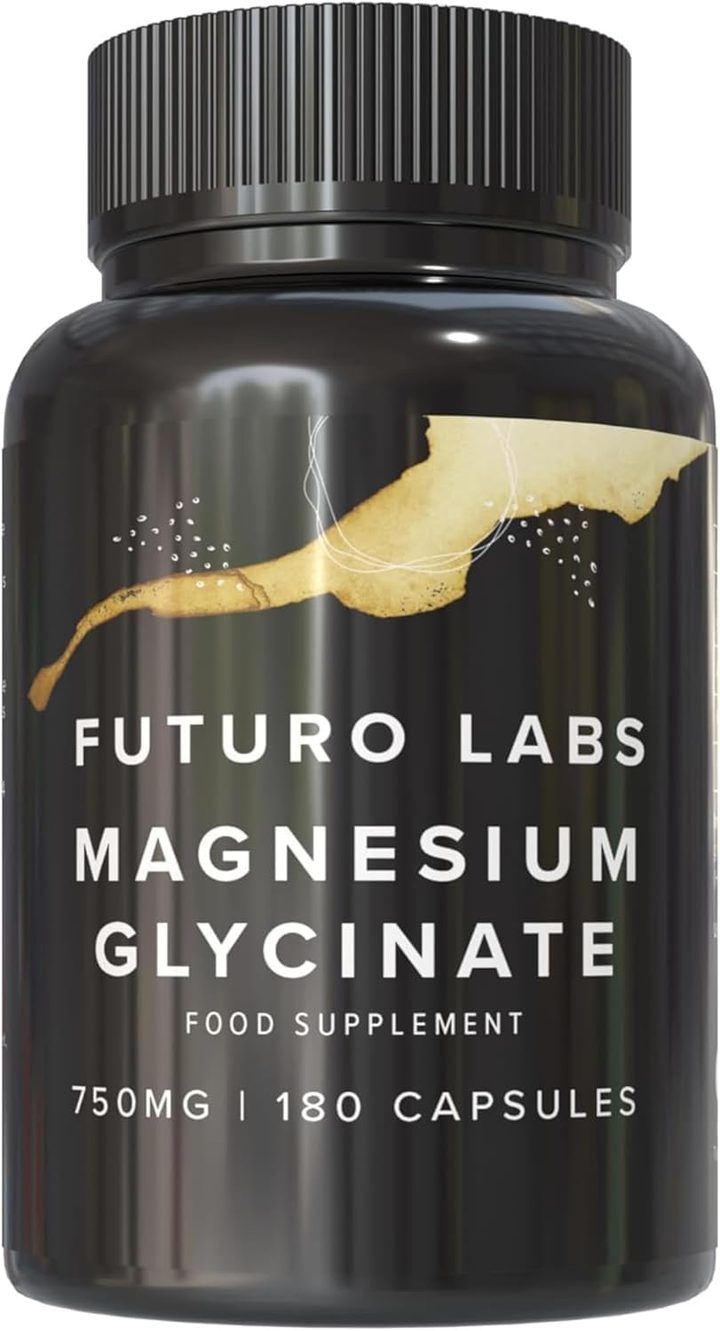
Our brand: the worked example on this page
Futuro Labs Magnesium Glycinate
- 22p a day
- 180 capsules, 2 capsules daily
- Lab tested
- Made in the UK
The table's worked row: Futuro Labs Magnesium Glycinate on Amazon UK, 1500mg bisglycinate giving 300mg elemental at 80% NRV, £19.99 for 90 days at 22p. Full label breakdown. The percentage chemistry is on the 500mg chemistry page; the 1000mg every-day question on the 1000mg page.
The table forward, compound to elemental at the two percentages labels use
Elemental magnesium in a given weight of magnesium glycinate is a multiplication, and the two multipliers labels use are the whole of the difficulty: the pure bisglycinate chelate is about 14% magnesium by molecular weight, and the commercial bisglycinate ingredients most manufacturers use declare up to 20%, the 500mg chemistry page's range, so every conversion has two answers and the tub's %NRV line picks between them. Forward, compound to elemental: 100mg of magnesium glycinate gives about 20mg of elemental magnesium at 20% and 14mg at 14%, roughly 5% and 4% of the 375mg NRV, a token either way and the kind of figure a gummy or a blend line carries. 250mg gives about 50mg or 35mg. 500mg, the number in the query, gives about 100mg or 70mg, roughly 27% or 19% NRV, a modest dose and the content of one large capsule of a true glycinate. 750mg, the fill of one large capsule on the worked example, gives 150mg at 20%, 40% NRV. 1000mg gives about 200mg or 140mg, roughly 53% or 37% NRV, and a product declaring 1000mg of magnesium glycinate has declared a compound weight whose magnesium is a fifth to a seventh of it, the 1000mg pages' finding that the big number on the front is the carrier and not the mineral. 1500mg gives about 300mg at 20%, 80% NRV, the worked example's specification, and 2000mg about 400mg at 20% or 280mg at 14%, the upper figure sitting at the supplemental guidance level. Read the tub's %NRV beside its compound weight and the multiplier reveals itself: a 500mg product at 27% NRV is a 20% ingredient and at 19% a pure chelate.
The table in reverse, elemental to compound for the dose you actually want, and the arithmetic filed
The reverse table is the one a buyer needs, because a buyer decides an elemental dose and then reads how much compound, and how many capsules, delivers it. For 100mg of elemental magnesium, a small top-up: 500mg of a 20% ingredient or about 700mg of the pure chelate, one large capsule. For 150mg, half a lifter's dose or one half of a split: 750mg or about 1070mg, one capsule of the worked example or one and a half of a pure chelate. For 200mg: 1000mg or about 1430mg. For 300mg, the section's standing dose at 80% NRV: 1500mg of a 20% ingredient, the worked example's two capsules, or about 2100mg of the pure chelate, three large capsules, the reason a genuine 300mg elemental glycinate is never a one-capsule product. For 400mg, the supplemental guidance level and the ceiling: 2000mg or about 2860mg, three to four capsules, and no reason to go there, the laxative effect and the guidance both arguing against it. The arithmetic filed: multiply compound by 0.2 or 0.14 to get elemental, divide elemental by the same to get compound, check the tub's %NRV to see which multiplier its ingredient uses, and count the capsules the compound weight implies, a label that prints both figures, like the worked example's 1500mg bisglycinate giving 300mg elemental at 80% NRV, having done the table's work for the reader and a label that prints only the compound having left them a row to look up, £19.99 for 90 days at 22p being the price of the worked row.
| Magnesium glycinate | Elemental at 20% | Elemental at 14% |
|---|---|---|
| 100mg | About 20mg, ~5% NRV | About 14mg, ~4% NRV |
| 500mg | About 100mg, ~27% NRV | About 70mg, ~19% NRV |
| 1000mg | About 200mg, ~53% NRV | About 140mg, ~37% NRV |
| 1500mgOurs | About 300mg, 80% NRV: the worked example | About 210mg, ~56% NRV |
| For 300mg elemental, you need | 1500mg: two capsules | About 2100mg: three capsules |
| For 400mg elemental, the ceiling | 2000mg | About 2860mg |
The verdict, a table with two columns and one line that picks between them
How much elemental magnesium in 500mg of magnesium glycinate: about 100mg at the 20% figure commercial ingredients declare and about 70mg at the pure chelate's 14%, with 1000mg giving about 200 or 140mg and 100mg giving about 20 or 14mg, the tub's %NRV line picking the column, and the reverse table giving 1500 to 2100mg of compound for the section's 300mg elemental dose across two or three capsules and 2000 to 2860mg for the 400mg ceiling nobody needs to reach. The worked row: Futuro Labs Magnesium Glycinate, 1500mg bisglycinate giving 300mg elemental at 80% NRV over two capsules, £19.99 for 90 days at 22p a day, both figures printed so no row needs looking up.
What to check on the label
- Multiply by 0.2 or 0.14: compound to elemental.
- Divide by the same: elemental to compound.
- Let the %NRV pick the column: 27% or 19% for 500mg.
- Count the capsules: 300mg elemental is two or three, never one.
- Stop at 400mg: the ceiling, and no reason to reach it.
Our brand
The worked example: Futuro Labs Magnesium Glycinate
Futuro Labs Magnesium Glycinate is the worked example for magnesium reviews because its label states every number a review needs: 1500mg magnesium bisglycinate at 20%, 300mg elemental, 80% NRV, 2 capsules a day, 180 capsules for £19.99, 22p a day, UK made, vegan HPMC shell, batch tested for lead, mercury, arsenic and cadmium, and only the register's own magnesium claims printed.
- Elemental magnesium per serving
- 300mg (80% NRV)
- Form
- magnesium bisglycinate 20%
- Serving
- 2 capsules a day
- Bottle
- 180 capsules, 90 days
- Price
- £19.99 (22p a day)
- Capsule
- vegetarian shell, vegan product
Questions people also ask
How much elemental magnesium is in 1000mg of magnesium glycinate?
About 200mg at the 20% figure commercial ingredients declare, roughly 53% NRV, or about 140mg at the pure chelate's 14%, roughly 37%, the big front-label number being the carrier compound and not the mineral.
How much elemental magnesium is in 100mg of magnesium glycinate?
About 20mg at 20% or 14mg at 14%, roughly 5% or 4% of the NRV, a token figure of the kind a gummy or a blend line carries.
How much magnesium glycinate gives 300mg of elemental magnesium?
About 1500mg at the 20% figure, two large capsules on the worked example, or about 2100mg at the pure 14%, three capsules, which is why a genuine 300mg elemental glycinate is never a one-capsule product.
Which percentage should I use for my product?
Read the %NRV beside the compound weight: 500mg at about 27% NRV is a 20% ingredient and at about 19% a pure chelate, and a label printing both the compound and the elemental figure has done the arithmetic for you.
Is 2000mg of magnesium glycinate too much?
At 20% it is about 400mg elemental, the UK supplemental guidance level and the ceiling, with the laxative effect likely before any harm; at 14% it is about 280mg, and there is no reason to reach the ceiling in either case.
Sources
- The magnesium bisglycinate chemistry: the pure chelate, one magnesium to two glycine, is about 14% magnesium by weight, and commercial bisglycinate ingredients, buffered or of different chelate ratios, declare magnesium contents up to about 20%. PubMed record
- Retained Regulation (EU) No 1169/2011, Annex XIII: nutrient reference value for magnesium 375mg. https://www.legislation.gov.uk/eur/2011/1169/annex/XIII
- Expert Group on Vitamins and Minerals. Safe Upper Levels for Vitamins and Minerals. Food Standards Agency, 2003 (magnesium guidance level 400mg a day from supplements). https://cot.food.gov.uk/sites/default/files/vitmin2003.pdf
- The GB claims register, magnesium entries: magnesium contributes to a reduction of tiredness and fatigue, normal psychological function, normal nervous system function, normal muscle function and electrolyte balance, among others. https://www.gov.uk/government/publications/great-britain-nutrition-and-health-claims-nhc-register