Ghost Fitness/Lion's mane/Can lion's mane replace pre-workout?
Can lion's mane replace pre-workout?
The short answer
No: a pre-workout is mostly caffeine with citrulline and beta-alanine, and lion's mane contains no caffeine and produces no acute effect. If you want to drop pre-workout, drop it or use plain caffeine at a chosen dose.
- What a pre-workout iscaffeine at 150-300mg, citrulline, beta-alanine, sometimes creatine
- Where the acute effect livesthe caffeine, overwhelmingly
- The mushroom's contributionzero to every ingredient's job: no caffeine, no acute effect
- The honest alternativesdrop it, or plain caffeine at a dose you choose
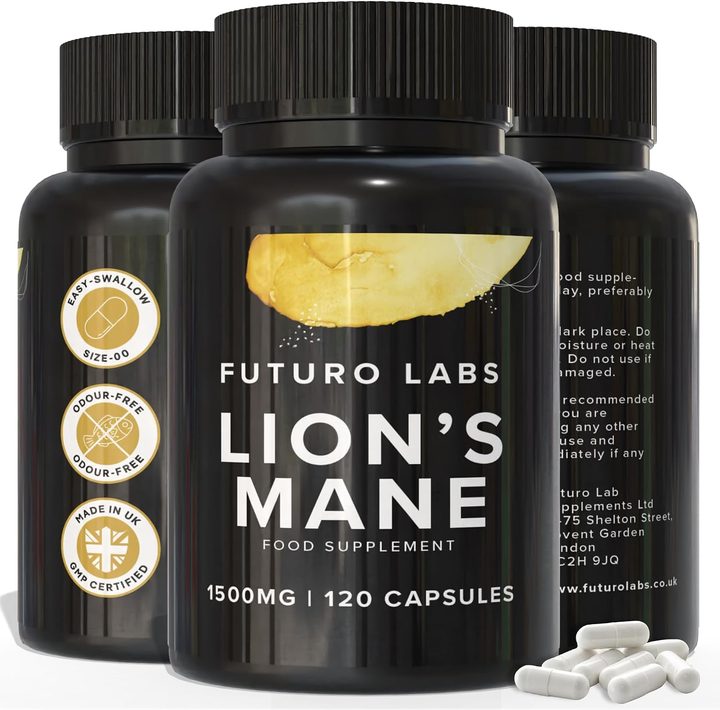
Our brand: the worked example on this page
Futuro Labs Lion's Mane
- 13p a day
- 120 capsules, 1 capsule daily
- Lab tested
- Made in the UK
The capsule that replaces nothing in a pre-workout: Futuro Labs Lion's Mane on Amazon UK, caffeine-free 5:1 fruiting body extract at 13p a day, taken beside the session, not for it. Full label breakdown. The caffeine contest is on the caffeine-versus page; the creatine ladder on the creatine ladder page.
The pre-workout taken apart, because you cannot replace a thing without knowing what it is made of
To ask whether lion's mane can replace pre-workout is to ask whether it can do the jobs a pre-workout's ingredients do, so take a typical tub apart and grade the mushroom against each part. The caffeine, first and largest: 150-to-300mg per serving in most commercial pre-workouts, the ingredient that carries the bulk of the felt effect, the alertness, the readiness, the reduced perceived effort, an acute and well-evidenced stimulant effect arriving within the hour, and the ingredient whose sleep cost and jitters are usually why someone wants to stop. The citrulline, typically several grams, a nitric-oxide precursor with a modest performance literature, the pump ingredient. The beta-alanine, the tingling ingredient, with a buffering literature at daily doses over weeks rather than any acute effect. Creatine, in some formulas, the one component with an authorised performance claim, working by daily saturation and not by pre-session timing. And the flavouring, colour and the ritual of the scoop, which does more of the psychological work than any label admits. Now grade lion's mane against each: no caffeine, no fungus making the alkaloid, so nothing of the stimulant job; no citrulline or nitric-oxide role; no buffering role; no creatine; and no acute effect of any kind, the taking pages describing a capsule you will most likely not notice, so the mushroom contributes exactly nothing to any job a pre-workout performs, which makes the replacement question not close but categorical, a claim-free slow research bet cannot stand in for an acute stimulant blend because it does none of the things the blend is bought for.
The reader who really asked, the honest ways to drop pre-workout, and the mushroom's true place beside the session
The reader who really asked is usually trying to leave pre-workout behind, the caffeine having become the problem, the afternoon crash, the poor sleep after evening sessions, the tolerance that needs two scoops, and marketing has offered lion's mane as the calm replacement, so serve that reader properly. The honest ways to drop pre-workout are three. Drop it outright: the performance cost of training without a stimulant is smaller than the industry implies and shrinks as the caffeine habit resets, most lifters finding warm-ups and a decent night's sleep do the readiness work within a fortnight. Use plain caffeine at a dose you choose: a caffeine tablet or a measured coffee at 100-to-200mg, taken early enough to protect sleep, gives the one ingredient that actually works without the blend's other passengers or its 300mg default, and lets the dose taper. Keep the creatine separately: if the pre-workout was also your creatine source, move the 3g to a daily plain tub, since it never needed the timing anyway. Lion's mane's true place is beside the session rather than for it: caffeine free and evening-safe, it can be taken at any hour without touching the sleep the reader is trying to protect, and it offers its separate, thin, claim-free bet on cognition and stress over sixteen weeks, a thing a lifter may run alongside a training programme and never a thing that fuels one, so the verdict is a plain no, the mushroom replaces nothing in a pre-workout, and the reader dropping the tub should drop it cleanly or keep only the caffeine, with the 13p capsule doing its own unrelated job in the background.
| The ingredient | Its job | Lion's mane's contribution |
|---|---|---|
| Caffeine, 150-300mg | The acute stimulant effect: most of the felt lift | None: no fungus makes caffeine |
| Citrulline | The pump: a modest nitric-oxide literature | None |
| Beta-alanine | Buffering over weeks; the tingle | None |
| Creatine, sometimes | The authorised claim, by daily saturation | None: move the 3g to a plain tub |
| The scoop and flavour | The ritual | A capsule beside a coffee, if ritual is wanted |
| The verdict | An acute stimulant blend | A slow claim-free bet: replaces nothing |
The verdict, categorical rather than close
Can lion's mane replace pre-workout: no, categorically, a pre-workout being mostly caffeine with citrulline, beta-alanine and sometimes creatine, and the mushroom contributing nothing to any of those jobs, no caffeine, no acute effect, no pump, no buffering, no saturation, so the reader wanting to leave the tub behind should drop it cleanly or keep only plain caffeine at a chosen early dose, moving any creatine to a daily plain tub. The capsule's honest place beside the session: Futuro Labs Lion's Mane, caffeine-free 5:1 fruiting body extract, one capsule at any hour, UK made, lab tested, £15.49 for 120 days at 13p a day, running its own unrelated bet in the background while the training does what training does.
What to check on the label
- Take the tub apart: caffeine, citrulline, beta-alanine, sometimes creatine.
- Grade the mushroom against each: zero contribution, every line.
- Drop pre-workout honestly: cleanly, or plain caffeine at a chosen dose.
- Move the creatine: a daily plain tub never needed the timing.
- Place the capsule beside, not for: evening-safe, unrelated, 13p.
Our brand
The worked example: Futuro Labs Lion's Mane
Futuro Labs Lion's Mane: 1 capsule daily of 5:1 fruiting body extract, labelled 1500mg mushroom equivalent (about 300mg extract), 120 capsules for £15.49, 120 days at 13p a day. Vegan HPMC shell, UK made under GMP and BRC, independently lab tested, caffeine free. Lion's mane holds no authorised UK health claims; this site describes its small studies as studies.
- Extract
- fruiting body, 5:1
- Per capsule
- 1500mg mushroom equivalent
- Serving
- 1 capsule a day
- Bottle
- 120 capsules, 120 days
- Price
- £15.49 (13p a day)
- Capsule
- HPMC vegan shell, size 00
Questions people also ask
Can lion's mane work as a natural pre-workout?
No: a pre-workout's felt effect is mostly caffeine, and lion's mane contains none and produces no acute effect of any kind, contributing nothing to the stimulant, pump, buffering or creatine jobs.
What is in a typical pre-workout?
Caffeine at 150-to-300mg carrying most of the effect, citrulline for the pump, beta-alanine for buffering over weeks, sometimes creatine, and the flavour and scoop ritual doing the rest.
How do I stop taking pre-workout without losing performance?
Drop it cleanly, the cost shrinking within a fortnight as the caffeine habit resets, or keep only plain caffeine at 100-to-200mg early enough to protect sleep, and move any creatine to a daily plain tub.
Does lion's mane give energy for training?
No: it is caffeine free and produces no lift, so the energy language on some mushroom marketing describes nothing the fungus does, and buying it for a session is buying the wrong kingdom of life.
Is there any reason to take lion's mane around training?
Only convenience: it is evening-safe and can anchor to a pre-session coffee, but it runs a separate, thin, claim-free sixteen-week bet on cognition and stress, and never fuels the session.
Sources
- The multi-ingredient pre-workout literature: commercial pre-workouts are typically built on caffeine at 150-300mg with citrulline, beta-alanine and sometimes creatine, caffeine carrying the bulk of the acute performance effect. PubMed record
- The caffeine biosynthesis literature: caffeine is a purine alkaloid synthesised by a limited set of plants including coffee, tea, cacao, guarana and yerba mate, and is not produced by fungi. PubMed record
- EFSA Panel on Dietetic Products, Nutrition and Allergies. Scientific Opinion on the substantiation of health claims related to creatine and increase in physical performance during short-term, high intensity, repeated exercise bouts. EFSA Journal 2011;9(7):2303. https://efsa.onlinelibrary.wiley.com/doi/10.2903/j.efsa.2011.2303
- Docherty S, Doughty FL, Smith EF. The acute and chronic effects of lion's mane mushroom supplementation on cognitive function, stress and mood in young adults: a double-blind, parallel groups, pilot study. Nutrients 2023;15(22):4842. PubMed record