Ghost Fitness/Lion's mane/Is lion's mane grown in the UK?
Is lion's mane grown in the UK?
The short answer
In three senses: wild lion's mane grows in Britain but is legally protected and may not be picked; UK growers cultivate it fresh for kitchens; and supplement extracts are mostly produced in Asia and encapsulated here.
- Wildnative to Britain, rare, and protected: an offence to pick
- CultivatedUK specialist growers supply fresh mushrooms to restaurants and farm shops
- Extractedsupplement extract powders are mostly produced in Asia
- MadeUK made on a capsule means encapsulated and bottled here
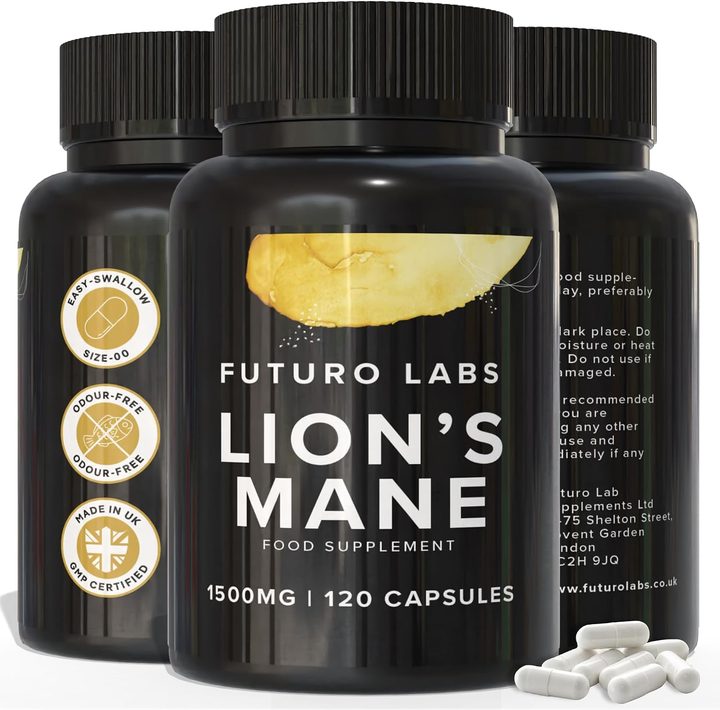
Our brand: the worked example on this page
Futuro Labs Lion's Mane
- 13p a day
- 120 capsules, 1 capsule daily
- Lab tested
- Made in the UK
UK made, and honest about what that means: Futuro Labs Lion's Mane on Amazon UK, encapsulated in the UK under GMP and BRC, 5:1 fruiting body extract, £15.49 for 120 days at 13p. Full label breakdown. The fresh-mushroom channels are on the where-to-buy page; the legal status on the legal page.
The wild answer, with the fact most foragers do not know, and the cultivated answer
Is lion's mane grown in the UK has three answers because grown means three things, and the first is the one foragers most need. Wild: Hericium erinaceus is native to Britain, growing on wounds in old beech and oak in mature woodland, and it is rare enough that it is one of the very few fungi given legal protection, listed on Schedule 8 of the Wildlife and Countryside Act 1981 alongside a handful of other species, which makes it an offence to pick, uproot or destroy a wild specimen in Great Britain, so a forager who finds one has found something to photograph and report to a recording scheme, not something to take home, the protection existing precisely because the species is scarce and slow to colonise, and this page stating it plainly because the culinary reputation sends people looking. Cultivated: yes, and increasingly, a small scene of UK specialist mushroom growers cultivating lion's mane on sterilised hardwood sawdust blocks in controlled fruiting rooms, supplying fresh mushrooms to restaurants, farm shops, farmers' markets and online produce boxes, the fruiting bodies exactly the white cascading delicacy the consume page dry-sears, and the grow-your-own kits sold widely being the domestic end of the same cultivation, a block fruiting on a kitchen counter in a fortnight, so the fresh mushroom is grown in the UK in the fullest sense, on British substrate in British fruiting rooms, and buying it that way is the honest way to eat a protected species.
The extracted and made answers, the honest distinction on a capsule, and the question to ask any brand
The supplement answer is where the word needs its careful distinction, because UK made on a capsule does not mean UK grown and honest brands do not claim it does. Extracted: the concentrated extract powders that fill lion's mane capsules across the whole UK market are, overwhelmingly, produced abroad, mostly in China where large-scale mushroom cultivation and hot-water extraction industries supply the world's supplement manufacturers, the dried fruiting bodies grown, extracted, filtered, concentrated and spray-dried there and shipped as a finished extract powder, the economics of grams-scale mushroom cultivation for a tenth-of-mass yield making domestic extraction at supplement scale rare to the point of absence, so a reader should assume an imported extract unless a brand states otherwise and can show it. Made: UK made, UK manufactured or made in Britain on a capsule label means the encapsulation, bottling, labelling and quality release happened here, in a UK facility, under UK GMP and, where stated, BRC standards, with the metals and microbiology testing of the imported extract done or commissioned here, which is a real and valuable claim about the manufacturing chain and its testing, and a different claim from where the mushroom grew. The worked example is described accordingly: Futuro Labs Lion's Mane is UK made under GMP and BRC and independently tested, statements about the facility and the testing, and this site does not describe its extract as UK grown because that is a separate question the label does not answer, the honest question to ask any brand being where the mushroom was cultivated and extracted, with a straight answer being a good sign whatever the country and a dodge being the tell. The three senses filed: wild in Britain and protected, cultivated fresh in Britain for the kitchen, extracted mostly in Asia for the capsule, and made in Britain when the label says so, which is what it says and all it says.
| The sense | The answer | The note |
|---|---|---|
| Wild | Native, rare, on old beech and oak | Protected under Schedule 8: an offence to pick |
| Cultivated fresh | Yes: UK specialist growers and home kits | The honest way to eat a protected species |
| Extracted for supplements | Mostly abroad, largely China | Assume imported extract unless a brand shows otherwise |
| Made | Encapsulated, bottled and tested here | A real claim about the facility, not the field |
| The worked example | UK made under GMP and BRC, tested | Not described as UK grown |
| The question for any brand | Where was it cultivated and extracted? | A straight answer is the good sign |
The verdict, grown here in two senses and made here in one
Is lion's mane grown in the UK: in three senses, wild in British woodland where it is a protected species that may not be picked, cultivated fresh by a small scene of UK specialist growers and by home kits for the kitchen, and, for the supplement aisle, extracted mostly in Asia and encapsulated here, UK made on a capsule meaning made, bottled and tested in a UK facility rather than grown in a British wood. The worked example, described honestly: Futuro Labs Lion's Mane, UK made under GMP and BRC, independently tested, 5:1 fruiting body extract, £15.49 for 120 days at 13p a day, its manufacturing chain British and its mushroom's origin the question to ask, as of every brand.
What to check on the label
- Never pick wild lion's mane: protected under Schedule 8.
- Buy the fresh mushroom from UK growers: farm shops, markets, kits.
- Assume imported extract in capsules: unless a brand shows otherwise.
- Read UK made as made: facility, testing and bottling, not the field.
- Ask where it was grown and extracted: a straight answer is the sign.
Our brand
The worked example: Futuro Labs Lion's Mane
Futuro Labs Lion's Mane: 1 capsule daily of 5:1 fruiting body extract, labelled 1500mg mushroom equivalent (about 300mg extract), 120 capsules for £15.49, 120 days at 13p a day. Vegan HPMC shell, UK made under GMP and BRC, independently lab tested, caffeine free. Lion's mane holds no authorised UK health claims; this site describes its small studies as studies.
- Extract
- fruiting body, 5:1
- Per capsule
- 1500mg mushroom equivalent
- Serving
- 1 capsule a day
- Bottle
- 120 capsules, 120 days
- Price
- £15.49 (13p a day)
- Capsule
- HPMC vegan shell, size 00
Questions people also ask
Does lion's mane grow wild in the UK?
Yes, on wounds in old beech and oak in mature woodland, rarely, and it is protected under Schedule 8 of the Wildlife and Countryside Act 1981, making it an offence to pick, uproot or destroy a wild specimen.
Can I buy UK-grown fresh lion's mane?
Yes: a small scene of specialist growers cultivates it on hardwood sawdust blocks for restaurants, farm shops, markets and produce boxes, and grow-your-own kits fruit a block on a kitchen counter in a fortnight.
Are lion's mane supplement extracts made from UK mushrooms?
Rarely: the extract powders across the UK market are overwhelmingly produced abroad, mostly in China, where large-scale cultivation and hot-water extraction supply the world's manufacturers.
What does UK made mean on a lion's mane capsule?
That encapsulation, bottling, labelling and quality release happened in a UK facility under UK GMP and, where stated, BRC standards, with testing done or commissioned here, a claim about the manufacturing chain and not about where the mushroom grew.
Is the worked example UK grown?
It is UK made under GMP and BRC and independently tested, statements about the facility and the testing; this site does not describe its extract as UK grown, and the origin of any brand's mushroom is the honest question to ask them directly.
Sources
- The Wildlife and Countryside Act 1981, Schedule 8: Hericium erinaceus is among the fungi listed as protected, making it an offence to pick, uproot or destroy wild specimens in Great Britain. https://www.legislation.gov.uk/ukpga/1981/69/schedule/8
- The medicinal mushroom labelling discussion: fruiting body versus mycelium-on-grain, extract ratios and beta-glucan content as the label facts that separate concentrated extracts from diluted powders. PubMed record
- The mushroom bioaccumulation literature: fungi concentrate heavy metals including lead, cadmium and mercury from their growing substrate, making per-batch metals testing the central purity check for mushroom supplements. PubMed record
- The Food Supplements (England) Regulations 2003. https://www.legislation.gov.uk/uksi/2003/1387/contents/made