Ghost Fitness/Lion's mane/Is lion's mane good for gym?
Is lion's mane good for gym?
The short answer
Not for the gym: lion's mane has no training, strength or recovery data and contains no caffeine. Whether it works at all rests on two small studies in cognition and stress, and no benefit may lawfully be claimed.
- Good for the gym?no training file at all: no strength, recovery or performance data
- Does it work?two small human studies, cognition and stress: interesting and thin
- What are its benefits?none may be claimed: no mushroom holds a UK health claim
- How does it work?a bench story: nerve growth factor in cells and animals, untested in people
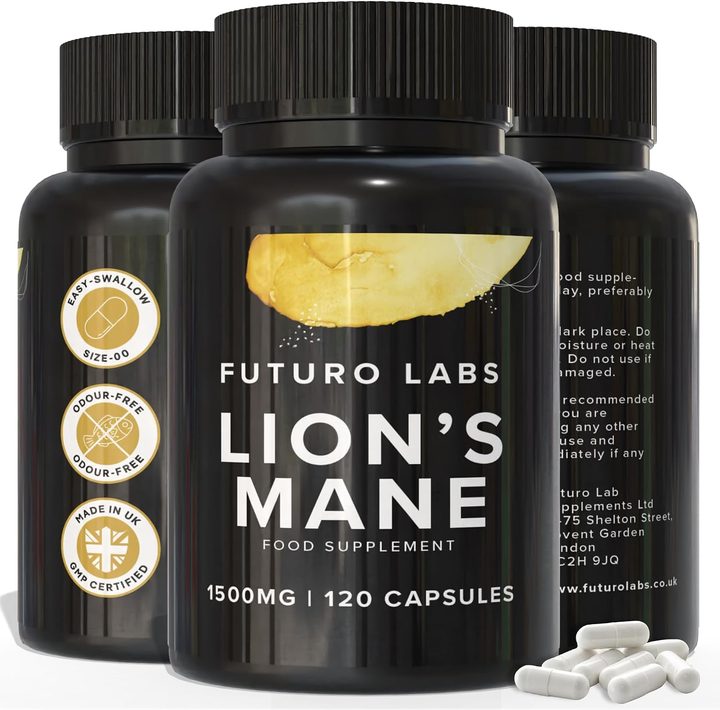
Our brand: the worked example on this page
Futuro Labs Lion's Mane
- 13p a day
- 120 capsules, 1 capsule daily
- Lab tested
- Made in the UK
Sold as what it is, not what forums say: Futuro Labs Lion's Mane on Amazon UK, 5:1 fruiting body extract, no claims, no caffeine, £15.49 for 120 days at 13p. Full label breakdown. The complete guide is here; the training evidence owners on the cordyceps page.
Verb one: is it good for the gym, answered from the file it does not have
This is the question lifters actually type, and it bundles three different verbs, good for the gym, does it work, and what are the benefits, so audit each one honestly rather than let the bundle blur them. Verb one, the gym: lion's mane has no training file, no trial anywhere having measured strength, power, endurance, recovery, muscle, body composition or any performance outcome after taking it, its two human studies concerning cognitive scores in older adults with mild impairment and one acute attention task plus subjective stress in a young-adult pilot, neither touching a barbell, so the honest answer to whether it is good for the gym is that nothing suggests it is and nothing has tested it, and the mushroom contains no caffeine, no fungus making the alkaloid, so it delivers none of the acute lift a pre-workout's stimulant provides, the pre-workout page taking the tub apart ingredient by ingredient and grading the mushroom's contribution to each at zero. The training evidence lives where lifters already know it lives: creatine, an authorised performance claim on decades of trials at 3g; caffeine's established acute effect; beta-alanine's buffering over weeks; and beneath them complete protein, sleep and programmed training, the free rungs carrying more evidence than every mushroom combined, which is why the spending ladder seats lion's mane last, a marginal 13p bought after everything evidenced and never instead of it. For athletes, bodybuilders and anyone searching this for sport, the verdict is the same sentence, the mushroom is not a training supplement, has never been studied as one, and any page telling a lifter otherwise is selling a cognition bet in gym clothes.
Verb two: does it actually work, answered by the two studies at their true size
Does lion's mane actually work is the question the forum threads circle, and the honest answer is a smaller question: work at what, on what evidence, and the evidence is two studies this site describes at their true size. The Mori 2009 trial: older Japanese adults, fifty to eighty, with diagnosed mild cognitive impairment, taking fruiting-body tablets, roughly three grams of dried mushroom a day, for sixteen weeks in a double-blind placebo-controlled design, cognitive scores improving against placebo across the trial and declining again after supplementation stopped, one small trial in a clinical population, its extrapolation to a healthy lifter a gap rather than a bridge, its fade-out arguing against cycling and for flat expectations. The Docherty 2023 pilot: forty-one healthy young adults, a single dose producing faster performance on one attention task about an hour later, and lower subjective stress after 28 days, a preliminary study by its own authors' framing, one task, one cohort, no dose-response, no replication yet, the mushroom's one acute datapoint and its one stress datapoint. That file supports exactly this sentence: lion's mane may do something small for cognition or stress in some people over weeks, on evidence too thin to promise anything, and the likeliest outcome of sixteen weeks is nothing noticed, which is why this site sells it, where it sells it at all, as a flat-expectations research bet at 13p a day and never as a thing that works, the forum testimonials on either side documenting expectations rather than effects, reviews verifying parcels and never doses or outcomes. Whether it works for you is answerable only by a clean personal experiment, the diary and n-of-one protocols on the fog and sleep pages, run with the honesty that an unblinded trial of one proves nothing to anyone else.
Verb three: what are the benefits, and how does it work, answered by the register and the bench
What are the benefits of taking lion's mane is the question the marketing answers longest and the law answers shortest: no mushroom holds an authorised health claim in the UK, so no benefit may lawfully be printed on any lion's mane product, not focus, memory, mood, nerve support, immunity, sleep, energy or gym performance, and a label or listing carrying any such benefit has failed the section's first flag before its contents are weighed. The benefits pages the search box finds are therefore describing either the two studies above, inflated, or the bench literature, extrapolated, and the bench literature is the answer to the last verb, how does it work: lion's mane contains two lipophilic compound families, hericenones from the fruiting body and erinacines from the mycelium, both shown in cell-culture and animal studies to stimulate nerve growth factor, a protein involved in neuron survival and growth, a real, repeatable laboratory finding that is the entire basis of the nerve-repair and neurogenesis language draped over the aisle, with no human trial having measured any effect of either compound, oral bioavailability and brain penetration unestablished in people, and nerve growth factor itself a double-edged signal with roles in pain, so how it works is a mechanism story that has never been shown to work in a person. The effects a buyer will notice from a capsule are, most likely, none, the mushroom being caffeine free and producing no acute anything, which is not a failure of the product but the honest shape of a claim-free bet. The three verbs audited, the verdict assembles: not good for the gym, its training file empty and its stimulant content zero; working, if at all, only in the narrow sense two small studies permit; and carrying no lawful benefit, its mechanism a bench story; a mushroom worth 13p a day to the lifter who buys exactly that, bought on the four tests, taken one capsule daily with no clock, reviewed at sixteen weeks, and seated last on the ladder behind creatine, protein, sleep and training, the worked example priced for that buyer and refusing on every page to serve the one sold a promise.
| The question | The honest answer | The evidence |
|---|---|---|
| Good for the gym? | No: no training file, no caffeine | No trial has measured any performance outcome |
| Does it work? | Only in the narrow sense two small studies permit | Mori 2009 in MCI adults; Docherty 2023 pilot |
| What are the benefits? | None may be claimed | No mushroom holds a UK health claim |
| How does it work? | A bench mechanism: NGF in cells and animals | Untested in any human outcome trial |
| What will I feel? | Most likely nothing: caffeine free, no acute effect | The honest shape of a claim-free bet |
| What is it worth? | 13p a day, last on the ladder | After creatine, protein, sleep and training |
The verdict, three verbs and one honest price
Is lion's mane good for the gym: no, its training file empty and its caffeine content zero, the performance evidence belonging to creatine, caffeine, beta-alanine and the free basics; does it work: only in the narrow sense two small studies permit, cognition in impaired older adults and one acute task plus stress in a young pilot, the likeliest outcome of sixteen weeks being nothing noticed; what are the benefits: none may lawfully be claimed, the mechanism a nerve-growth-factor bench story untested in people. The mushroom sold as exactly that: Futuro Labs Lion's Mane, 5:1 fruiting body extract, one capsule daily, no claims, no caffeine, UK made, lab tested, £15.49 for 120 days at 13p a day, a flat-expectations research bet seated last on a lifter's ladder, which is the only honest thing this page can call it.
What to check on the label
- Separate the three verbs: gym, works, benefits.
- Answer the gym from the missing file: no training data, no caffeine.
- Size the two studies: MCI adults and a pilot; interesting and thin.
- Refuse every benefit claim: no mushroom holds one.
- File the mechanism as bench: NGF in dishes, not people.
- Price it last: 13p after creatine, protein, sleep, training.
Our brand
The worked example: Futuro Labs Lion's Mane
Futuro Labs Lion's Mane: 1 capsule daily of 5:1 fruiting body extract, labelled 1500mg mushroom equivalent (about 300mg extract), 120 capsules for £15.49, 120 days at 13p a day. Vegan HPMC shell, UK made under GMP and BRC, independently lab tested, caffeine free. Lion's mane holds no authorised UK health claims; this site describes its small studies as studies.
- Extract
- fruiting body, 5:1
- Per capsule
- 1500mg mushroom equivalent
- Serving
- 1 capsule a day
- Bottle
- 120 capsules, 120 days
- Price
- £15.49 (13p a day)
- Capsule
- HPMC vegan shell, size 00
Questions people also ask
Is lion's mane good for athletes or bodybuilders?
No trial has measured any training outcome, strength, recovery, endurance or body composition, and it contains no caffeine, so nothing suggests it helps sport and nothing has tested it; creatine, caffeine and the basics own that evidence.
Does lion's mane actually work?
Only in the narrow sense two small studies permit: cognitive scores in older adults with mild impairment over sixteen weeks, and one acute attention task plus subjective stress in a 41-person pilot, no claim resulting and no replication yet.
What are the benefits of lion's mane supplements in the UK?
None may lawfully be claimed: no mushroom holds an authorised UK health claim, so any focus, memory, nerve, immunity or energy benefit printed on a product is unlicensed and disqualifying.
How does lion's mane work?
By a bench mechanism: hericenones and erinacines stimulate nerve growth factor in cell-culture and animal studies, a real finding never tested in a human outcome trial, with bioavailability and brain penetration unestablished in people.
What effect will I feel from lion's mane?
Most likely none: it is caffeine free and produces no acute effect, the honest shape of a claim-free flat-expectations bet reviewed at sixteen weeks, with forum testimonials documenting expectations rather than effects.
Sources
- Mori K, Inatomi S, Ouchi K, Azumi Y, Tuchida T. Improving effects of the mushroom Yamabushitake (Hericium erinaceus) on mild cognitive impairment: a double-blind placebo-controlled clinical trial. Phytotherapy Research 2009;23(3):367-372. PubMed record
- Docherty S, Doughty FL, Smith EF. The acute and chronic effects of lion's mane mushroom supplementation on cognitive function, stress and mood in young adults: a double-blind, parallel groups, pilot study. Nutrients 2023;15(22):4842. PubMed record
- The hericenone and NGF literature: lion's mane compounds stimulate nerve growth factor synthesis in cell-culture and animal models, bench findings that have not translated into human pain or nerve-repair trials. PubMed record
- Retained Regulation (EC) No 1924/2006 on nutrition and health claims made on foods, and the Great Britain nutrition and health claims register. https://www.gov.uk/government/publications/great-britain-nutrition-and-health-claims-nhc-register
- Kreider RB, et al. International Society of Sports Nutrition position stand: safety and efficacy of creatine supplementation in exercise, sport, and medicine. Journal of the International Society of Sports Nutrition 2017;14:18. PubMed record