Ghost Fitness/Lion's mane/Is lion mane bad to take at night?
Is lion mane bad to take at night?
The short answer
Bad in no sense: not for sleep, being caffeine free with no sedative either; not for absorption, no window existing; not for the stomach, one small capsule with a snack; not for anything documented. Night is fine.
- Bad for sleep?no: caffeine free, no stimulant, no sedative
- Bad for absorption?no: no window exists at any hour
- Bad for the stomach?no: one small capsule, with a snack if bare capsules sit badly
- Bad for anything documented?no: nothing in the literature attaches to the hour
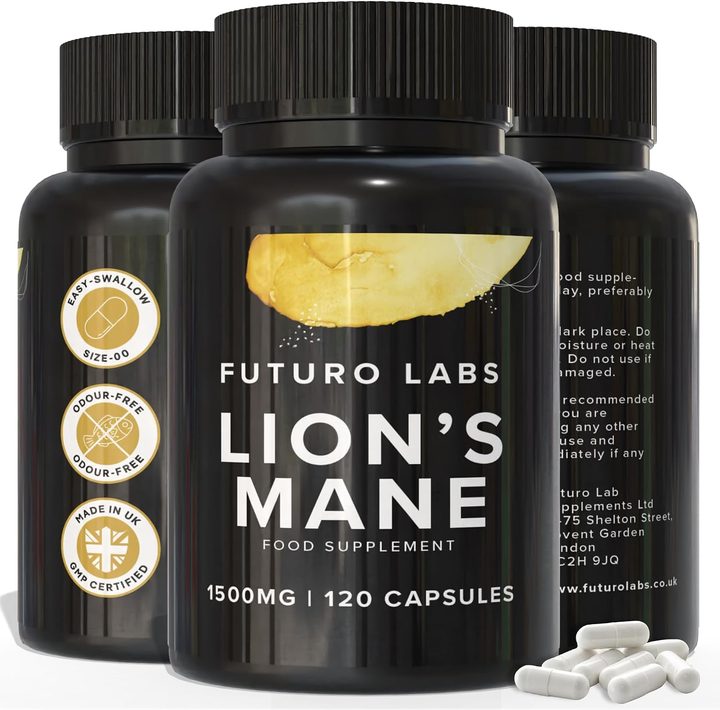
Our brand: the worked example on this page
Futuro Labs Lion's Mane
- 13p a day
- 120 capsules, 1 capsule daily
- Lab tested
- Made in the UK
A capsule with no bad hour: Futuro Labs Lion's Mane on Amazon UK, 1 caffeine-free capsule at any time, £15.49 for 120 days at 13p. Full label breakdown. The five-disturbers checklist is on the before-bed page; the hour-by-hour narrative on the what-happens page.
Bad in which sense, because the word carries four questions and each has its own answer
Is lion's mane bad to take at night carries four questions inside one word, and answering each separately is the honest method because a reader worried about one sense may be reassured by an answer to another. Bad for sleep, the sense most readers mean: no, the mushroom containing no caffeine, no fungus making the alkaloid, and no stimulant of any kind, so nothing delays sleep onset or fragments the night, and equally no sedative, no sleep claim existing and no sedative effect measured, so nothing blunts the morning either, the night capsule sleeping through the night as inertly as the reader does. Bad for absorption, the sense borrowed from the timing folklore: no, no absorption window existing for a hot-water mushroom extract at any hour, fed and fasted identical, the empty-stomach mechanisms absent, a night capsule digesting exactly as a morning one does. Bad for the stomach, the sense the label's direction anticipates: no, one small capsule being neither large nor acidic, and the bare-capsule queasiness a minority feel at any hour being fixed at night as by day, a modest snack rather than a feast meeting the with-a-meal direction without inviting reflux, the before-bed checklist clearing the load-and-reflux mechanism for a single capsule. Bad for anything documented, the sense that catches the rest: no, nothing in the tolerability literature attaching to the hour of dosing, the trials having specified no time and reported no time-related issue, the vivid-dreams chatter online being anecdote in both directions with no study behind it, and the theoretical bench signals on clotting and glucose being a pharmacist mention for those on the relevant drugs regardless of the clock.
The four noes assembled into the honest verdict, and the one thing night is actually for
Four senses, four noes, and the assembled verdict is that lion's mane is not bad to take at night in any sense the word can carry, which leaves the question's mirror to be answered with equal plainness: night is not good for it either, the capsule holding no sleep benefit to deliver and no calm to time, so the night hour is neither a risk nor a remedy, the sleep pages' standing finding that the behavioural shelf, magnesium's evening sentences in its own section and CBT-i for persistent insomnia own the question the night capsule cannot touch. The one thing night is actually for is the anchor: for the evening-routined, the toothbrush and the pill organiser, the late trainer whose fixed point is the post-session meal, the shift worker whose breakfast falls at midnight, night is when the capsule reliably gets taken, and adherence being the only timing variable lion's mane has, the night capsule earns its place by presence rather than by effect, the caffeine-free fact making the hour costless. The verdict filed in one line: lion's mane is not bad at night for sleep, absorption, the stomach or anything documented, it is not good at night for sleep either, and it is right at night for anyone whose anchor lives there, the worked example being a caffeine-free single capsule that a night will neither notice nor thank you for, taken at ten by those whose routine says so and at eight in the morning by everyone else.
| The sense | The answer | The reason |
|---|---|---|
| For sleep | No | Caffeine free, no stimulant; no sedative either |
| For absorption | No | No window at any hour; fed and fasted identical |
| For the stomach | No | One small capsule; a snack for the queasy |
| For anything documented | No | The trials specified no hour and reported no time-related issue |
| Good for sleep, then? | Also no | No sleep claim, no sedative effect, empty file |
| What night is for | The anchor | Adherence: the evening-routined, late trainers, shift workers |
The verdict, four noes and one anchor
Is lion's mane bad to take at night: no in every sense, not for sleep since it is caffeine free with no stimulant and no sedative, not for absorption since no window exists at any hour, not for the stomach since one small capsule with a snack sits fine, and not for anything documented since nothing in the literature attaches to the hour, with the mirror answered too, night being no help for sleep either, and the night hour earning its place only as the anchor for those whose routine lives there. The capsule with no bad hour: Futuro Labs Lion's Mane, one caffeine-free capsule at any time, UK made, lab tested, £15.49 for 120 days at 13p a day, taken at night by the evening-anchored and unnoticed by the night.
What to check on the label
- Ask bad in which sense: sleep, absorption, stomach, documented.
- Answer no to each: caffeine free, no window, one capsule, nothing attached.
- Answer the mirror honestly: not good for sleep either.
- Use night as an anchor: adherence for the evening-routined.
- Send sleep hopes elsewhere: hygiene, magnesium's section, CBT-i.
Our brand
The worked example: Futuro Labs Lion's Mane
Futuro Labs Lion's Mane: 1 capsule daily of 5:1 fruiting body extract, labelled 1500mg mushroom equivalent (about 300mg extract), 120 capsules for £15.49, 120 days at 13p a day. Vegan HPMC shell, UK made under GMP and BRC, independently lab tested, caffeine free. Lion's mane holds no authorised UK health claims; this site describes its small studies as studies.
- Extract
- fruiting body, 5:1
- Per capsule
- 1500mg mushroom equivalent
- Serving
- 1 capsule a day
- Bottle
- 120 capsules, 120 days
- Price
- £15.49 (13p a day)
- Capsule
- HPMC vegan shell, size 00
Questions people also ask
Will lion's mane at night ruin my sleep?
No: it contains no caffeine or stimulant to delay or fragment sleep, and no sedative to blunt the morning, the night proceeding exactly as it would have without the capsule.
Is lion's mane absorbed worse at night?
No: no absorption window exists for a hot-water mushroom extract at any hour, fed and fasted are identical, and a night capsule digests as a morning one does.
Should I eat something with lion's mane at night?
A modest snack if bare capsules sit badly for you, meeting the label's with-a-meal direction without a feast that could invite reflux; otherwise the single capsule is fine alone.
Is there any documented reason to avoid night dosing?
None: the trials specified no hour and reported no time-related issue, and the vivid-dreams chatter is anecdote in both directions with no study behind it.
So is night a good time for lion's mane?
Only as an anchor: it holds no sleep benefit to deliver, so night is right for the evening-routined, late trainers and shift workers whose fixed point falls there, and no better than morning for anyone else.
Sources
- The caffeine biosynthesis literature: caffeine is a purine alkaloid synthesised by a limited set of plants including coffee, tea, cacao, guarana and yerba mate, and is not produced by fungi. PubMed record
- The sleep and memory consolidation literature: newly learned material is consolidated during sleep, with sleep deprivation after study measurably impairing retention, the foundation of study-schedule advice. PubMed record
- The Hericium erinaceus tolerability literature: human trials at grams-scale daily doses of fruiting-body preparations reported no serious adverse events, with mild gastrointestinal complaints and rare allergic reactions the reported issues, and a long history of the species as food. PubMed record
- The medicinal mushroom labelling discussion: fruiting body versus mycelium-on-grain, extract ratios and beta-glucan content as the label facts that separate concentrated extracts from diluted powders. PubMed record