Ghost Fitness/Lion's mane/Is 50 mg of lion's mane enough?
Is 50 mg of lion's mane enough?
The short answer
No, in every unit: 50mg of extract is 250mg equivalent, 50mg equivalent is 10mg of extract, and either is a token that exists on labels to list the ingredient, not to dose it. Blends and gummies live here.
- 50mg of 5:1 extract250mg mushroom equivalent: a sixth of the worked example's capsule
- 50mg of mushroom equivalent10mg of 5:1 extract: a thirtieth of the capsule
- Against the trialsthe trials' 1,800 to 3,000mg of dried mushroom: forty to sixty times more
- Where 50mg livesblends, gummies, pre-workout matrices: the ingredient listed, not dosed
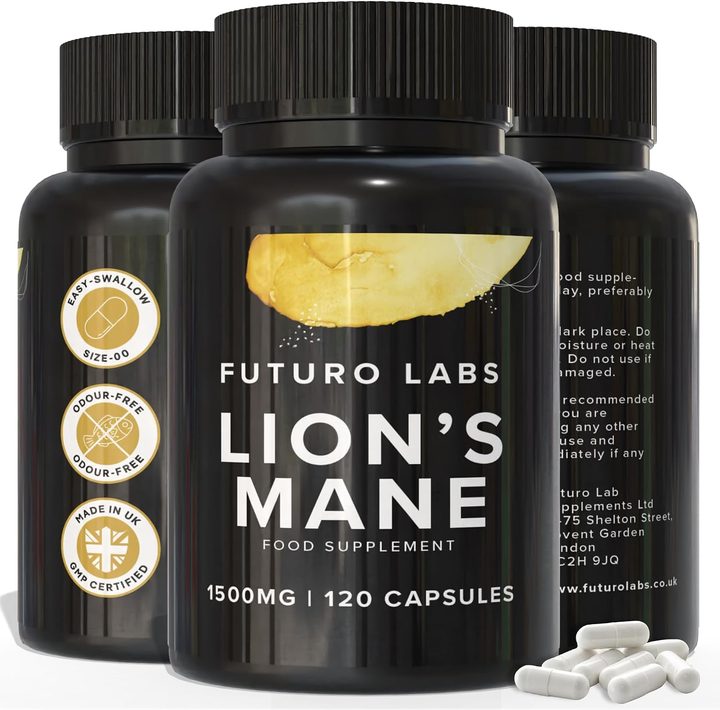
Our brand: the worked example on this page
Futuro Labs Lion's Mane
- 13p a day
- 120 capsules, 1 capsule daily
- Lab tested
- Made in the UK
A dose rather than a listing: Futuro Labs Lion's Mane on Amazon UK, about 300mg of 5:1 extract at 1500mg equivalent per capsule, £15.49 for 120 days at 13p. Full label breakdown. The 500mg readings are on the 500mg page; the blend division on the multi-mushroom page.
No in every unit, and the arithmetic that makes 50mg a token whichever way it is read
Is 50mg of lion's mane enough is one of the few dose questions this section can answer with a plain no, because the number is a token in every unit a label could mean. Read as extract, 50mg of a 5:1 is 250mg of mushroom equivalent, a sixth of the worked example's single capsule and roughly a tenth of the lower trial dose, the Docherty pilot's 1.8 grams of dried mushroom; read as mushroom equivalent, 50mg is about 10mg of 5:1 extract, a thirtieth of the capsule and a sixtieth of the trial; read as plain dried powder, 50mg is a pinch of an ingredient, a fortieth to a sixtieth of the trials' amounts. Whichever reading applies, 50mg sits an order of magnitude or two below every reference point the literature offers and below every label direction on the stated-extract shelf, and the honest verdict is that it is not a dose but a listing, with the standing caveat that not enough is not a claim that more does anything, no dose being established as effective at any level and the trials' amounts being context rather than targets, so 50mg is not enough by the only comparisons available and the section promises nothing for the amounts that are.
Why a token dose exists on a label at all, where 50mg lives, and the number filed as a listing
Why 50mg appears on labels at all is the more useful question, because a token dose has a purpose and it is not to dose anyone: an ingredient present at 50mg can be listed on the ingredients line and named on the front of the pack, and naming is what the token buys, the word lion's mane on a tub whose real product is something else. Where 50mg lives, accordingly, is three places. Blends and complexes, the multi-mushroom page's division, where a fixed capsule split across six or ten species leaves each at a token and a proprietary line hides the split, 50mg of lion's mane being what remains after nine other names have been listed. Gummies, where the sugar matrix caps the active payload and the mushroom rides at token milligrams so that the jar can say lion's mane, the six-gummy matching sum showing how many sweets it takes to reach one capsule's equivalent. And pre-workout and focus matrices, the passenger-ingredient audit, where lion's mane at a few dozen milligrams sits in a nootropic blend line so that the tub can wear the focus word while the caffeine does the work. In each, the token is doing marketing rather than dosing, and a reader asking whether 50mg is enough has usually found it on one of those labels and has, by asking, already answered the question the label hoped they would not. The number filed as a listing: 50mg is not enough in any unit and was never meant to be, it exists so an ingredient can be named, and the honest response is to buy the mushroom as a stated single-ingredient extract at a real serving, the worked example's roughly 300mg of 5:1 at 1500mg equivalent being a dose rather than a name, with the same flat expectations attached to it that attach to every serving in a claim-free category.
| The reading | What it is | Against the worked example and the trials |
|---|---|---|
| 50mg of 5:1 extract | 250mg mushroom equivalent | A sixth of the capsule; a tenth of the lower trial dose |
| 50mg of mushroom equivalent | About 10mg of 5:1 extract | A thirtieth of the capsule; a sixtieth of the trial |
| 50mg of plain powder | A pinch of an ingredient | A fortieth to a sixtieth of the trials |
| Where it lives | Blends, gummies, pre-workout matrices | The ingredient listed, not dosed |
| Why it exists | To put the name on the pack | Marketing, not dosing |
| The honest response | A stated single-ingredient extract at a real serving | A dose rather than a name |
The verdict, a listing and not a dose
Is 50mg of lion's mane enough: no, in every unit, 50mg of extract being a sixth of the worked example's capsule and a tenth of the lower trial dose, 50mg of mushroom equivalent a thirtieth and a sixtieth, and 50mg of plain powder a pinch, a token that exists on blends, gummies and pre-workout matrices so that the name can be printed, not so that anyone is dosed, with the standing caveat that not enough is no promise about the amounts that are. The dose rather than the name: Futuro Labs Lion's Mane, about 300mg of 5:1 extract at 1500mg equivalent per capsule, one daily, UK made, lab tested, £15.49 for 120 days at 13p a day, a single stated ingredient at a real serving and flat expectations either way.
What to check on the label
- Say no in every unit: extract, equivalent or powder, a token.
- Know why the token exists: to name the ingredient on the pack.
- Recognise where it lives: blends, gummies, pre-workout matrices.
- Buy a dose, not a name: a stated single-ingredient extract.
- Promise nothing for more: not enough is not a claim for larger amounts.
Our brand
The worked example: Futuro Labs Lion's Mane
Futuro Labs Lion's Mane: 1 capsule daily of 5:1 fruiting body extract, labelled 1500mg mushroom equivalent (about 300mg extract), 120 capsules for £15.49, 120 days at 13p a day. Vegan HPMC shell, UK made under GMP and BRC, independently lab tested, caffeine free. Lion's mane holds no authorised UK health claims; this site describes its small studies as studies.
- Extract
- fruiting body, 5:1
- Per capsule
- 1500mg mushroom equivalent
- Serving
- 1 capsule a day
- Bottle
- 120 capsules, 120 days
- Price
- £15.49 (13p a day)
- Capsule
- HPMC vegan shell, size 00
Questions people also ask
Is 50mg of lion's mane extract a real dose?
No: 50mg of a 5:1 is 250mg of mushroom equivalent, a sixth of the worked example's capsule and a tenth of the lower trial dose, a token whichever unit the label used.
Why do some products contain only 50mg of lion's mane?
To name it: an ingredient at 50mg can be listed and printed on the front, so blends, gummies and pre-workout matrices carry lion's mane at token amounts for the word rather than the dose.
Would 50mg do anything at all?
Nothing that any evidence speaks to, and the caveat runs both ways: no dose is established as effective, so not enough at 50mg is no promise that a real serving does anything either.
How much lion's mane is a real serving?
The stated-extract shelf directs roughly 300 to 500mg of extract, the worked example's capsule at about 300mg of 5:1 and 1500mg equivalent, against trials that used 1.8 to 3 grams of dried mushroom.
What should I buy instead of a product with 50mg?
A stated single-ingredient extract: fruiting body, a ratio with its maths, real per-serving milligrams and testing shown, a dose rather than a listing, with flat expectations attached.
Sources
- The medicinal mushroom labelling discussion: fruiting body versus mycelium-on-grain, extract ratios and beta-glucan content as the label facts that separate concentrated extracts from diluted powders. PubMed record
- Docherty S, Doughty FL, Smith EF. The acute and chronic effects of lion's mane mushroom supplementation on cognitive function, stress and mood in young adults: a double-blind, parallel groups, pilot study. Nutrients 2023;15(22):4842. PubMed record
- Mori K, Inatomi S, Ouchi K, Azumi Y, Tuchida T. Improving effects of the mushroom Yamabushitake (Hericium erinaceus) on mild cognitive impairment: a double-blind placebo-controlled clinical trial. Phytotherapy Research 2009;23(3):367-372. PubMed record
- Retained Regulation (EC) No 1924/2006 on nutrition and health claims made on foods, and the Great Britain nutrition and health claims register. https://www.gov.uk/government/publications/great-britain-nutrition-and-health-claims-nhc-register