Ghost Fitness/Collagen/Should I take collagen everyday?
Should I take collagen everyday?
The short answer
Yes, if at all: every trial took it every day for eight to twenty-four weeks, and no trial ran alternate days. Nothing in collagen needs a day off, no tolerance. Anchor it or it lapses by week three.
- The trials' everyday2.5 to 15g daily, rest days included, 8 to 12 weeks for skin, 12 to 24 for joints; no alternate-day trial
- The register's everydaycollagen holds no claim; vitamin C's collagen formation sentence is a daily nutrient's
- The habit's everydayanchored to a fixed point it survives to week twelve; floating on memory it lapses by week three
- The wallet's everyday28p a day in a capsule; roughly a pound a day in powder at 10g
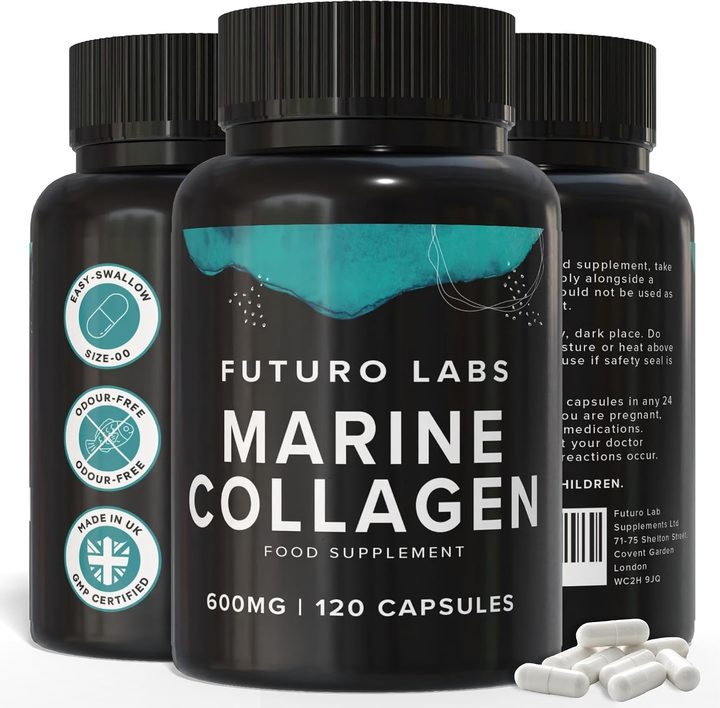
Our brand: the worked example on this page
Futuro Labs Marine Collagen
- 28p a day
- 120 capsules, 2 capsules daily
- Lab tested
- Made in the UK
The affordable everyday: Futuro Labs Marine Collagen on Amazon UK, 2 capsules, 1200mg hydrolysed type 1 marine collagen with 12mg vitamin C at 15% NRV plus zinc, 120 for £16.99, 28p a day, sixty days a tub, lab tested and UK made, below the trial doses and taken daily for vitamin C's collagen formation sentence and the habit. Full label breakdown. The morning-or-night question is on the morning or night page; the daily marine dose on the how much marine collagen daily page.
The trials' everyday and the register's everyday
Should I take collagen every day is a question whose answer is already inside the evidence, because every collagen trial that produced a result took the dose every day, so the honest page does not ask whether but which everyday the reader means, and finds four. The trials' everyday first. The skin trials gave 2.5 to 10 grams of hydrolysed collagen every day for eight to twelve weeks; the joint trials gave around ten grams every day for twelve to twenty-four weeks; the one bone trial gave five grams every day for a year; and the tendon protocol, the only timed collagen dose, gave fifteen grams with vitamin C an hour before each loading session, which in a rehabilitation programme is most days. Not one trial gave collagen on alternate days, three times a week, in cycles with breaks, or only on training days, so the trial evidence has no alternate-day arm to compare and a reader who takes collagen three times a week is running a trial nobody ran and cannot expect the trials' result from it. The reason is the tissue: skin turns over on a clock of weeks and the dermis on a clock of months, cartilage and tendon slower still, and the proposed mechanism is a steady supply of small peptides reaching fibroblasts and chondrocytes over that clock, which a dose every third day dilutes to a third. Nothing in collagen asks for a day off: it is a food protein with no upper level set by any authority, no tolerance that builds, no dependence, no receptor to down-regulate and no accumulation to clear, so the cycling that some supplements are given, on and off in blocks, has no rationale here and no trial behind it. Rest days are included for the same reason creatine's are: the tissue does not know which days a reader trained. The register's everyday second. Collagen holds no authorised claim, so the everyday on a collagen label belongs to the vitamin C beside it, which contributes to normal collagen formation for the normal function of skin, cartilage, bones, teeth, gums and blood vessels and has a daily nutrient reference value of 80mg, a nutrient the body does not store in quantity and takes in daily from fruit and vegetables, so a capsule carrying 12mg at 15% of that value is a daily contribution to a daily nutrient, and the capsule's honest everyday is vitamin C's rather than collagen's.
The habit's everyday, the wallet's everyday, and the four totalled
The habit's everyday third, and it is the one that decides whether the first two ever happen. Consistency across weeks was the single variable every collagen trial controlled, the participants dosed every day and measured at the end, so a reader who wants any result the trials measured has to be taking the dose in week twelve, and the habit literature is plain about what survives twelve weeks: a behaviour anchored to an existing fixed point in the day, the morning coffee, the last glass of water, the post-training shake, holds, while a behaviour floating on memory, taken when a reader remembers, lapses by around week three, which is when most tubs go to the back of the cupboard. So every day is not only the trials' condition but the habit's, since a daily dose at a fixed anchor is easier to keep than an alternate-day dose that requires a reader to remember which day it is, and the honest advice is to pick the anchor before the tub. The wallet's everyday fourth, because every day has a price and the price differs by form. Two capsules at 28p a day is £8.50 a month and £102 a year, an everyday most readers can carry without thinking, for a modest dose taken for the vitamin C line and the habit. Ten grams of powder a day, the joint trial dose, costs roughly a pound a day at typical shelf prices, £30 a month and £365 a year, an everyday that is a decision, made for a reason, the joint timetable or the skin trials, for the trial's duration, and reviewed against a scored sheet at the trial's reading points rather than continued on faith. The secondary question, is it good to take marine collagen daily, is the same question with the animal named: marine and bovine hydrolysates run the same clock and the same everyday, the marine footnotes being fish allergy, which is a never rather than a daily question, and the heavy-metals panel a marine label should show, which is a manufacturing question and not a frequency one. The four totalled: the trials took it every day, the register's sentence is a daily nutrient's, the habit survives only when daily and anchored, and the wallet decides which daily dose is affordable and which is a decision. The worked example is the affordable everyday on its true terms: two capsules, 1200mg hydrolysed type 1 marine collagen with 12mg vitamin C plus zinc, 120 for £16.99 at 28p a day, sixty days a tub, lab tested and UK made, below the trial doses, taken daily at an anchor for vitamin C's collagen formation sentence and the habit. Should I take collagen every day: yes, if at all, because there is no other way the evidence was made, and the only real question is which dose a reader can keep taking.
| The everyday | The fact | What it means |
|---|---|---|
| The trials' | Every trial dosed daily, rest days included, 8 to 24 weeks; no alternate-day trial | Daily or the trials are not being tested |
| The tissue's | Skin in weeks, dermis and joints in months; a steady peptide supply is the mechanism | A dose every third day is a third of the dose |
| The register's | Collagen holds no claim; vitamin C's sentence is a daily nutrient's, NRV 80mg | The capsule's honest everyday is vitamin C's |
| The habit's | Anchored daily doses survive to week twelve; floating doses lapse by week three | Pick the anchor before the tub |
| The wallet's | 28p a day in capsules; roughly a pound a day in powder at 10g | Affordable at one; a decision at the other |
| No day off needed | No upper level, no tolerance, no dependence, no accumulation | Cycling has no rationale and no trial |
| The worked exampleOurs | Two capsules, 1200mg marine collagen with 12mg vitamin C plus zinc, 28p a day, 60 days a tub | The affordable everyday, on its true terms |
What to check on the label
- Daily, or not at all: no trial ran alternate days.
- Include rest days: the tissue does not know the programme.
- Do not cycle it: nothing in collagen asks for a break.
- Anchor it: coffee, last glass, or the shake.
- Choose the everyday you can afford: 28p or a pound.
Our brand
The worked example: Futuro Labs Marine Collagen
Futuro Labs Marine Collagen: 2 capsules daily, 1200mg hydrolysed type 1 marine collagen with 12mg vitamin C and 1.5mg zinc (15% NRV each), 120 capsules for £16.99, 60 days at 28p a day, lab-tested, UK GMP made. Slim veggie-shell capsules, odour free. Fish derived: pescatarian, not vegetarian or vegan.
- Collagen per serving
- 1200mg hydrolysed type 1 marine (fish)
- Co-factors
- vitamin C 12mg (15% NRV), zinc 1.5mg (15% NRV)
- Serving
- 2 capsules a day
- Bottle
- 120 capsules, 60 days
- Price
- £16.99 (28p a day)
- Capsule
- slim size 00, veggie shell, odour free
Questions people also ask
Is it OK to take collagen every day?
Yes, and it is the only way the evidence was made: every collagen trial dosed daily including rest days for eight to twenty-four weeks, collagen is a food protein with no upper level, no tolerance and no dependence, and nothing in it asks for a day off, so the question is which daily dose a reader can keep taking.
Should I cycle collagen or take breaks?
No: cycling has no rationale for a food protein with no receptor to down-regulate, no accumulation to clear and no tolerance that builds, no trial has tested breaks, and the tissues collagen is aimed at run on clocks of weeks and months that a break interrupts.
Can I take collagen only on training days?
That is a trial nobody ran: the joint and skin trials dosed every day and the tendon protocol dosed before each loading session, and the dermis, cartilage and tendon do not know which days a reader trained, so training-day-only dosing dilutes the steady supply the proposed mechanism relies on.
Is it good to take marine collagen daily?
The same answer as any collagen: daily if at all, on the trials' terms, with marine's footnotes being fish allergy, a never rather than a frequency question, and the heavy-metals panel a marine label should show, a manufacturing question, neither of which changes the everyday.
How much does taking collagen every day cost?
Two capsules at 28p a day is around £8.50 a month and £102 a year, for a modest dose taken for the vitamin C line and the habit, while ten grams of powder a day, the joint trial dose, is roughly a pound a day, £30 a month and £365 a year, a decision made for a reason and for a trial's duration.
Sources
- The collagen peptide trial literature: randomised controlled studies of hydrolysed collagen supplementation across skin, joint and connective-tissue outcomes, typically at 2.5g to 15g daily, with small effects and frequent industry funding. PubMed record
- The habit formation literature: anchoring a new behaviour to an existing daily routine is the best-documented adherence strategy, with consistency outperforming timing choices. PubMed record
- The vitamin C safety assessment: the nutrient reference value is 80mg a day, absorption saturates at a few hundred milligrams with the excess excreted, doses above around one to two grams a day cause loose stools and gastrointestinal upset, the safe level for supplements is set around a gram a day in UK guidance, and high doses raise urinary oxalate in people prone to kidney stones and increase iron absorption, a note for iron overload conditions. https://www.gov.uk/government/publications/vitamin-c-safe-upper-levels
- Futuro Labs Marine Collagen listing and label: 1200mg hydrolysed type 1 marine collagen per 2-capsule serving with 12mg vitamin C and 1.5mg zinc at 15% NRV each, 120 capsules, independently lab tested, UK made. https://www.amazon.co.uk/dp/B0C2J7N364