Ghost Fitness/Collagen/Is collagen third-party tested?
Is collagen third-party tested?
The short answer
Rarely by legal requirement: UK supplements need no pre-approval, so testing is a voluntary paper trail. Rank claims by their documents, a batch-matched certificate from a named lab outranks third-party tested, which outranks lab tested.
- The legal baselineno pre-approval regime: food law, enforced after the fact
- What tests coveridentity, heavy metals, microbiology: the standard panels
- The hierarchy's topa batch-matched certificate from a named independent lab
- The separate schemesport batch certification: a different question entirely
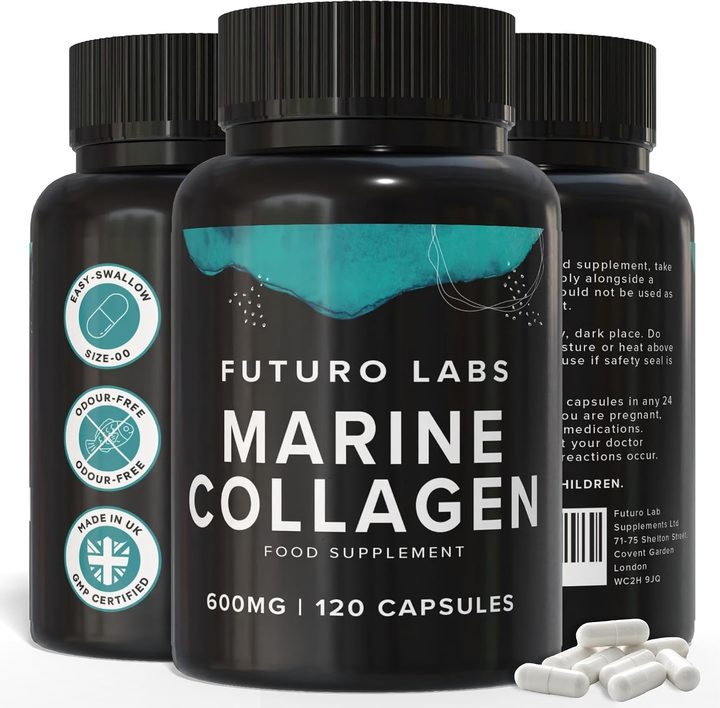
Our brand: the worked example on this page
Futuro Labs Marine Collagen
- 28p a day
- 120 capsules, 2 capsules daily
- Lab tested
- Made in the UK
Positioned exactly where its paper sits: Futuro Labs Marine Collagen on Amazon UK, 1200mg hydrolysed type 1, lab tested for heavy metals and microbiology, UK GMP manufactured, not batch certified for sport, £16.99 for 60 days at 28p. Full label breakdown. The label walk is on the label page; the athlete's certification decode on the female athletes page.
The legal baseline stated plainly, and what testing actually covers when it happens
Start where most testing pages refuse to, with the legal baseline, because it reframes every slogan: UK food supplements face no pre-approval regime, no authority tests a collagen tub before it goes on sale, the category being governed by general food law, safety and labelling rules enforced after the fact, with responsibility sitting on the business, which means every testing claim on every label in the aisle is voluntary, a manufacturer's choice to generate paperwork the law never demanded, and the shopper's whole job is grading that paperwork. What good testing covers, when it happens, is the standard panel this site's quality pages keep listing: identity, confirming the powder is collagen at the stated content, the nitrogen-spiking era's lesson; heavy metals, mercury, lead, cadmium and arsenic, non-negotiable for marine raw material; and microbiology, the pathogen and hygiene counts any protein powder owes, with pesticide and residue screens as extensions on thorough programmes. Who runs it defines the vocabulary: a manufacturer's own quality-control lab testing its batches is real and self-interested, in-house QC; an independent laboratory paid to test with no stake in the result is the third party the phrase means; and the difference between those two, plus whether a document exists that you can see, generates the entire hierarchy the next section climbs.
The hierarchy climbed rung by rung, the sport-certification aside, and the request that settles everything
Rank every testing claim by the paper behind it, bottom to top. Rung zero, silence: no testing language at all, which at least has the honesty of claiming nothing. Rung one, lab tested: the weakest positive claim, compatible with anything from a full independent programme to a single in-house check years ago, meaningful only if documents follow. Rung two, third-party tested: names the right structure, an independent lab, but as a printed slogan still proves nothing without the paper. Rung three, certificates published or on request: the claim becomes checkable, and the checking has three questions, is the lab named and real, is the certificate batch-matched to the number stamped on your actual tub rather than a generic sample from 2023, and does the panel cover the metals and micro lines that matter. Rung four, the top: a current, batch-matched certificate of analysis from a named independent laboratory, available before purchase, the standard this site's quality pages set and few products meet. The aside that prevents a common confusion: sport batch certification, the anti-doping schemes athletes need, is a separate paper trail testing for banned substances per batch, a product can sit high on this page's hierarchy and hold no sport certificate, the female-athlete page's decode, and the worked example states its own position on both trails plainly, heavy-metal and microbiology tested with UK GMP manufacture, and not batch certified for sport, exactly the sentence a tested athlete needs to read before buying anything. The settling move, for any tub at any rung: email the brand for the certificate for your batch number, a two-minute request whose answer, document, delay or deflection, grades the product better than any front label ever will.
| The rung | The claim | What it proves |
|---|---|---|
| Zero | Silence | Nothing, honestly |
| One | Lab tested | Anything or nothing: documents required to mean more |
| Two | Third-party tested | The right structure, still a slogan without paper |
| Three | Certificates on request | Checkable: named lab, batch-matched, right panels |
| Four | Batch-matched CoA, named lab, before purchase | The standard: few products meet it |
| The aside | Sport batch certification | A separate banned-substance trail: never assume it |
The verdict, filed with the paperwork
Is collagen third-party tested: only when a manufacturer chooses to be, the UK's no-pre-approval baseline making every testing claim voluntary, so the shopper grades the paper rather than the slogan, silence below lab tested, below third-party tested, below certificates on request, below the standard, a current batch-matched certificate of analysis from a named independent laboratory, with sport batch certification running as its own separate trail that no general testing claim implies. The worked example files its position without varnish: Futuro Labs Marine Collagen, 1200mg hydrolysed type 1, heavy-metal and microbiology tested, UK GMP manufactured, not batch certified for sport, £16.99 for 60 days at 28p a day, a label that tells you which trails it walks, which is the only testing sentence worth printing at all.
What to check on the label
- No law requires the testing: every claim in the aisle is voluntary.
- Grade the paper, not the slogan: the hierarchy runs on documents.
- Batch-matched or barely meaningful: your tub's number on the certificate.
- Sport certification is a separate trail: never assume it from lab tested.
- The two-minute email settles it: request your batch's certificate.
Our brand
The worked example: Futuro Labs Marine Collagen
Futuro Labs Marine Collagen: 2 capsules daily, 1200mg hydrolysed type 1 marine collagen with 12mg vitamin C and 1.5mg zinc (15% NRV each), 120 capsules for £16.99, 60 days at 28p a day, lab-tested, UK GMP made. Slim veggie-shell capsules, odour free. Fish derived: pescatarian, not vegetarian or vegan.
- Collagen per serving
- 1200mg hydrolysed type 1 marine (fish)
- Co-factors
- vitamin C 12mg (15% NRV), zinc 1.5mg (15% NRV)
- Serving
- 2 capsules a day
- Bottle
- 120 capsules, 60 days
- Price
- £16.99 (28p a day)
- Capsule
- slim size 00, veggie shell, odour free
Questions people also ask
Are collagen supplements legally required to be tested?
No: UK supplements face no pre-approval, only general food law enforced after the fact, so every testing claim on a label is a voluntary paper trail the shopper must grade.
What is the difference between lab tested and third-party tested?
Structure: lab tested can mean in-house quality control, while third party means an independent laboratory with no stake, though both remain slogans until a document is shown.
What should a real certificate of analysis show?
Three things: a named, real laboratory, a batch number matching the tub in your hand, and panels covering identity, heavy metals and microbiology, current rather than archival.
Does third-party tested mean safe for drug-tested athletes?
No: banned-substance screening is a separate sport batch-certification scheme, and a product can pass every purity panel while holding no sport certificate at all.
How do I actually verify a brand's testing?
Email for the certificate matching your batch number: a prompt document grades the product at the hierarchy's top, and delay or deflection grades it just as clearly.
Sources
- Futuro Labs Marine Collagen listing and label: 1200mg hydrolysed type 1 marine collagen per 2-capsule serving with 12mg vitamin C and 1.5mg zinc at 15% NRV each, 120 capsules, independently lab tested, UK made. https://www.amazon.co.uk/dp/B0C2J7N364
- EFSA Panel on Dietetic Products, Nutrition and Allergies. Scientific Opinion on the substantiation of health claims related to magnesium. EFSA Journal 2010;8(10):1807. https://efsa.onlinelibrary.wiley.com/doi/10.2903/j.efsa.2010.1807
- The collagen peptide trial literature: randomised controlled studies of hydrolysed collagen supplementation across skin, joint and connective-tissue outcomes, typically at 2.5g to 15g daily, with small effects and frequent industry funding. PubMed record
- EFSA Panel on Dietetic Products. Scientific opinion on Dietary Reference Values for fats: Adequate Intake of 250mg combined EPA and DHA per day for adults. EFSA Journal 2010;8(3):1461. https://www.efsa.europa.eu/en/efsajournal/pub/1461