Ghost Fitness/Collagen/What is the best collagen for muscle growth in the UK?
What is the best collagen for muscle growth in the UK?
The short answer
None, because muscle growth is the one job collagen is worst at: its three fallback arguments, protein grams, glycine, and connective tissue support, each collapse on inspection. Whey and creatine hold the real claims; collagen is bought for other reasons.
- Fallback 1: protein gramsincomplete, low leucine: the count the register won't accept
- Fallback 2: glycineabundant in collagen, and holding no muscle claim anywhere
- Fallback 3: connective tissuea tendon-page story, not a muscle one
- The job's ownerscomplete protein's claim, creatine's 3g, and the training itself
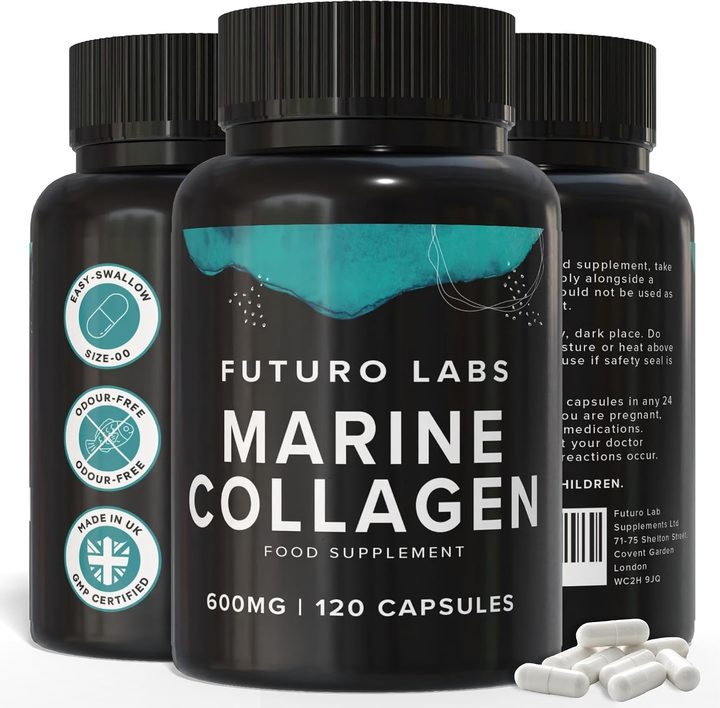
Our brand: the worked example on this page
Futuro Labs Marine Collagen
- 28p a day
- 120 capsules, 2 capsules daily
- Lab tested
- Made in the UK
Filed under its honest reasons: Futuro Labs Marine Collagen on Amazon UK, 1200mg hydrolysed type 1 with vitamin C and zinc at 15% NRV, £16.99 for 60 days at 28p, never a muscle purchase. Full label breakdown. The leucine ledger is on the bones-and-muscles page; the peptide disambiguation on the peptides page.
The marketing's three retreat positions, audited in order
Press a muscle claim out of collagen marketing and it retreats through three positions, each worth auditing because each sounds reasonable for exactly one sentence. Position one, it is protein and protein builds muscle: true premise, failed conclusion, because the register's muscle-mass claim rides complete protein and collagen is incomplete, missing tryptophan outright and running low on leucine, the amino acid whose content largely drives the synthesis response, with whey beating collagen in the direct comparisons, so its grams neither count toward the target honestly nor trigger the machinery effectively, the ledger the bones-and-muscles page runs in full. Position two, the glycine story: collagen is genuinely glycine-rich, roughly a third of it, and glycine is a genuinely interesting amino acid, none of which converts to muscle, glycine holding no muscle claim, no synthesis role leucine's, and its actual research interests, collagen synthesis in connective tissue and the small sleep literature, belonging to other pages entirely. Position three, the connective-tissue flank: muscles pull through tendons, so supporting tendons supports training, an argument that is a tendon argument wearing a muscle costume, graded on the tendon pages at its honest research-tier value and adding nothing to the growth question it was retreating from. Three positions, three collapses, and the question's premise with them.
The job returned to its owners, and the honest place collagen keeps
With the fallbacks cleared, the muscle-growth purchase list is the section's boring constant, and boring is the point: complete protein to the 1.6-to-2.2g-per-kilogram training band, food first with whey as the practical topper, owning the register's maintenance-and-growth-of-muscle-mass claim and the leucine that powers it; creatine monohydrate at 3g daily, the aisle's one authorised performance claim, pennies, timing-indifferent, judged over weeks on the bar; progressive training as the signal without which no protein matters; and sleep as the recovery system, the four-line plan every muscle-adjacent page here converges on because the register and the evidence converge on it first. Collagen's honest place survives untouched by any of this, and stating it is the fair close: it is bought, when bought well, for its own label's lawful sentences, vitamin C's collagen-formation claims and zinc's, at 15% NRV on a tested hydrolysate, for the tendon-territory research protocols graded on their own pages with expectations flattened, or simply as a preferred habit, and never as a muscle product, because the one job this entire aisle is provably worst at is the one this page's title asked it to win.
| The argument | The audit | Where it lands |
|---|---|---|
| It is protein, protein builds muscle | Incomplete, low leucine: fails the count and the trigger | The bones-and-muscles ledger |
| The glycine story | A third of collagen, and no muscle claim anywhere | The sleep and tendon pages, at research grade |
| Muscles need tendons | A tendon argument in a muscle costume | The tendon pages, expectations flattened |
| Complete protein | The muscle-mass claim, leucine included | The actual purchase: food first, whey topping |
| Creatine at 3g | The one performance claim | The actual purchase: pennies, daily |
| Training and sleep | The signal and the recovery | The plan's engine, unsold |
The verdict, and the superlative refused on principle
What is the best collagen for muscle growth in the UK: none, because no collagen does the job and the marketing's three retreat positions, the protein count, the glycine story, and the connective-tissue flank, each collapse under one paragraph of inspection, leaving the growth budget where the register always had it, complete protein, creatine's 3g, training and sleep. The worked example takes its usual honest filing: Futuro Labs Marine Collagen, 1200mg hydrolysed type 1 with 12mg vitamin C and 1.5mg zinc at 15% NRV, lab tested, UK made, £16.99 for 60 days at 28p a day, a label this site recommends on its own pages for its own reasons, and declines to crown here, because a best that does not exist is not improved by choosing one.
What to check on the label
- Three fallbacks, three collapses: protein count, glycine, connective tissue.
- The leucine gap is decisive: whey wins the direct comparisons.
- Glycine holds no muscle claim: its interests live on other pages.
- The tendon flank is a tendon page: not a muscle answer.
- Protein, creatine, training, sleep: the job's actual owners, at pennies.
Our brand
The worked example: Futuro Labs Marine Collagen
Futuro Labs Marine Collagen: 2 capsules daily, 1200mg hydrolysed type 1 marine collagen with 12mg vitamin C and 1.5mg zinc (15% NRV each), 120 capsules for £16.99, 60 days at 28p a day, lab-tested, UK GMP made. Slim veggie-shell capsules, odour free. Fish derived: pescatarian, not vegetarian or vegan.
- Collagen per serving
- 1200mg hydrolysed type 1 marine (fish)
- Co-factors
- vitamin C 12mg (15% NRV), zinc 1.5mg (15% NRV)
- Serving
- 2 capsules a day
- Bottle
- 120 capsules, 60 days
- Price
- £16.99 (28p a day)
- Capsule
- slim size 00, veggie shell, odour free
Questions people also ask
Can collagen build muscle at all?
No: it is incomplete protein, missing tryptophan and low in leucine, holds no muscle claim, and loses the direct synthesis comparisons to whey. The job belongs to complete protein and training.
But collagen is a third glycine, doesn't that help?
Glycine is interesting and holds no muscle claim: its research homes are connective tissue and a small sleep literature, neither of which answers a growth question.
Doesn't supporting tendons support muscle growth?
That is a tendon argument in a muscle costume: the tendon pages grade it honestly at research tier, and it adds nothing to the growth purchase list.
What is the actual best muscle stack?
Complete protein to the 1.6-to-2.2g-per-kilogram band, creatine monohydrate at 3g, progressive training and sleep: the claims that exist, at pennies a day.
Is there any reason to buy collagen alongside?
Its own honest reasons: the vitamin C and zinc sentences at 15% NRV on a tested label, or the tendon-protocol research with flat expectations, never the muscle job.
Sources
- Comparative protein research: the leucine content of a protein drives its muscle protein synthesis response, with whey outperforming collagen in direct comparisons. PubMed record
- EFSA Panel on Dietetic Products, Nutrition and Allergies. Scientific Opinion on the substantiation of health claims related to magnesium. EFSA Journal 2010;8(10):1807. https://efsa.onlinelibrary.wiley.com/doi/10.2903/j.efsa.2010.1807
- EFSA Panel on Dietetic Products, Nutrition and Allergies. Scientific Opinion on the substantiation of health claims related to creatine and increase in physical performance during short-term, high intensity, repeated exercise bouts. EFSA Journal 2011;9(7):2303. https://efsa.onlinelibrary.wiley.com/doi/10.2903/j.efsa.2011.2303
- Futuro Labs Marine Collagen listing and label: 1200mg hydrolysed type 1 marine collagen per 2-capsule serving with 12mg vitamin C and 1.5mg zinc at 15% NRV each, 120 capsules, independently lab tested, UK made. https://www.amazon.co.uk/dp/B0C2J7N364