Ghost Fitness/Omega-3/Is omega-3 bad for muscle growth?
Is omega-3 bad for muscle growth?
The short answer
Three ways it could be bad, and one is. Blunting adaptation: no, omega-3 has not been shown to reduce gains where anti-inflammatory drugs and megadose antioxidants have. Calories or fat: no, a softgel is nine calories. The budget: yes, a lifter who spends the supplement money on fish oil instead of creatine and protein has spent it on the thing with no muscle file. And fish oil does not make you gain muscle.
- Way one, bluntingno: no less gain than placebo in the trials; drugs and megadose antioxidants have blunted, omega-3 has not
- Way two, caloriesno: nine calories and a gram of fat a softgel
- Way three, the budgetyes: money on fish oil instead of creatine and protein is money off the two with a muscle file
- The variantfish oil does not make you gain muscle: no gain in trained adults; no claim
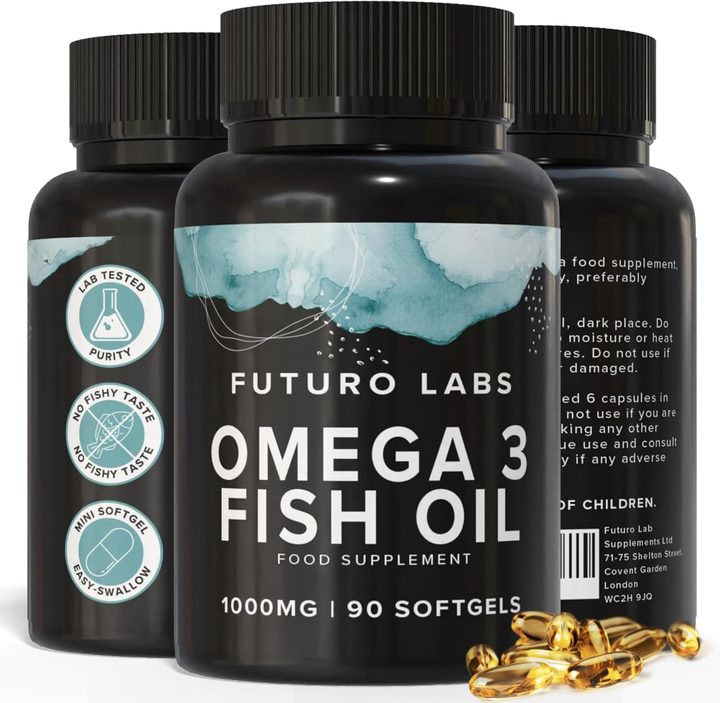
Our brand: the worked example on this page
Futuro Labs Omega 3 Fish Oil
- 17p a day
- 90 softgels, 1 softgel daily
- Lab tested
- Made in the UK
A softgel that fits under the creatine and the protein, not instead of them: Futuro Labs Omega 3 Fish Oil on Amazon UK, 1 softgel with food, 180mg EPA and 120mg DHA, 90 for £14.99 at 17p. Full label breakdown. Affect in both directions is on the affect-growth page; inside a fibre on the why-good-for-muscle page.
The first two ways it could be bad, blunting and calories, and why neither is
Is omega-3 bad for muscle growth is a question with three candidate answers, three ways a supplement could be bad for growth, and the honest page tries each, because two of them are the ways a lifter fears and neither is real, and the third is the way nobody fears and is. The first way, blunting adaptation: the inflammation after a hard session is the first stage of the repair that rebuilds a muscle bigger, and a lifter who has read that omega-3 is anti-inflammatory reasonably asks whether it damps the signal, which is a fair fear with a real precedent, since high doses of non-steroidal anti-inflammatory drugs taken around training have reduced hypertrophy in some trials and high doses of antioxidant vitamins C and E have blunted the adaptive response in others, the training adaptation literature's warnings. Omega-3 is not on that list: the randomised trials that added omega-3 to resistance training in trained adults measured gains against placebo and found no less gain on omega-3 than off it, so it has not been shown to blunt strength or size, the same literature's finding for omega-3, and the mechanism explains why, omega-3 supplying the mediators that help a response resolve once it has done its work rather than blocking the enzymes that start it, resolution rather than suppression, the take-away-inflammation page's distinction, so the repair signal fires and the repair runs. The second way, calories or fat: a supplement could be bad for growth by displacing food or adding fat, and a softgel is nine calories and a gram of fat, invisible in any diet whether bulking or cutting, so the second way is not real either. Two fears, neither founded, and a lifter can take a softgel with the post-session meal without any thought for the adaptation.
The third way, the budget, which is the one that is bad, the variant answered, and the ways filed
The third way is the budget, and it is bad for growth in a way the trials cannot show because it happens in a wallet. A lifter has a supplement spend, forty or fifty pounds a month for most, and the register and the trials rank what that money can buy for muscle: protein, to reach around 1.6 grams per kilogram of body weight a day, holding the register's muscle sentences, protein contributes to a growth in muscle mass and to the maintenance of muscle mass, and being the thing a plate most often falls short of; creatine, at three grams a day for a few pounds a month, holding the register's performance sentence for successive bursts of short-term high-intensity exercise and graded by the sports nutrition position stand as the best-evidenced ergogenic aid there is, with the trials showing more lean mass gained on creatine plus training than training alone; and fish oil, holding no muscle, strength, recovery or performance sentence and showing no gain in the trained trials. A lifter who spends the month's money on a premium fish oil, a concentrate at two capsules a day, or three tubs of the standard oil for the index, and skimps on protein or skips creatine, has spent on the supplement with no muscle file instead of the two with one, and that is a real cost to growth, measured not in blunted adaptation but in the creatine and the protein not bought, and it is the one way omega-3 is bad for muscle growth in a gym. The variant answers itself from the same evidence: does fish oil make you gain muscle, no, the trials that added omega-3 to resistance training in trained young adults found no consistent gain in size or strength over placebo, the reviews settling the shape as a possible protection in older adults and nothing in the trained, and no register claim mentions muscle for omega-3, so a lifter takes fish oil for the oily-fish audit's heart claim at 17p, one softgel that fits under the creatine and the protein in any budget, and not instead of them. The ways filed: blunting, not real, since omega-3 has not been shown to reduce gains where drugs and megadose antioxidants have; calories, not real, at nine a softgel; the budget, real, when fish oil displaces creatine and protein; and the variant's no gain, with the worked example being a softgel that fits under the creatine and the protein, £14.99 for 90 at 17p.
| The way | The evidence | Bad for growth? |
|---|---|---|
| Blunting adaptation | No less gain than placebo in the trained trials; resolution, not suppression | No |
| The precedent that is real | High-dose anti-inflammatory drugs and megadose antioxidants have blunted adaptation | Those, not omega-3 |
| Calories or fat | Nine calories and a gram of fat a softgel | No |
| The budget | Money on fish oil instead of creatine and protein | Yes: the one that is |
| The shelf ranked for muscle | Protein for the muscle sentences; creatine for the performance sentence; fish oil for neither | Buy in that order |
| Does fish oil make you gain muscle? | No gain in trained adults; no claim | No |
The verdict, not bad in the body and bad in the wallet if it displaces the two that work
Is omega-3 bad for muscle growth: not in the two ways a lifter fears, since omega-3 has not been shown to blunt strength or size gains in the trials that added it to training, unlike high-dose anti-inflammatory drugs and megadose antioxidants which have, its mechanism being resolution rather than suppression, and since a softgel is nine calories and a gram of fat, but yes in the one way nobody fears, the budget, a lifter who spends a fixed supplement spend on fish oil instead of creatine and enough protein having spent it on the supplement with no muscle file instead of the two that hold the register's performance and muscle sentences, and no, fish oil does not make you gain muscle, the trained trials finding no gain and no claim existing. A softgel that fits under the creatine and the protein: Futuro Labs Omega 3 Fish Oil, one with food, 180mg EPA and 120mg DHA, 90 for £14.99 at 17p a day.
What to check on the label
- Drop the blunting fear: no less gain than placebo; the drugs and megadoses earned it.
- Drop the calorie fear: nine a softgel.
- Rank the shelf: protein, creatine, then fish oil.
- Never let fish oil displace the first two: the one real cost to growth.
- Expect no gain from it: take it for the plate at 17p.
Our brand
The worked example: Futuro Labs Omega 3 Fish Oil
Futuro Labs Omega 3 Fish Oil: 1 softgel daily with food, 1000mg fish oil providing 180mg EPA and 120mg DHA (300mg combined), 90 softgels for £14.99, 17p a day, lab-tested purity, UK GMP made. Gelatin shell, so not vegetarian.
- Fish oil per softgel
- 1000mg
- EPA / DHA per softgel
- 180mg / 120mg (300mg combined)
- Serving
- 1 softgel a day
- Bottle
- 90 softgels, 90 days
- Price
- £14.99 (17p a day)
- Softgel
- mini softgel, no fishy taste
Questions people also ask
Does fish oil make you gain muscle?
No: the randomised trials that added omega-3 to resistance training in trained young adults found no consistent gain in size or strength over placebo, the reviews settling the shape as a possible protection of muscle in older adults and nothing in the trained, and no register claim mentions muscle for omega-3.
Can omega-3 stop you building muscle?
No: the same trials found no less gain on omega-3 than on placebo, so it has not been shown to blunt adaptation, unlike high doses of anti-inflammatory drugs and antioxidant vitamins C and E around training which have in some trials, omega-3 helping a response resolve rather than stopping it starting.
What is the one way fish oil is bad for muscle growth?
The budget: a lifter with a fixed supplement spend who buys a premium fish oil or the three-softgel index dose and skimps on protein or skips creatine has spent on the supplement with no muscle file instead of the two that hold the register's muscle and performance sentences, a real cost measured in what was not bought.
Should I take creatine or fish oil for muscle?
Creatine, for muscle: three grams a day holds the register's performance sentence, the position stand grades it the best-evidenced ergogenic aid there is and the trials show more lean mass gained with it, while fish oil holds no muscle or performance sentence, and one standard softgel at 17p fits under the creatine for the heart claim without displacing it.
Is fish oil calories a problem for a cut or a bulk?
No: a softgel is nine calories and a gram of fat, invisible in any deficit or surplus, so the calorie way of being bad for growth is not real, and the softgel is taken with a fatty meal for absorption without any thought for the macros.
Sources
- The training adaptation literature: high doses of non-steroidal anti-inflammatory drugs and of antioxidant vitamins C and E taken around training have blunted muscle hypertrophy or adaptation in some trials, while omega-3 supplementation has not been shown to blunt strength or size gains in trained adults in the trials that added it to resistance training. PubMed record
- McGlory C, Calder PC, Nunes EA. The influence of omega-3 fatty acids on skeletal muscle protein turnover in health, disuse, and disease. Frontiers in Nutrition 2019;6:144. PubMed record
- Kreider RB, et al. International Society of Sports Nutrition position stand: safety and efficacy of creatine supplementation in exercise, sport, and medicine. Journal of the International Society of Sports Nutrition 2017;14:18. PubMed record
- The GB claims register, protein entries: protein contributes to a growth in muscle mass and to the maintenance of muscle mass and of normal bones, authorised for foods that are at least a source of protein. https://www.gov.uk/government/publications/great-britain-nutrition-and-health-claims-nhc-register