Ghost Fitness/Omega-3/How to take fish oil without burping?
How to take fish oil without burping?
The short answer
Climb the fixes by cost. Free: take the softgel in the middle of a meal rather than before it, stay upright for an hour or two after, and split a dose across two meals. Cheap: freeze the softgels, or choose a smaller one. Moderate: check the oil is fresh, since a rancid oil burps worst, and prefer a triglyceride form. Premium: an enteric-coated softgel. Last resort: an algal or emulsified oil.
- Freemid-meal rather than before; upright for an hour or two; split across two meals
- Cheapfreeze the softgels; choose a smaller softgel
- Moderatea fresh oil, TOTOX under 26, a rancid oil burping worst; a triglyceride form
- Premium and last resortan enteric coat that releases past the stomach; an algal or emulsified oil
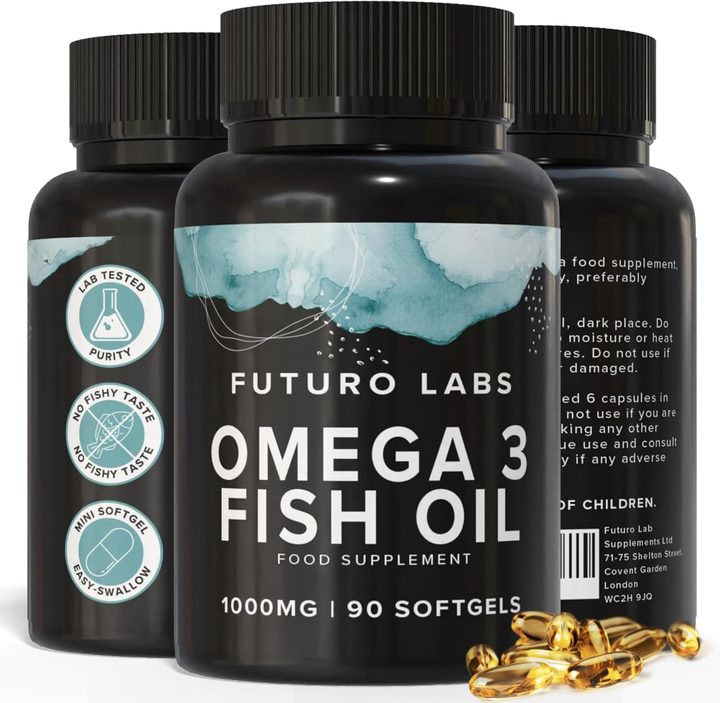
Our brand: the worked example on this page
Futuro Labs Omega 3 Fish Oil
- 17p a day
- 90 softgels, 1 softgel daily
- Lab tested
- Made in the UK
A standard softgel that most people take without a burp using the free rungs: Futuro Labs Omega 3 Fish Oil on Amazon UK, 1 softgel in the middle of a meal, 180mg EPA and 120mg DHA, lab-tested purity, 90 for £14.99 at 17p. Full label breakdown. The mechanisms behind the burps are on the avoid-burps page; the rancid checks on the rancid page.
The free rungs and the cheap ones, which stop most burps before anything is bought
How to take fish oil without burping is best answered as a ladder ordered by cost, because most burps are stopped by the free rungs and a reader who buys a premium product first has paid for a fix they did not need. The free rungs. Mid-meal: a softgel swallowed on an empty stomach or before a meal floats on nothing and refluxes, and the same softgel swallowed in the middle of a meal is mixed into the food, emulsified with it and held down by it, the single largest fix and the one most burpers have never tried, taking it before the meal as most labels vaguely suggest. Upright: an hour or two of sitting or standing after the meal lets the stomach empty before anything is pressed against the oesophageal junction, so the softgel goes with lunch or dinner rather than a bedtime snack, the reflux-and-posture literature's finding. Split: a reader taking two or three softgels takes them at two meals rather than one, halving the oil in any one stomach. The cheap rungs. Freezing: a frozen softgel takes longer to dissolve, passes the stomach before it releases its oil and releases it in the intestine instead, a folk fix that works for many and costs a freezer drawer, the softgel's contents being unharmed by freezing. A smaller softgel: a 500mg softgel taken twice burps less than a 1000mg one taken once, the oil per swallow being what floats, so a reader who burps on large softgels buys small ones. Most readers are burp-free by the end of the cheap rungs.
The moderate rungs, the premium one, the last resort, and the ladder filed
The moderate rungs cost more because they change the oil. Freshness: a rancid fish oil burps worst of all and smells worst, its oxidised aldehydes being the fishy, painty note that repeats for hours, so a reader who burps on one tub and not another has often met a rancid tub, and the fix is a fresh oil, a tub with a recent date, stored cool and dark, finished within a couple of months of opening, checked by biting a softgel for a mild rather than a paint-like taste and, for the certificate reader, by a TOTOX under 26, the rancid pages' test and the burp fix that is also a quality fix. Form: a triglyceride or re-esterified triglyceride oil is reported by many users to sit better than an ethyl ester, the ethyl ester's alcohol backbone being suspected in the reflux and the triglyceride form also absorbing better with a light meal, so a reader on an unstated-form budget oil who still burps tries a stated triglyceride. The premium rung: an enteric-coated softgel, which resists the stomach's acid and releases in the intestine, reducing reflux for most users with absorption similar to an uncoated oil taken with food, the enteric literature's finding, at a cost premium per softgel and with the honest note that a rancid oil under a coat is a rancid oil that burps less. The last resort, for a reader who burps on everything: an algal oil, whose DHA-dominant profile and vegetable shell some reflux-prone readers tolerate better, or an emulsified liquid omega-3 taken in a smoothie, the oil pre-emulsified so that nothing floats, both dearer per milligram and both a change of product rather than a change of habit. The ladder filed: mid-meal, upright and split for free, frozen and smaller for pennies, fresh and triglyceride for a little more, an enteric coat as the premium and an algal or emulsified oil as the last resort, with the worked example being a standard softgel most people take without a burp on the free rungs, one in the middle of a meal at 17p, £14.99 for 90.
| The rung | The fix | The mechanism it addresses |
|---|---|---|
| Free | Mid-meal, not before; upright for an hour or two; split across two meals | Oil floating on an empty stomach; lying flat; oil per stomach |
| Cheap | Freeze the softgels; choose a smaller softgel | Release past the stomach; oil per swallow |
| Moderate | A fresh oil with a TOTOX under 26; a triglyceride form | Rancid aldehydes; the ethyl ester backbone |
| Premium | An enteric-coated softgel | Release past the stomach; a cost premium |
| Last resort | An algal oil or an emulsified liquid | Nothing floats; a change of product |
| Where most stop | The cheap rungs | Before anything premium is bought |
The verdict, a ladder most people leave at the second rung
How to take fish oil without burping: by climbing a ladder ordered by cost, the free rungs first, a softgel in the middle of a meal rather than before it, an upright hour or two after and a dose split across two meals, then the cheap rungs, frozen softgels and smaller ones, then the moderate rungs, a fresh oil with a TOTOX under 26 since a rancid oil burps worst and a triglyceride form that sits better than an ethyl ester, then the premium rung of an enteric coat that releases past the stomach, and the last resort of an algal or emulsified oil for the reader who still burps on everything, most people leaving the ladder at the second rung. The standard softgel taken on the free rungs: Futuro Labs Omega 3 Fish Oil, one softgel in the middle of a meal, 180mg EPA and 120mg DHA, 90 for £14.99 at 17p a day.
What to check on the label
- Take it mid-meal, not before: the largest free fix.
- Stay upright for an hour or two: no bedtime softgel.
- Freeze the softgels if the free rungs fail: release past the stomach.
- Check the oil is fresh: a rancid oil burps worst.
- Buy an enteric coat only after the cheaper rungs: a premium for the few.
Our brand
The worked example: Futuro Labs Omega 3 Fish Oil
Futuro Labs Omega 3 Fish Oil: 1 softgel daily with food, 1000mg fish oil providing 180mg EPA and 120mg DHA (300mg combined), 90 softgels for £14.99, 17p a day, lab-tested purity, UK GMP made. Gelatin shell, so not vegetarian.
- Fish oil per softgel
- 1000mg
- EPA / DHA per softgel
- 180mg / 120mg (300mg combined)
- Serving
- 1 softgel a day
- Bottle
- 90 softgels, 90 days
- Price
- £14.99 (17p a day)
- Softgel
- mini softgel, no fishy taste
Questions people also ask
What is the best way to take fish oil without fishy burps?
In the middle of a meal rather than before it, so the oil is mixed into the food and held down by it, with an upright hour or two after and a dose split across two meals, the free fixes that stop most burps before anything is bought.
Does freezing fish oil capsules stop burping?
For many people, yes: a frozen softgel takes longer to dissolve, passes the stomach before it releases its oil and releases it in the intestine instead, a folk fix that costs a freezer drawer and leaves the oil unharmed.
Why does one fish oil make me burp and another not?
Often freshness: a rancid oil's oxidised aldehydes are the fishy, painty note that repeats for hours and burps worst of all, so a tub that burps has often gone rancid, checked by biting a softgel and fixed by a fresh oil stored cool and finished within a couple of months.
Are enteric-coated fish oils worth it for burps?
As the premium rung after the free and cheap ones fail: the coat resists the stomach's acid and releases the oil in the intestine, reducing reflux for most users with absorption similar to an uncoated oil taken with food, at a cost premium per softgel.
What if I burp on every fish oil I try?
The last resort is a change of product: an algal oil, whose DHA-dominant profile and vegetable shell some reflux-prone readers tolerate better, or an emulsified liquid omega-3 in a smoothie, where nothing floats, both dearer per milligram.
Sources
- The reflux and posture literature: lying flat within an hour or two of eating, and of taking an oil, increases reflux because the stomach's contents sit against the oesophageal junction, so a fish oil softgel taken at the pillow refluxes more than the same softgel taken with an upright meal. PubMed record
- The enteric-coated fish oil literature: an enteric coating delays a softgel's release until it has passed the stomach, reducing fishy reflux for most users, with overall EPA and DHA absorption similar to uncoated oil taken with food and a modest cost premium for the coating. PubMed record
- The fish oil oxidation literature: oxidation is measured by peroxide value, anisidine value and their combination as TOTOX, with the industry monograph setting limits of 5, 20 and 26 respectively, and surveys of retail fish oils finding a meaningful share above those limits, freshness being a quality dimension a label rarely shows and a certificate does. PubMed record
- Classic absorption work on fish oil ethyl esters: uptake is markedly higher when ethyl ester omega-3 is taken with a high-fat meal, narrowing the gap to triglyceride forms. PubMed record