Ghost Fitness/Omega-3/Is fish oil good for kidney stone patient?
Is fish oil good for kidney stone patient?
The short answer
By the stone-former's three questions. Does fish oil cause stones? No: refined fish oil carries no oxalate, calcium or purines, the loads that form stones. Does it prevent them? Only in small research trials that measured lower urinary calcium and oxalate, a finding no guideline has adopted and no claim covers. Does it interfere with stone treatment? No. So a stone former decides by the oily-fish audit and keeps the urologist's plan.
- Does it cause stones?no: no oxalate, no calcium, no purines in a refined fish oil
- Does it prevent them?research only: small trials, lower urinary calcium and oxalate; no guideline, no claim
- Does it interfere with treatment?no: fluids, diet, citrate and thiazide untouched
- The decisionthe oily-fish audit; the urologist's plan as the plan; the water
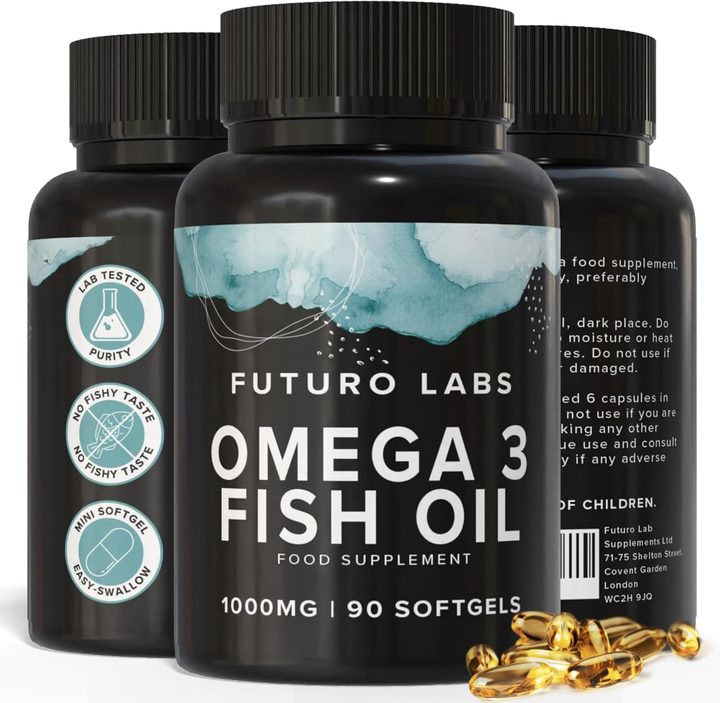
Our brand: the worked example on this page
Futuro Labs Omega 3 Fish Oil
- 17p a day
- 90 softgels, 1 softgel daily
- Lab tested
- Made in the UK
A refined oil with none of the three loads: Futuro Labs Omega 3 Fish Oil on Amazon UK, 1 softgel with food, 180mg EPA and 120mg DHA, lab-tested purity, 90 for £14.99 at 17p. Full label breakdown. Kidney disease is a different question, on the kidney patients page; kidney side effects on the kidney side effects page.
The first question, does it cause stones, answered by the three loads a refined fish oil does not carry
Is fish oil good for a kidney stone patient is a question a stone former asks with a specific fear, having been told to watch oxalate, calcium, salt and sometimes purines, and the honest page answers the three questions a stone former is really asking rather than the wellness question the shelf hears. The first question, does fish oil cause stones: no. Stones form from loads in the urine, calcium oxalate stones from oxalate and calcium, calcium phosphate stones from calcium and an alkaline urine, and uric acid stones from purines and an acid urine, and a refined fish oil carries none of the three, no oxalate, since oxalate lives in plants, spinach, rhubarb, nuts and chocolate, and not in an oil, no calcium, since a fat has none, and no purines, since the purines of fish live in the flesh and a refined oil is stripped of the protein and nucleic acid that carry them, the gout page's finding that the oil of a sardine is not the sardine, so a softgel adds nothing to the urine that makes a stone and a stone former who has been avoiding fish oil out of caution has been avoiding the wrong thing. The one food-level note is that the fish itself is a different matter for the uric acid stone former, sardines, anchovies and mackerel being high in purines as flesh while their oil is not, so a stone former on a low-purine diet who has been told to limit oily fish keeps the limit on the fish and has no reason to extend it to the oil, and a cod liver oil adds vitamin A rather than any stone load and is a separate question.
The second and third questions, prevention in research only and no interference with treatment, the decision, and the questions filed
The second question, does fish oil prevent stones: only in research, and the honesty matters here because a stone former will find the trials. Small studies in recurrent calcium stone formers gave fish oil at gram doses and measured lower urinary calcium and oxalate excretion, the omega-3 and stone literature's finding, a plausible mechanism through the kidney's handling of calcium and a real measured change in urine chemistry, but the trials are small and short, none has shown fewer stones over years, no guideline on stone prevention recommends omega-3, and no register claim mentions the kidney or the urine, so fish oil is not a stone treatment and a stone former who takes it hoping to prevent the next stone is hoping on a research finding rather than acting on advice. The third question, does it interfere with stone treatment: no. Stone prevention rests on fluid intake to two to three litres of urine a day, dietary adjustment of salt, oxalate, animal protein and calcium timing as the urologist directs, and, where prescribed, potassium citrate to raise urinary citrate and a thiazide to lower urinary calcium, the citrate and stone literature's measures, and a softgel touches none of them, altering neither the fluid balance nor the drugs, so a stone former on citrate or a thiazide takes fish oil or not without any adjustment and tells the urologist only as a matter of a complete list. The decision, then, is the oily-fish audit's, the same as for anyone: a stone former on a low-fish plate takes one softgel for the 250mg heart claim and a stone former eating oily fish twice a week takes none, with the flesh-not-the-oil note for the uric acid former, and the urologist's plan kept as the plan, the water being the thing that prevents stones and the softgel being the thing that does not. Three notes: the kidney stone question is not the kidney disease question, which has its own page and its own caution at high doses; a stone former with a stone that is moving, with pain, fever or blood in the urine, has an emergency and not a supplement decision; and a stone former who wants the urinary calcium finding tested has a twenty-four-hour urine collection to ask for, which the urologist will have done anyway. The questions filed: no cause, since no oxalate, calcium or purines, no prevention beyond research, no interference with treatment, and a decision by the audit with the plan kept, with the worked example being a refined oil with none of the three loads, £14.99 for 90 at 17p.
| The question | The finding | The answer |
|---|---|---|
| Does it cause stones? | No oxalate, no calcium, no purines in a refined fish oil | No |
| Does the fish itself? | Sardines, anchovies and mackerel are high-purine flesh; the oil is not | Keep a low-purine limit on the fish, not the oil |
| Does it prevent stones? | Small trials: lower urinary calcium and oxalate; no fewer stones shown; no guideline; no claim | Research only; not a treatment |
| Does it interfere with treatment? | Fluids, diet, citrate and thiazide untouched | No |
| The decision | The oily-fish audit | One softgel for a low-fish plate; none for oily fish twice a week |
| The plan | The urologist's, and the water | Kept as the plan; the softgel tells the urologist only as a list |
The verdict, not a cause, not a cure, not an interference, and a decision by the audit
Is fish oil good for a kidney stone patient: by the stone-former's three questions, it does not cause stones, since a refined fish oil carries no oxalate, calcium or purines and adds nothing to the urine that forms them, with the purines of sardines and mackerel living in the flesh and not the oil, it does not prevent stones beyond small research trials that measured lower urinary calcium and oxalate without showing fewer stones and that no guideline or claim has adopted, and it does not interfere with the fluids, diet, citrate or thiazide that prevent them, so a stone former decides by the oily-fish audit as anyone would, keeps the urologist's plan as the plan and drinks the water. A refined oil with none of the three loads: Futuro Labs Omega 3 Fish Oil, one with food, 180mg EPA and 120mg DHA, lab-tested purity, 90 for £14.99 at 17p a day.
What to check on the label
- Stop avoiding the oil: no oxalate, calcium or purines.
- Keep any purine limit on the fish: the flesh, not the oil.
- Read the prevention trials as research: no fewer stones shown, no guideline.
- Change nothing in the plan: fluids, diet, citrate, thiazide.
- Decide by the audit: and treat pain, fever or blood as an emergency.
Our brand
The worked example: Futuro Labs Omega 3 Fish Oil
Futuro Labs Omega 3 Fish Oil: 1 softgel daily with food, 1000mg fish oil providing 180mg EPA and 120mg DHA (300mg combined), 90 softgels for £14.99, 17p a day, lab-tested purity, UK GMP made. Gelatin shell, so not vegetarian.
- Fish oil per softgel
- 1000mg
- EPA / DHA per softgel
- 180mg / 120mg (300mg combined)
- Serving
- 1 softgel a day
- Bottle
- 90 softgels, 90 days
- Price
- £14.99 (17p a day)
- Softgel
- mini softgel, no fishy taste
Questions people also ask
Can fish oil cause kidney stones?
No: stones form from oxalate, calcium and purines in the urine, and a refined fish oil carries none of the three, oxalate living in plants, calcium being absent from a fat and the purines of fish living in the flesh that a refined oil is stripped of, so a softgel adds nothing to the urine that makes a stone.
Does fish oil help prevent kidney stones?
Only in research: small trials in recurrent calcium stone formers measured lower urinary calcium and oxalate on fish oil at gram doses, a real change in urine chemistry, but none has shown fewer stones over years, no stone-prevention guideline recommends omega-3 and no register claim mentions the kidney, so it is not a stone treatment.
Can I take fish oil with potassium citrate or a thiazide for stones?
Yes: a softgel alters neither the fluid balance nor the drugs, so citrate and thiazide work as before, and the urologist is told about the fish oil only as part of a complete list rather than because anything needs adjusting.
I have uric acid stones and was told to limit oily fish, does that include fish oil?
No: the purines that raise uric acid live in the flesh of sardines, anchovies and mackerel, and a refined oil is stripped of the protein and nucleic acid that carry them, so the limit stays on the fish and does not extend to the oil, the same distinction the gout pages draw.
Is kidney stone disease the same as kidney disease for fish oil purposes?
No: a stone former has normal kidney function and no fish oil restriction, while chronic kidney disease has its own page and its own caution at high doses with a nephrologist's input, and a stone that is moving, with pain, fever or blood in the urine, is an emergency rather than a supplement decision.
Sources
- The omega-3 and kidney stone literature: refined fish oil contains no oxalate, calcium or purines, so it does not add to the load that forms stones, and small trials in recurrent stone formers have measured lower urinary calcium and oxalate excretion on fish oil, a research finding that no guideline has turned into a recommendation, stone prevention resting on fluid intake, dietary adjustment and, where prescribed, citrate or thiazide. PubMed record
- The citrate and kidney stone literature: urinary citrate inhibits calcium stone formation, and magnesium citrate has been studied as a stone-preventing agent, so the citrate salt is if anything protective against stones rather than a cause. PubMed record
- The purine and gout literature: oily fish is high in purines and raises gout risk when eaten in quantity, while refined fish oil supplements contain no purines, and omega-3 has been studied as a possible help in gout rather than a trigger. PubMed record
- The omega-3 and chronic kidney disease literature: fish oil has been studied as a treatment in IgA nephropathy and used to lower triglycerides in dialysis patients without evidence of kidney harm, with no association between omega-3 intake and kidney stones or declining kidney function in people with normal kidneys. PubMed record