Ghost Fitness/Omega-3/Can fish oil damage your liver?
Can fish oil damage your liver?
The short answer
Checked against the liver injury registry: fish oil and the prescription omega-3 ethyl esters at four grams a day are graded unlikely causes of liver injury, with no clinically apparent cases in the trials or case reports, and the fatty liver trials find less liver fat at gram doses. The documented supplement hazards are alcohol, paracetamol overdose, anabolic steroids, high-dose green tea extract, some botanicals and excess vitamin A, which is cod liver oil's note, not a body oil's.
- The registry's gradefish oil and the four-gram prescription esters: unlikely causes of liver injury; no clinically apparent cases
- The fatty liver trialsmodest reductions in liver fat and enzymes at two to four grams over months: research, no claim
- What does damage a liveralcohol, paracetamol above the dose, anabolic steroids, high-dose green tea extract, some botanicals, excess vitamin A
- The fish-oil-adjacent hazardcod liver oil's vitamin A at high daily doses over years; a body oil carries none
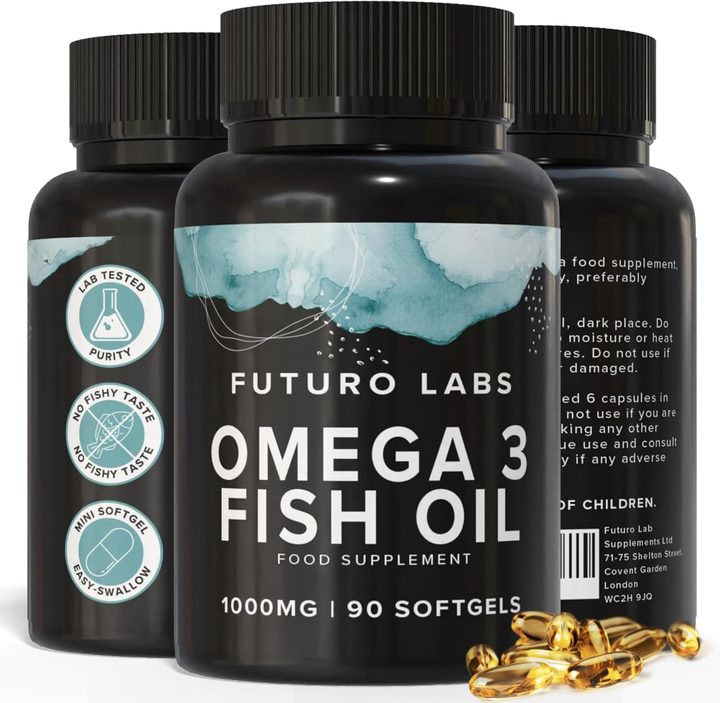
Our brand: the worked example on this page
Futuro Labs Omega 3 Fish Oil
- 17p a day
- 90 softgels, 1 softgel daily
- Lab tested
- Made in the UK
A body oil with no vitamin A, pressed from the flesh and not the liver: Futuro Labs Omega 3 Fish Oil on Amazon UK, 1 softgel with food, 180mg EPA and 120mg DHA, lab-tested purity, 90 for £14.99 at 17p. Full label breakdown. Whether it is good for the liver is on the good-for-liver page; the liver side effects page on the liver side effects page.
The registry, and what it says about fish oil at every dose that has been studied
Can fish oil damage your liver is a question with a reference book, because liver injury from drugs and supplements is catalogued, and the honest page opens the book rather than reasoning from the fact that a liver processes fat. The registry: the drug-induced liver injury reference maintained for clinicians catalogues every drug and supplement with documented liver harm, grades each by the likelihood that it causes clinically apparent liver injury, and has an entry for fish oil and omega-3 fatty acids, which grades them as unlikely causes of liver injury, noting that the large trials, including the prescription omega-3-acid ethyl esters at four grams a day for years, produced no clinically apparent liver injury and that case reports are absent, the liver injury reference's entry, so the highest dose any reader will meet, thirteen standard softgels' worth prescribed and monitored, has a clean liver record across tens of thousands of patient-years. The fatty liver trials go further than clean: meta-analyses of omega-3 in non-alcoholic fatty liver disease, the commonest liver condition in a gym as in the country, find modest reductions in liver fat and in the liver enzymes on a blood test at two to four grams a day over months, an effect strongest where the starting liver fat is highest, the fatty liver literature's finding, a research result with no register claim, since no omega-3 claim mentions the liver, but one that makes damage the wrong word in the wrong direction, a fat that the liver handles by lowering its own triglyceride output rather than one that overloads it. So at a standard softgel, at three, at a concentrate and at the prescription dose, the registry's answer is the same, and a reader whose liver enzymes are raised on a blood test has a list of causes to work through with a GP, alcohol, weight, the medicine cabinet and the supplement shelf, on which fish oil is the entry with the lowest grade.
The things that do damage a liver in a gym, the one fish-oil-adjacent hazard, the reader with a liver condition, and the registry filed
The things that do damage a liver are on the same registry and worth naming, because a gym has more of them than most places. Alcohol, the commonest by a distance. Paracetamol above the daily dose, the commonest cause of acute liver failure in the country, and a lifter taking it for a joint on top of a cold remedy that also contains it is the classic case. Anabolic steroids, the oral ones above all, with documented liver injury and a lifter who uses them having a liver panel as the least of the reasons to stop. High-dose green tea extract, sold as a fat burner, with enough documented case reports to carry a warning in several countries, and some botanicals, ashwagandha among them, with rare but recognised case reports, the herb-induced liver injury literature's list, so a fat burner or a herbal stack is a likelier liver suspect than any fish oil. And vitamin A in excess, which is the one fish-oil-adjacent hazard on the page: vitamin A is stored in the liver and damages it when the store overfills, the upper level for adults sitting at 3000 micrograms a day, and cod liver oil, pressed from the liver rather than the flesh, carries vitamin A, a single daily dose of most brands being well within the level but a reader taking several cod liver oil capsules a day, or cod liver oil alongside a multivitamin and a vitamin A supplement, over years, being the reader who reaches it, the cod liver oil pages' standing note, while a body fish oil, pressed from the flesh, carries no vitamin A and no liver note at all. The reader with a liver condition, fatty liver, hepatitis, cirrhosis or a raised enzyme being investigated, has a hepatologist or a GP who decides on doses, a standard softgel usually being unremarkable and gram doses being their question, and tells them about every supplement on the shelf, the fish oil last. The registry filed: fish oil and the four-gram esters graded unlikely with no cases, less liver fat in the fatty liver trials at gram doses, alcohol, paracetamol, steroids, green tea extract, botanicals and excess vitamin A as the real hazards, and cod liver oil's vitamin A as the one fish-oil-adjacent note that a body oil does not carry, with the worked example being a body oil with no vitamin A, £14.99 for 90 at 17p.
| The item | The registry's record | The note |
|---|---|---|
| Fish oil, standard dose to four grams | Unlikely cause of liver injury; no clinically apparent cases in trials or reports | Clean across tens of thousands of patient-years |
| Fatty liver disease | Modest reductions in liver fat and enzymes at two to four grams over months | Research; no claim; the wrong direction for damage |
| Alcohol; paracetamol above the dose | The commonest causes of liver damage and of acute liver failure | The lifter's cold remedy plus painkiller |
| Anabolic steroids; high-dose green tea extract; some botanicals | Documented case reports; warnings in several countries | The fat burner and the stack, not the fish oil |
| Vitamin A in excess | Stored in the liver; damages it above 3000 micrograms a day over time | Cod liver oil at several capsules a day, or stacked with a multivitamin |
| A body fish oil | No vitamin A; no liver note | The one to take |
The verdict, the cleanest entry on the shelf's liver registry, with the one caution belonging to the liver oil
Can fish oil damage your liver: no by the registry, the drug-induced liver injury reference grading fish oil and the prescription omega-3 ethyl esters at four grams a day as unlikely causes of liver injury with no clinically apparent cases in the trials or the case reports, and the fatty liver trials finding modest reductions in liver fat and enzymes at two to four grams over months, while the things that do damage a liver in a gym are alcohol, paracetamol above the dose, anabolic steroids, high-dose green tea extract, some botanicals and vitamin A in excess, the last being the one fish-oil-adjacent hazard because cod liver oil carries vitamin A and a high daily dose over years reaches the level the liver stores and objects to, which a body fish oil pressed from the flesh does not carry. A body oil with no vitamin A: Futuro Labs Omega 3 Fish Oil, one with food, 180mg EPA and 120mg DHA, lab-tested purity, 90 for £14.99 at 17p a day.
What to check on the label
- Open the registry: fish oil is graded unlikely, with no cases.
- Audit the real hazards: alcohol, paracetamol, steroids, green tea extract, botanicals.
- Count the vitamin A if you take cod liver oil: capsules plus any multivitamin.
- Choose a body oil: no vitamin A, no liver note.
- Take raised enzymes to a GP: with the whole shelf listed, fish oil last.
Our brand
The worked example: Futuro Labs Omega 3 Fish Oil
Futuro Labs Omega 3 Fish Oil: 1 softgel daily with food, 1000mg fish oil providing 180mg EPA and 120mg DHA (300mg combined), 90 softgels for £14.99, 17p a day, lab-tested purity, UK GMP made. Gelatin shell, so not vegetarian.
- Fish oil per softgel
- 1000mg
- EPA / DHA per softgel
- 180mg / 120mg (300mg combined)
- Serving
- 1 softgel a day
- Bottle
- 90 softgels, 90 days
- Price
- £14.99 (17p a day)
- Softgel
- mini softgel, no fishy taste
Questions people also ask
Is fish oil hard on the liver?
No: the drug-induced liver injury reference grades fish oil and the prescription omega-3 ethyl esters at four grams a day as unlikely causes of liver injury, with no clinically apparent cases in the trials or case reports across tens of thousands of patient-years, and the liver handles the fat by lowering its own triglyceride output rather than being overloaded by it.
Can fish oil raise liver enzymes?
The trials find the opposite: meta-analyses of omega-3 in fatty liver disease report modest reductions in liver fat and in the enzymes on a blood test at two to four grams a day over months, so raised enzymes on a reader's test have a different cause to find with a GP, alcohol, weight, paracetamol, steroids, a fat burner or a herbal stack before any fish oil.
Which supplements can damage your liver?
The ones with documented case reports on the liver injury registry: anabolic steroids above all, high-dose green tea extract sold as a fat burner, some botanicals including ashwagandha in rare cases, and vitamin A in excess from cod liver oil stacked with a multivitamin over years, with alcohol and paracetamol above the dose as the commonest causes of all.
Is cod liver oil bad for the liver?
Only in excess: cod liver oil carries vitamin A, which the liver stores and which damages it above the adult upper level of 3000 micrograms a day sustained over time, so one daily dose of most brands is within the level while several capsules a day, or cod liver oil alongside a multivitamin and a vitamin A supplement, can reach it, and a body fish oil carries no vitamin A at all.
Can I take fish oil if I have fatty liver disease?
With the GP or hepatologist knowing, yes: the fatty liver trials find modest reductions in liver fat and enzymes at two to four grams a day over months, a research finding rather than a treatment, with weight loss doing far more, and a standard softgel for the heart claim being unremarkable in a liver condition while gram doses are the clinician's question.
Sources
- The drug-induced liver injury reference: fish oil and omega-3 fatty acid preparations, including the prescription ethyl esters at four grams a day, have not been linked to clinically apparent liver injury in the trials or in case reports, are graded as unlikely causes of liver injury, and if anything reduce liver fat and enzymes in fatty liver disease, with vitamin A excess from cod liver oil being the separate and documented hepatic hazard. https://www.ncbi.nlm.nih.gov/books/NBK548176/
- Meta-analyses of omega-3 supplementation in non-alcoholic fatty liver disease: modest reductions in liver fat and liver enzymes at two to four grams a day over months, an effect studied as a possible treatment, with no evidence of liver harm from omega-3 at supplement doses. PubMed record
- The herb-induced liver injury literature: documented case reports of liver injury associated with botanical supplements including ashwagandha and high-dose green tea extract, rare but recognised in hepatology. PubMed record
- The cod liver oil and vitamin A literature: cod liver oil carries preformed vitamin A at hundreds of micrograms per teaspoon or capsule, the adult upper level for preformed vitamin A being 3000 micrograms a day and pregnancy advice being to avoid liver oils, so a cod liver oil stacked with a multivitamin or a vitamin A supplement is the one combination in which a fish oil can push a vitamin over its limit. https://www.gov.uk/government/publications/sacn-vitamin-a-and-health